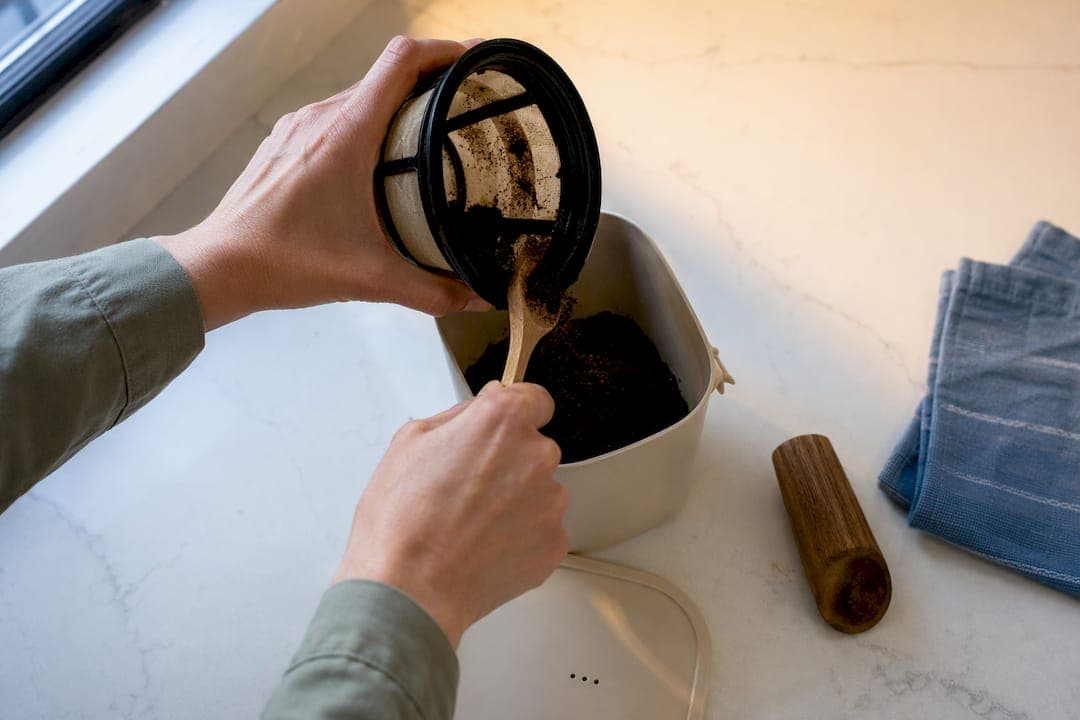
No. Coffee grounds should not go down the sink as a matter of routine, because they clump together and bind with grease to form stubborn blockages deep in your pipework. A small splash while rinsing a mug is unlikely to cause instant damage, but repeat that habit daily and you're building a problem one layer at a time.
TL;DR:
- Repeated rinsing of coffee grounds causes gradual buildup of dense, tar-like deposits on pipe walls, especially at bends and narrows where flow slows.
- Coffee grounds do not dissolve in water and swell slightly when wet, increasing their tendency to stick and clog over time if rinsed frequently.
- Proper disposal methods include composting, council food-waste collection, or bagging grounds in general waste, rather than rinsing down the sink.
- Removing visible grounds and using hot water or a plunger can temporarily clear minor blockages, but persistent problems likely require professional jetting and CCTV inspection.
- Regular prevention involves using sink strainers, wiping grounds into the bin before rinsing, and avoiding fats and oils entering the drain to limit buildup.
Table of Contents
- Why coffee grounds cause drain problems
- Is it okay if a small amount goes down by accident?
- Safe ways to dispose of used coffee grounds
- How do you clear a sink blocked by coffee grounds?
- How can you stop grounds clogging your drains again?
- A tradesman's view on coffee grounds and drains
- When DIY isn't enough, here's what Budget Rodz can do
- Sources
Why coffee grounds cause drain problems
Coffee grounds don't dissolve in water. They swell slightly when wet and stick together into a dense, sand-like mass, which is exactly why they never simply wash away the way sugar or salt does. Grounds clump rather than break down, settling in the low points of your pipework where flow slows down.
Those low points matter more than people realise:
- P-traps and bends collect particulate matter because water speed drops as it changes direction.
- Existing sludge gives grounds something to stick to, so deposits grow thicker with every rinse.
- Grease and oils bond with grounds to form a tar-like plug that hardens as it cools.
- Garbage disposal units grind grounds finer but don't remove them. They often just shift the blockage further down the line, out of easy reach.
Drain surveys using CCTV regularly show these deposits clinging to pipe walls like a coating of wet cement, thickest exactly where a pipe bends or narrows.
Is it okay if a small amount goes down by accident?
A single rinse of a mug with a few stray grounds isn't going to bring your kitchen to a standstill. The real risk comes from repetition, not the odd accident.
- Occasional tiny amounts get carried along by water flow before they have a chance to settle.
- Repeated rinsing is where the damage builds. Plumbers describe the problem as cumulative, with single incidents rarely causing an emergency but months of small deposits eventually forming a serious blockage.
- The safer habit is to scrape or wipe grounds into the bin or compost caddy before you rinse the cafetière or filter.
- If you have a garbage disposal, don't treat it as a green light. It doesn't eliminate the downstream risk, it just delays where the grounds end up.
Safe ways to dispose of used coffee grounds
Coffee grounds are genuinely useful once they're out of your plumbing, and given how much coffee the country gets through, there's no shortage of them to work with. British coffee consumption figures show just how much spent material households generate every week, which makes reuse worth the small extra effort.
- Compost them. Spread grounds out to dry slightly, then mix into your compost heap alongside "brown" material like dry leaves or shredded card, aiming for roughly one part grounds to two or three parts brown matter so the pile doesn't turn slimy. Grounds add nitrogen, which speeds up decomposition.
- Use council food-waste collection. Where your council offers a food-waste or compost bin, grounds can go straight in, or in a paper liner if your scheme asks for one.
- Fall back on general waste. If neither option is available, bagging dried grounds and putting them in the regular bin is the sensible default. Experts recommend general waste over the sink every time.
- Reuse around the house. Dried grounds work as a mild odour absorber in the fridge, a light abrasive scrub for greasy pans, or a deterrent scattered near plants that slugs tend to target, though results vary and it's not a guaranteed fix.
Pro Tip: Keep a small pail or a folded paper bag on the counter for spent grounds. Emptying that once a day into the compost or bin means far less temptation to just tip them into the sink.
How do you clear a sink blocked by coffee grounds?
If water is already pooling in the sink, don't reach for anything caustic. Bleach and oven cleaner can damage pipe seals and don't actually shift compacted grounds.
- Remove the strainer or plug and scoop out any visible grounds by hand first.
- Flush with hot water only if you're confident there's no grease mixed in. Hot water on a greasy plug can just push the mess further along the pipe.
- A plunger over the plughole, with enough water in the basin to create a seal, can dislodge a partial clog.
- If you're comfortable doing so, remove the P-trap under the sink to check for a solid mass. This works well alongside the step-by-step fixes for a blocked kitchen sink if you want a visual walkthrough first.
- Watch for grease mixed into the deposit. If that's part of the problem, the guidance on oil-related sink blockages covers the extra care needed.
Persistent slow drainage, gurgling sounds, or a lingering smell after you've tried the above are signs the blockage has moved beyond where a plunger can reach. That's the point to call a professional rather than keep experimenting.
How can you stop grounds clogging your drains again?
Prevention here is mostly about breaking one habit and replacing it with another, smaller one.
- Wipe or tip reusable filters and cafetière grounds into the bin or compost before you rinse anything.
- Fit a sink strainer and empty it daily. It's a five-second job that catches almost everything.
- Keep fats and oils away from the sink entirely. Pour them into a container instead of letting them mix with grounds in the plughole.
- If your property has older pipework or drains that already run slow, an occasional professional jetting and CCTV check, such as a CCTV drain survey, catches build-up before it becomes an emergency.
A tradesman's view on coffee grounds and drains
Coffee-ground blockages have a particular look on a drain camera. It's not a single lump, it's a smooth, grey coating that builds up along the pipe wall like plaster, thickest at bends where flow slows down. High-pressure jetting clears it efficiently because water alone often can't break that coating loose, it needs force behind it.
Most of the calls involving grounds aren't really about coffee at all. They're about years of small habits: a bit of grease here, a rinse of grounds there, until one day the sink won't drain. The DIY steps above genuinely work for early-stage blockages. Where they don't, the sign is usually consistency: if the problem keeps returning within days of clearing it, something further down the line needs a proper look, not another attempt with a plunger.
— Christopher
When DIY isn't enough, here's what Budget Rodz can do
If you've tried the plunger, cleared the trap, and the sink is still slow or gurgling, it's worth stopping before you make things worse with more chemicals or more force. Professional services can provide a fast response, use high-pressure jetting to break up compacted grounds and grease, and perform CCTV inspections to reveal exactly what's sitting in your pipework rather than leaving you to guess.

For a blockage that's already causing standing water or backing up, the emergency drain unblocking service gets someone out fast, with transparent pricing agreed before any work starts. If your drains have been running slow for a while rather than suddenly blocking, a scheduled CCTV drain survey will show whether years of grounds and grease have built up somewhere you can't see, so you can get it jetted clear before it turns into a Saturday-night emergency.
Sources
- Can You Put Coffee Grounds Down the Sink? | Better Homes & Gardens
- Coffee consumption | British Coffee Association
- Why you should stop putting coffee grounds down the sink (and what to do instead) - The Manual