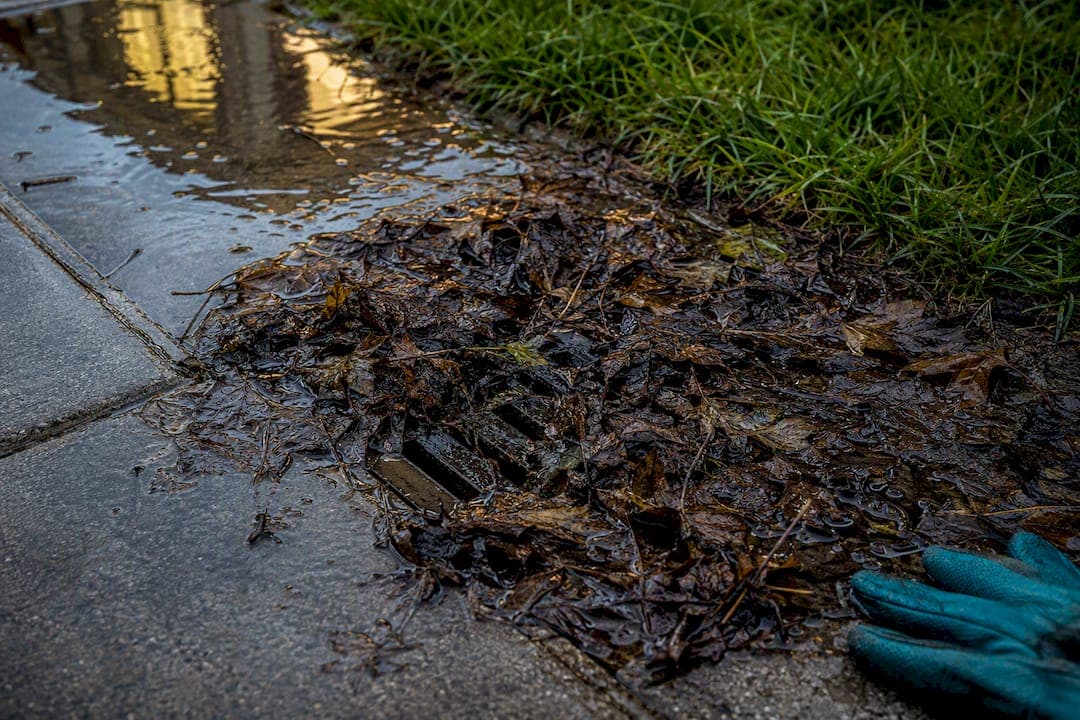
Yes, you can usually clear it yourself. Lift the grate, scoop out the leaves, and flush with a hose. If you find standing water that won't drain, a foul sewage smell, or more than one drain affected, stop and call a professional. Those are signs the blockage sits deeper than a hand can reach.
TL;DR:
- Most leaf blockages are within the first metre of pipe and can be cleared with manual scooping and flushing, avoiding specialist tools.
- Rodding should be done in short strokes, and stop immediately if water levels do not drop, or if sewage smells or multiple drains are affected.
- Use basic tools like gloves, a torch, drain scoops, and a garden hose with a jet nozzle for effective DIY cleaning; avoid chemical unblockers outdoors.
- Installing a gully guard and regularly clearing gutters and downpipes significantly reduces the chance of future blockages.
- Call a professional with CCTV and jetting equipment if debris persists, water backs up, or deeper pipe issues are suspected.
Table of Contents
- What causes a drain blocked by leaves in the first place?
- Step-by-step DIY unblock: clearing the grate and pipe
- What tools actually work, and what to avoid
- How to stop leaves blocking your drains again
- When to call a professional (and what it costs)
- Why professional kit succeeds where DIY stops working
- A publisher's take on leaf season
- Get a drain blocked by leaves sorted fast with Budgetrodz
- Sources
What causes a drain blocked by leaves in the first place?
Leaves rarely block a drain on their own. They arrive on a wet day, settle over the grate, and start to break down. That decay produces a soft, matted layer that traps silt washing off paths and lawns, and within a week or two you've got a leaf-and-silt sandwich sitting right on top of the outlet.
Mud and grit compound the problem. Once silt works its way past the grate and into the pipe run, it settles in low spots and hardens, especially after several dry days between rainfall. A 2025 simulation study on drainage capacity found that inlet clogging combined with pipeline silting reduces peak flow and pushes more surface water back up, which is exactly what you see as a garden puddle that won't budge after rain.
Trapped debris is the third layer: twigs, moss, and gutter waste that washes down a downpipe and lodges at a bend. This is why a drain blocked by leaves so often turns out to be leaves plus something else entirely.
Step-by-step DIY unblock: clearing the grate and pipe
Most leaf blockages sit within the first metre of pipe, in the sump beneath the grate or just past it. That's well within reach of basic tools, provided you work through the process in order rather than jumping straight to a hose.
Start with preparation. Put on rubber gloves and, if you're working near a busy path or driveway, keep an eye on traffic and watch for slippery leaf mulch underfoot. Have a bucket or bin bag ready so you're not leaving a pile of sludge on the patio.
- Lift the grate. Most outdoor gully grates lift out with a flat screwdriver or lift a hinge catch; some older cast-iron covers need a stiff pry bar. Set it aside somewhere it won't get walked on wet.
- Inspect the sump. Shine a torch down. You're looking for the depth of leaf mulch, whether there's standing water, and whether you can see the outlet pipe at the base.
- Scoop by hand. Use a small trowel, a gloved hand, or a proper drain scoop to lift out leaves and mud. Work from the top down, and resist the urge to push debris further in to "see if it clears."
- Rod or auger the pipe run. Feed a drain rod or hand auger gently into the outlet, turning as you push rather than forcing it. If you hit resistance at a joint, back off slightly rather than ramming the cable through.
- Flush with a hose. Once the visible debris is out, run a hose with a jet nozzle into the gully to push any remaining loose material through the pipe. A drain bladder attached to a hose can add extra pressure for stubborn residue, but only use one if you understand how to control the pressure release safely.
This remove-grate-scoop-rod-flush sequence is the same one used across most homeowner drain guides, and it clears the majority of surface leaf blockages without any specialist kit.
Pro Tip: Rod in short strokes rather than one long push. You'll feel a blockage give way as resistance drops, which tells you it's cleared rather than just packed tighter.
Stop if the water level in the sump doesn't drop after flushing, if you smell sewage rather than damp leaves, or if a second drain nearby is also backed up. Those point to a blockage further down the run than rodding can usefully reach.
What tools actually work, and what to avoid
You don't need much to handle a typical drain blocked by leaves, but the right basics make the job faster and safer.
- Rubber gloves and eye protection to handle wet debris and guard against splashback.
- A torch to see into the sump before you start pulling anything out.
- A drain scoop or small trowel for manual removal without damaging the gully lining.
- Drain rods or a hand auger for anything sitting just past the visible sump.
- A garden hose with a jet nozzle to flush loosened debris through.
For stubborn clogs, a wet/dry vacuum can pull sludge and water out of a sump far faster than scooping by hand, and expert guides on drain vacuums rate them well for exactly this job. A pressure washer on a low setting can substitute for a hose, but keep the nozzle back from the pipe mouth to avoid forcing debris into a tighter clump further down.
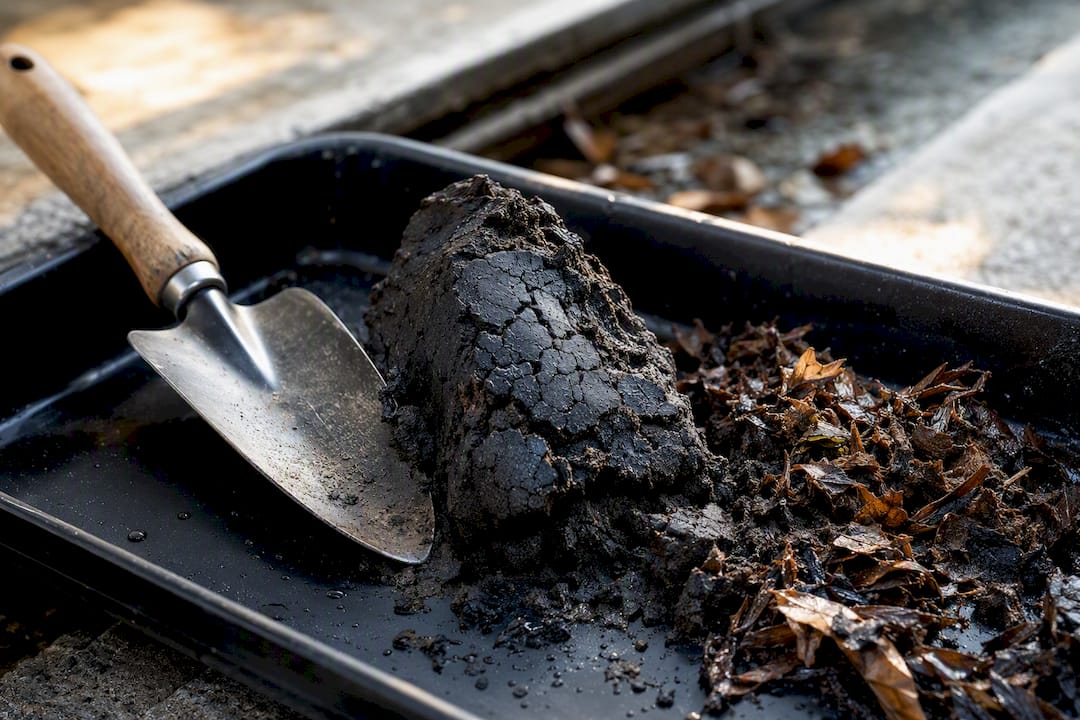
Skip caustic chemical drain unblockers outdoors. They're designed for enclosed indoor pipework, and around soil, plant roots, and open drainage they do little against a leaf mat while adding an unnecessary chemical to your garden. If your inspection shows compacted, dark, almost clay-like material rather than loose leaf mulch, that's hardened silt rather than fresh debris, and it's usually beyond what rodding and flushing can shift.
How to stop leaves blocking your drains again
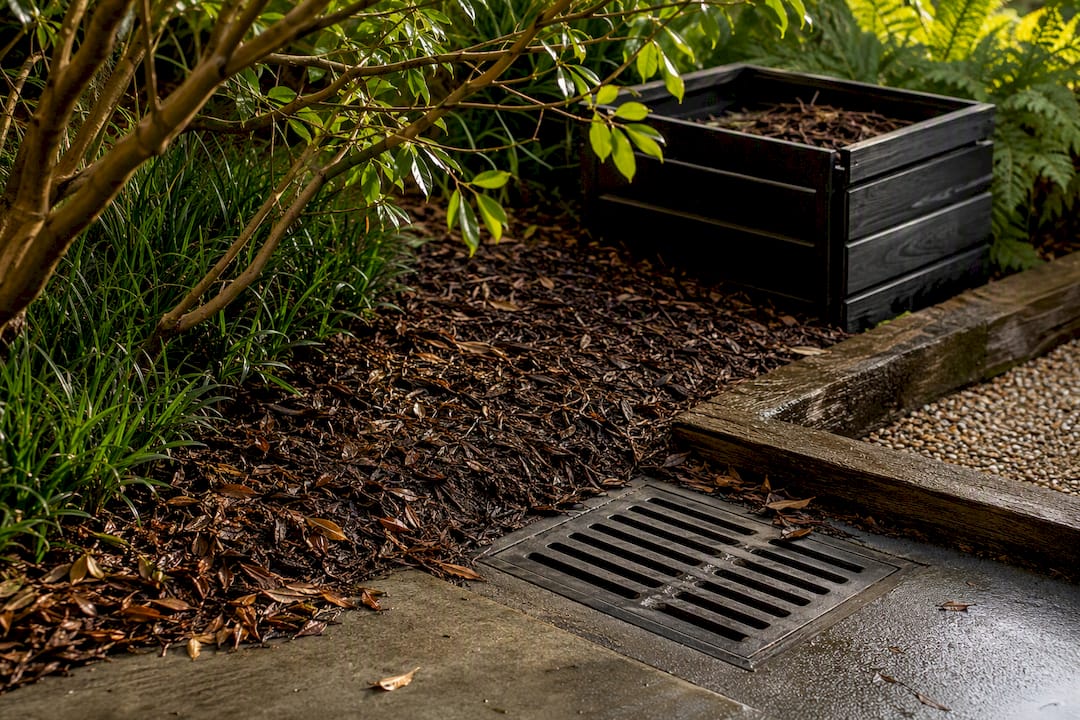
Clearing the drain once is only half the job. Fitting a gully guard or dome grate over the gully stops leaves settling on top before they even reach the water, and it takes minutes to fit on most standard drain covers.
Build a simple seasonal routine around three checkpoints:
- Late autumn, once most leaves have dropped, clear every visible drain and gutter outlet.
- After any storm, check drains for debris that's washed off nearby trees or roofs.
- Early spring, inspect for anything that built up unnoticed over winter.
Gutters matter more than most homeowners realise here. A blocked gutter overflows straight down the wall and into the nearest ground-level drain, so clearing gutters and fitting a leaf trap on downpipe outlets cuts the volume of debris reaching underground pipework before it starts. Practical maintenance advice on downpipe traps backs this as one of the better-value fixes available to homeowners.
A few landscaping tweaks help too. Prune back branches overhanging drains, keep compost heaps away from gully covers, and avoid piling bark mulch directly next to a drain, since it washes in during heavy rain almost as readily as leaves do.
Pro Tip: Write the date you last cleared each drain on a sticky note inside a shed or garage door. It sounds basic, but it's the easiest way to spot a drain you've forgotten for a full year.
When to call a professional (and what it costs)
Call a professional when you see a foul sewage smell, water backing up rather than draining away, more than one drain affected at once, or when your own rodding and flushing hasn't shifted the blockage. Any of those points to a problem beyond the reach of a hand tool.
Professionals bring three things a homeowner's kit can't match:
- CCTV surveys to locate exactly where and what the blockage is without digging blind.
- High-pressure jetting to clear compacted leaf and silt mixtures that resist manual rodding.
- Root cutting and repair work where tree roots have found their way into an ageing pipe joint.
Checkatrade's guidance on outdoor drain blockages notes that CCTV inspection paired with jetting is the standard approach once a blockage sits beyond the visible sump, and jetting has the added benefit of reconditioning the pipe walls rather than just pushing the clog through. Costs vary with access, how far the blockage sits from an inspection point, and whether any pipe repair is needed alongside the clearance, so a fixed-price callout after a quick assessment is worth more than guessing from a phone call alone.
Why professional kit succeeds where DIY stops working
Once silt hardens inside a pipe, it forms a dense layer that rodding simply can't break up efficiently. Some professionals handle exactly this gap with high-pressure jetting and CCTV inspection, backed by a typical 90-minute response time across these areas.
High ratings and transparent, no-hidden-fee pricing matter here because callers are usually dealing with a garden they can't use or water pooling near a doorway. Hardened silt, deep mainline blockages, and root intrusion are the three scenarios where a homeowner's rod and hose genuinely run out of road, and that's where trained kit takes over.
A publisher's take on leaf season
Prevention beats emergency call-outs every time, and a five-minute check after a windy week costs nothing compared with a flooded patio. Before the leaves properly start falling, run through this: fit a gully guard, clear gutters, check every downpipe outlet, note the date on each drain you clear, and keep a torch by the back door for quick inspections.
— Christopher
Get a drain blocked by leaves sorted fast with Budgetrodz
Some local drainage services get to a blocked drain faster than most homeowners can book a plumber elsewhere, with a typical 90-minute response in relevant service areas, and fixed pricing agreed before any work starts.

If your rodding and flushing haven't shifted the clog, or you're seeing standing water and a foul smell, that's the point to stop and get proper kit onto the job. Jetting clears compacted leaf and silt mixtures that a garden hose never will, and a CCTV survey shows exactly where the problem sits before anyone starts digging.
- Book emergency drain unblocking
- See drainage services including jetting and CCTV
- Read the complete homeowner's guide to blocked outside drains
Contact the emergency line above and a technician can usually be with you the same day.
Sources
- How to Unblock the Drain Outside: A Step-by-Step Guide
- Blocked Outside Drain? What To Do, Who To Call & Costs
- How to Unblock Drains Outside (Expert Guide)