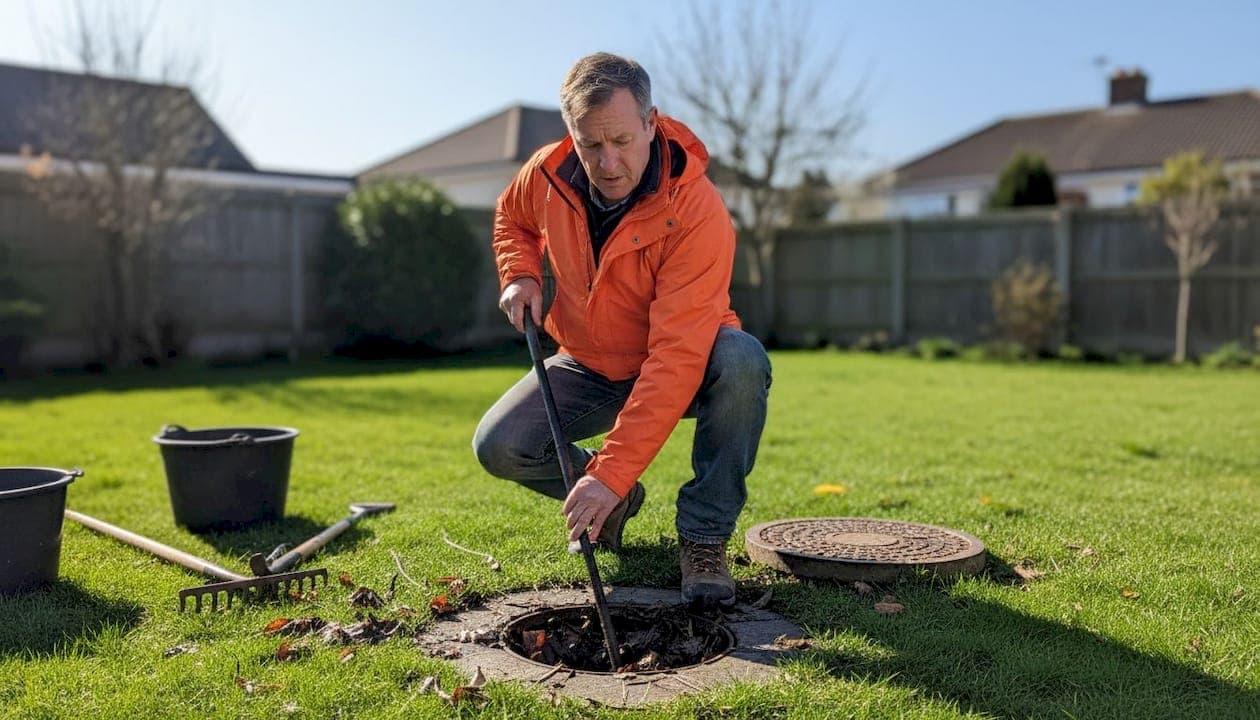
A blocked outside drain is defined as any external drainage gully, gulley pot, or inspection chamber that has stopped carrying water away at its normal rate. Left untreated, a clogged outdoor drain causes standing water, structural damp, and a genuine health hazard from sewage exposure. The good news is that most blockages within your property boundary are fixable with the right tools, the right technique, and a clear understanding of when to stop and call a professional. This guide covers every stage, from spotting the first warning signs to safely clearing the drain and preventing the problem from returning.
What are the signs of a blocked outside drain?
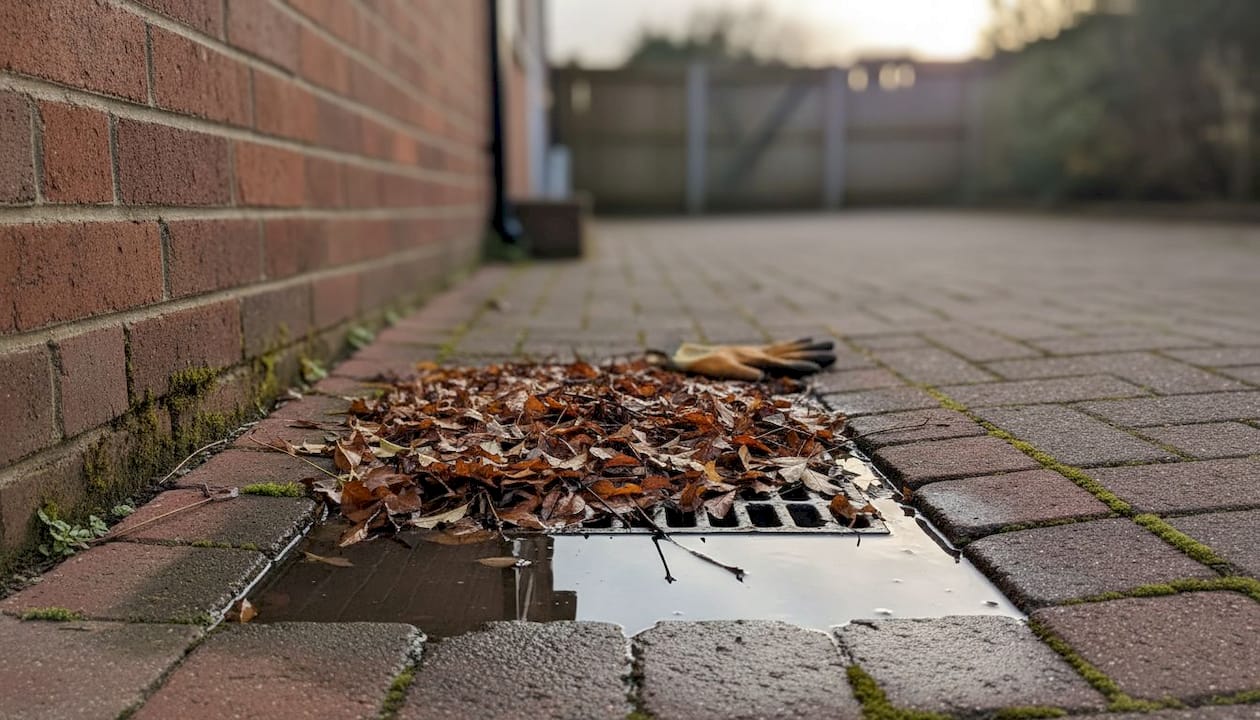
Spotting a blockage early saves you time, money, and a great deal of mess. The clearest sign is standing water pooling around a gully or drain cover that refuses to clear within a few minutes of rain stopping. Slow drainage from the same point is an earlier, subtler warning that most homeowners miss until the problem becomes serious.
Audible clues matter just as much as visible ones. A gurgling sound from indoor sinks, toilets, or baths when you run an outside tap points directly to a shared drainage problem. The gurgling happens because air is being displaced by water trying to find an alternative route through a partially blocked pipe.
Foul smells near an external drain are another reliable indicator. Decomposing organic matter, trapped grease, and stagnant water all produce a distinctive odour that gets stronger as the blockage worsens. If you notice the smell intensifying after heavy rain, the drain is likely holding water rather than moving it.
The distinction between a minor and a serious blockage matters for deciding your next step:
- Minor blockage: slow drainage, mild smell, water clears within a few minutes
- Moderate blockage: standing water after rain, gurgling from indoor fixtures, visible debris at the gully
- Severe blockage: outside drain overflowing onto paths or lawns, sewage surfacing, multiple drains affected simultaneously
- Structural concern: recurring blockage within days of clearing, sunken ground near the drain, or visible pipe damage at the chamber
A severe or recurring blockage is not a DIY job. The signs above tell you which category you are dealing with before you pick up a single tool.
Tools and safety equipment for unblocking an outside drain
The right equipment makes the difference between a 30-minute fix and a worsening problem. A standard DIY kit for clearing a garden drain blocked by leaves or light debris costs between £25 and £50 and covers the majority of accessible blockages.
| Tool or item | Purpose | Approximate cost |
|---|---|---|
| Drain rods with attachments | Manual rodding to break up and shift blockages | £15–£30 |
| Rubber plunger | Creating suction pressure on shallow blockages | £5–£10 |
| Hosepipe or pressure washer | Flushing debris after clearing | Existing or £20+ |
| Manhole lifting key | Safely removing heavy drain covers | £5–£10 |
| Buckets and trowel | Removing surface debris and standing water | £5–£10 |
| Nitrile gloves | Hand protection against contamination | £3–£6 |
| Safety goggles | Eye protection from splashing | £3–£8 |
| Waterproof boots | Foot and ankle protection | Existing or £15+ |
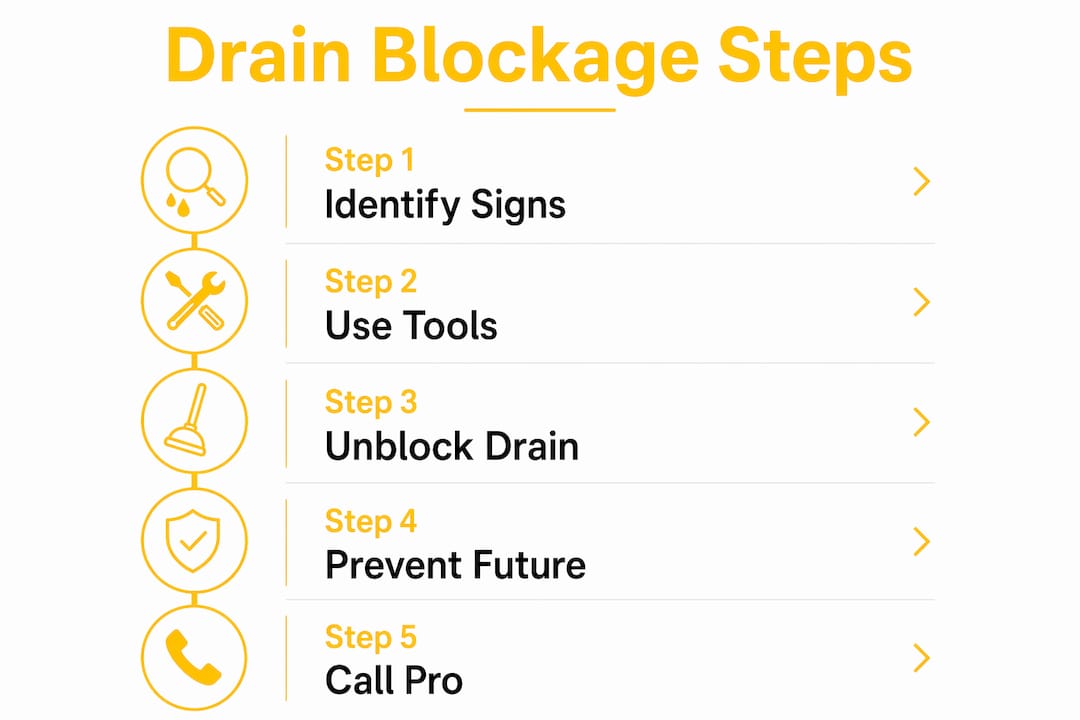
Protective gear is non-negotiable. Drain water contains bacteria, and even a small splash to the eyes or mouth carries a genuine infection risk. Nitrile gloves are preferable to latex because they resist punctures and chemicals better.
One item to leave on the shelf is chemical drain unblocker. Chemical unblockers damage pipe seals and create hazardous conditions for any professional who later needs to clear the drain manually. If the blockage is complete, the chemical simply sits in the standing water, corroding your pipework without shifting the obstruction.
Pro Tip: Buy a manhole lifting key before you need it. Trying to lever a cast-iron cover with a screwdriver risks injury and damages the frame. Keys cost under £10 at most builders' merchants.
How do you unblock an outside drain step by step?
A standard external drain unblocking job takes between 20 and 60 minutes for a single gully when the blockage is accessible and within the property boundary. More complex lateral runs can take up to two hours. Work methodically and you will clear the majority of blockages without professional help.
-
Inspect before you touch anything. Use your manhole lifting key to remove the drain cover safely. Identify whether the chamber is full of water (blockage is downstream) or empty (blockage is upstream, between the gully and the chamber). Working from downstream chambers toward the blockage lets you pull debris outward rather than compacting it deeper into the pipe.
-
Remove surface debris by hand. Put on your nitrile gloves and goggles. Scoop out leaves, mud, and visible debris from the gully pot using a trowel or gloved hand. Place waste into a bucket or bag for disposal. This step alone clears a surprising number of garden drain blockages caused by autumn leaf fall.
-
Flush with hot water and washing-up liquid. For light grease blockages, pour 4–6 litres of hot water mixed with washing-up liquid directly into the gully. Use hot water, not boiling, because boiling water warps UPVC pipes. Wait two minutes and check whether the water level drops. If it does, repeat the flush until the drain runs freely.
-
Rod the drain if flushing fails. Attach the plunger head or corkscrew attachment to your first drain rod. Feed it into the drain and add additional rods as you go deeper. Always rotate rods clockwise during use. Anti-clockwise rotation unscrews the joints underground, leaving rod heads stuck in the pipe and turning a simple job into an expensive recovery operation.
-
Apply gentle, rhythmic pressure. Push and pull the rods with a steady motion rather than forcing them. When you feel resistance, work the rods back and forth to break up the blockage rather than ramming it. Excessive force risks cracking older clay or concrete pipes.
-
Flush and confirm flow. Once resistance clears, withdraw the rods one section at a time, still rotating clockwise. Run a hosepipe into the gully for two to three minutes and watch the chamber. Water should drain freely with no backing up. If it does, replace the cover and dispose of any waste responsibly.
Pro Tip: Wear old clothes you do not mind discarding. Even careful rodding produces splashback, and drain water stains fabric permanently.
What causes a blocked outside drain and how do you prevent it?
Understanding the cause of a blockage tells you how to stop it happening again. The most common causes in Cheshire gardens are:
- Leaf and organic debris: autumn leaves accumulate rapidly in gully pots, especially near trees. A single storm can block a previously clear drain within hours.
- Mud and silt: heavy rain washes soil into drainage channels, particularly in gardens with clay-heavy ground, which is common across much of Cheshire.
- Grease and cooking fats: fat poured down kitchen sinks cools and solidifies in external pipes, narrowing the bore over time until flow stops entirely.
- Wet wipes and sanitary products: products marketed as "flushable" do not break down in drainage systems. They bind with grease and debris to form solid blockages.
- Tree root ingress: roots follow moisture into pipe joints, cracking them open and creating a mesh that catches every piece of debris passing through.
- Damaged or collapsed pipes: older clay pipes crack under ground movement or vehicle weight, causing partial collapses that restrict flow.
Prevention is straightforward for most of these causes. Fit a leaf guard over every external gully and clean it monthly during autumn and winter. Dispose of cooking oil in a sealed container and put it in the general waste bin, never down the sink. Use an enzyme-based drain cleaner monthly to break down organic build-up before it becomes a blockage. Schedule a visual inspection of all external drain covers every six months, lifting each one briefly to check for silt accumulation.
The tree root problem is different. Roots cannot be prevented by surface measures alone. If your property has mature trees within three metres of a drain run, a periodic CCTV drain survey is the only reliable way to catch root ingress before it causes a collapse.
When should you stop DIY and call a professional?
Some blockages are beyond the reach of rods and hot water. Continuing to attempt DIY clearing in these situations risks injury, pipe damage, and a significantly higher repair bill.
Stop and call a professional drainage engineer when you notice any of the following:
- The blockage returns within seven days of manual clearing
- Water rises in the chamber when you flush an indoor toilet or run a bath
- Sewage is surfacing in the garden or on paths
- Multiple properties are affected simultaneously, which indicates the problem lies in a shared sewer beyond your boundary
- You can feel the rods hitting something solid that will not shift after several minutes of steady pressure
- The ground near the drain has subsided or feels soft underfoot
Recurring blockages after manual clearing almost always signal a structural problem such as tree root ingress or a collapsed pipe. A CCTV drain survey identifies the root cause without excavation, saving homeowners the cost of unnecessary digging. If sewage is surfacing or neighbours are affected, contact your regional water provider immediately, as responsibility for shared sewers sits with them, not with individual homeowners.
Structural problems cannot be fixed with rods. A CCTV survey sends a camera through the pipe to locate the exact position and nature of the fault, whether that is root ingress, a cracked joint, or a full collapse. That information determines whether the fix is a targeted repair or a pipe replacement. Attempting to rod through a collapsed section risks pushing debris into an already compromised pipe and making the damage worse.
Licensed drainage engineers carry public liability insurance and work to Water Industry Act standards. For properties in Cheshire, a CCTV survey in Ellesmere Port or the surrounding area gives you a written report and a clear repair plan, which is also useful evidence if you need to make an insurance claim.
Key takeaways
A blocked outside drain is best resolved by correctly diagnosing the blockage type, using the right tools safely, and calling a professional the moment structural damage or sewage surfacing is suspected.
| Point | Details |
|---|---|
| Spot it early | Standing water, gurgling sounds, and foul smells are the first signs of a clogged outdoor drain. |
| Use the right tools | Drain rods, a plunger, hot water, and protective gear handle the majority of accessible blockages. |
| Rod clockwise only | Anti-clockwise rotation unscrews rod joints underground, turning a simple job into a costly recovery. |
| Know when to stop | Call a professional if the blockage returns within seven days or sewage surfaces in the garden. |
| Prevent recurrence | Fit leaf guards, dispose of fats correctly, and schedule a CCTV survey if mature trees are nearby. |
What I have learned from years of watching homeowners tackle drain problems
The single most common mistake I see is homeowners reaching for a bottle of chemical drain cleaner the moment they notice slow drainage outside. It feels like the logical first step. It almost never works on a solid outdoor blockage, and it frequently makes the situation worse by corroding pipe seals and creating a chemical hazard for whoever has to clear the drain next.
The second mistake is ignoring the early warning signs. A gurgling sound from the kitchen sink when it rains is not a quirk of an old house. It is a drain telling you that something is restricting flow outside. Catching it at that stage means a bucket, a pair of gloves, and twenty minutes of work. Ignoring it for another month often means rods, a professional call-out, and sometimes a CCTV survey.
Property boundary responsibility is something most homeowners in Cheshire do not think about until there is a problem. Drains within your curtilage are your responsibility. Shared sewers beyond your boundary belong to the regional water provider. Knowing that distinction before you start spending money on repairs matters enormously.
My practical advice is this: inspect your external drain covers twice a year, clear the gully pots of leaves every autumn, and never pour cooking fat down any drain. Those three habits eliminate the majority of outside drainage issues before they start. When something does go wrong, work methodically through the steps in this guide. If the blockage does not clear on the first proper attempt, or if it comes back quickly, stop and get a professional opinion. The cost of a survey is always less than the cost of a collapsed pipe.
— Christopher
Persistent drain problems? Budgetrodz is ready to help
When a garden drain blocked by roots, collapsed pipes, or deep silt defeats DIY methods, you need a team that can respond fast and diagnose accurately.

Budgetrodz provides 24/7 emergency drain unblocking across Ellesmere Port, Wirral, Chester, and surrounding Cheshire areas, with a typical response time of 90 minutes. The team uses high-pressure jetting to clear blockages that rods cannot shift, and professional CCTV drain surveys to locate structural faults without unnecessary excavation. Pricing is transparent with no hidden call-out fees, and Budgetrodz holds a perfect 5.0 rating from over 50 Google reviews. Call or book online for a fast, guaranteed resolution to your drainage problem.
FAQ
What causes an outside drain to block suddenly?
Sudden blockages are most commonly caused by a large accumulation of leaves, a build-up of grease that finally seals the pipe bore, or a tree root that has grown across the drain channel. Heavy rain accelerates all three by flushing loose debris into the system at once.
How do I unblock a garden drain without a rod?
Pour 4–6 litres of hot water mixed with washing-up liquid into the gully to shift light grease blockages. For debris blockages, remove the cover and scoop out material by hand using nitrile gloves and a trowel before flushing with a hosepipe.
Is an outside drain overflowing a health hazard?
Yes. An outside drain overflowing with sewage-contaminated water exposes your garden, paths, and potentially your home to harmful bacteria. Keep children and pets away from the affected area and wear protective gear if you need to work near it.
Who is responsible for a blocked outside drain in Cheshire?
Drains within your property boundary are your responsibility as the homeowner. If the blockage affects a shared sewer or multiple neighbouring properties, responsibility passes to the regional water provider, and you should contact them directly rather than attempting further DIY work.
When does a blocked drain need a CCTV survey?
A CCTV survey is needed when a blockage returns within seven days of clearing, when the ground near the drain has subsided, or when rodding meets solid resistance that will not shift. These signs indicate structural damage that cannot be diagnosed or fixed from the surface.