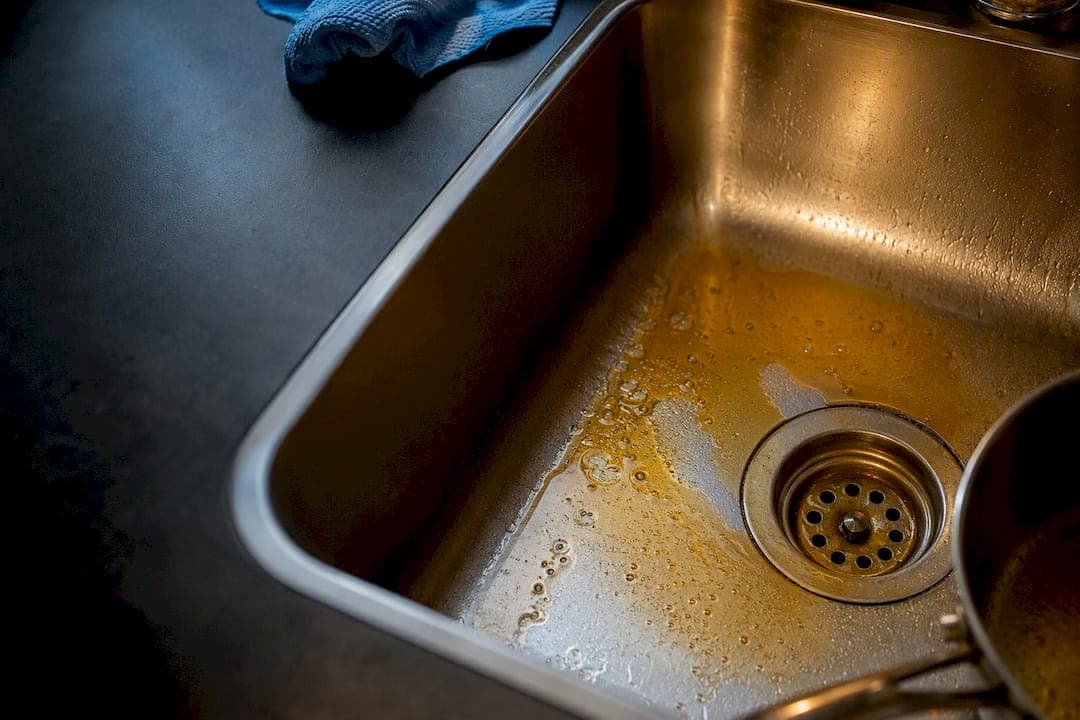
Do not pour cooking oil down the sink. Oil and fat, known collectively as FOG (fats, oils and grease), cool and solidify inside pipes, catching food debris and narrowing the flow until drains slow, back up, or block completely. If you have already tipped some down the plughole, do not panic. Follow the mitigation steps below straight away and, if the sink is still not draining properly, book a professional check before it becomes a bigger job.
TL;DR:
- Using hot water, dish soap, or baking soda temporarily displaces grease but does not dissolve or remove the hardened fat build-up inside pipes.
- Disposing of used cooking oil correctly involves cooling, sealing in a sturdy container, and recycling or proper waste disposal, not pouring down the drain.
- Common home remedies like repeated hot water or caustic drain cleaners are ineffective against hardened grease and can damage older pipework.
- Professional tools such as hydro-jetting and CCTV inspection are required to effectively remove and assess grease blockages once they become entrenched.
- Fitting a grease trap in residential kitchens or shared housing can prevent grease-related blockages and reduce costly repairs over time.
Table of Contents
- Why oil and fat wreck kitchen pipes over time
- How to dispose of used cooking oil safely at home
- What to do if you already poured oil down the sink
- How professionals actually clear a grease blockage
- When to call a professional: a practical checklist
- Common misconceptions about oil disposal
- Local rules and fines for improper oil disposal
- Setting up a grease trap in a home or small kitchen
- Everyday habits that actually stop grease problems
- Need it sorted today? Budgetrodz emergency drain unblocking
- Sources
Why oil and fat wreck kitchen pipes over time
Warm oil pours easily, which is exactly why it feels harmless going down the plughole. The problem starts the moment it hits cooler water further down the pipe. Oil and fat begin solidifying as they lose heat, sticking to the inside of the pipework rather than washing straight through to the sewer.
That first thin coating does not disappear on the next wash. It hardens, narrows the internal diameter of the pipe, and becomes a surface that the next dose of grease sticks to more easily than bare metal or plastic would. Layer builds on layer, and each layer traps whatever floats past it, coffee grounds, rice, tea leaves, soap scum, turning a smooth pipe into something closer to a fur-lined artery.
- Kitchen sink traps and U-bends clog first, because that is where flow slows and cools fastest.
- Dishwasher drain lines narrow in the same way, often unnoticed until water starts backing up.
- Septic tanks and municipal sewers face the same problem at scale, which is how fatbergs form in council sewer networks.
Statistic callout: Approved building-regulation guidance on drainage explicitly recognises grease and fat as a cause of pipe blockage requiring professional mechanical clearing, not a household nuisance that resolves on its own, according to the government's Approved Document H guidance.
Hot water, washing-up liquid, or a splash of bicarbonate of soda might shift oil along the pipe for a moment. None of it dissolves the fat. It just relocates the problem further down the line, where it cools again and settles somewhere you cannot see it.
How to dispose of used cooking oil safely at home
Getting rid of oil properly takes barely longer than pouring it down the sink, and it removes the risk entirely. Industry waste guidance is blunt about this: cooking oil should never go down the drain, full stop, so build one of these habits into your routine instead.
- Let the oil cool completely. Hot oil will melt plastic containers and is a genuine burn risk, so give it 20 to 30 minutes before handling.
- Pour it into a sealed, sturdy container. An empty glass jar, a rinsed milk bottle, or any screw-top container works. Seal tightly and put it in the general waste bin.
- Solidify it first if you prefer a no-spill option. Mix the cooled oil with an absorbent material, kitchen roll, sawdust, or even used cat litter, inside a container, then bin the solid lump once it has set.
- Wipe pans and roasting trays with paper towel before washing. Bin the towel rather than rinsing the fat straight into the sink. This one habit prevents most of the grease that ends up in kitchen drains in the first place.
- Prepare larger quantities for recycling. Used cooking oil can often be recycled into biodiesel, and many local recycling centres or household waste sites accept it. Seal the container clearly, label it "used cooking oil," and check your council's guidance before dropping it off, since accepted quantities and container types vary by area.
Pro Tip: Keep a dedicated "oil jar" on the worktop or under the sink during cooking season. Filtering used oil through a sieve before storing it also lets you reuse it a couple of times for similar dishes, cutting down on both waste and how often you need to dispose of it.
What to do if you already poured oil down the sink
Mistakes happen, and one lapse will not automatically block your drain. Act quickly and you can usually stop it becoming a problem.
- Run hot water with a spoonful of concentrated washing-up liquid. This helps emulsify any fresh oil clinging near the surface, though treat it as a temporary measure only.
- Try a plunger if water is draining slowly. A few firm plunges can dislodge a fresh, soft clog before it hardens.
- Try baking soda and vinegar as a mild follow-up. Half a cup of each, left for 15 minutes then flushed with hot water, can help with very recent, minor deposits.
- Stop if there is no improvement after one or two attempts. Repeating the same fix over and over rarely works better the third time; it usually just delays calling for proper help.
A few things to actively avoid while you do this:
- Do not keep pouring hot water down repeatedly over several days, hoping it will eventually clear. It often pushes grease deeper into the pipe network rather than removing it.
- Do not reach for caustic commercial drain cleaners. Trade guidance is clear that these chemicals rarely shift entrenched grease and can damage older pipework in the process.
- Watch for gurgling sounds, recurring backups within days of clearing, or a sink that drains noticeably slower each time. These are signs to call a professional now, not signs to try one more home remedy.
How professionals actually clear a grease blockage
Once grease has hardened into a coating rather than a loose clog, DIY methods lose their effectiveness fast. Professional plumbers reach for tools built specifically for this problem.
- Mechanical snaking works well on partial or recent blockages, using a flexible cable to physically break through and pull out debris close to the point of the clog.
- Hydro-jetting uses high-pressure water to scour the full internal surface of the pipe, stripping hardened grease off the walls rather than just punching a hole through the middle of it. This restores the original pipe diameter instead of leaving a narrow channel that clogs again within weeks.
- CCTV inspection sends a camera down the line first, showing exactly where the buildup sits and whether the pipe itself has suffered damage from years of grease accumulation.
- Chemical drain cleaners get skipped by most professionals entirely. They are usually ineffective against hardened grease and can corrode ageing pipework, making a repair job worse rather than better.
Combining CCTV assessment with correctly calibrated jetting pressure clears the entire grease coating along a run of pipe rather than pushing the blockage further down the line, which is why plumbers treat inspection as step one, not an optional extra.
When to call a professional: a practical checklist
Three signs mean it is time to stop experimenting and pick up the phone: water that will not drain at all, a blockage that keeps returning within days of clearing it, or a foul smell rising from the plughole even when the sink looks clear.
On a callout, Budgetrodz typically works to a 90-minute response target across Ellesmere Port, Wirral, Chester, and the surrounding area, running a CCTV check first to confirm exactly where the grease has built up before deciding whether jetting, snaking, or both is the right fix. Pricing is agreed upfront with no hidden extras.
Catching a grease problem early, before it hardens into a full blockage, usually means a straightforward clearing job rather than the far more expensive step of relining a damaged section of pipe.
Before calling, it helps to have ready:
- How long the drainage problem has been happening.
- Whether it affects one sink or multiple fixtures in the property.
- Any smells, sounds, or previous attempts at clearing it yourself.
Common misconceptions about oil disposal
A surprising number of kitchen habits persist purely because they feel logical, even when they do the opposite of what people assume.
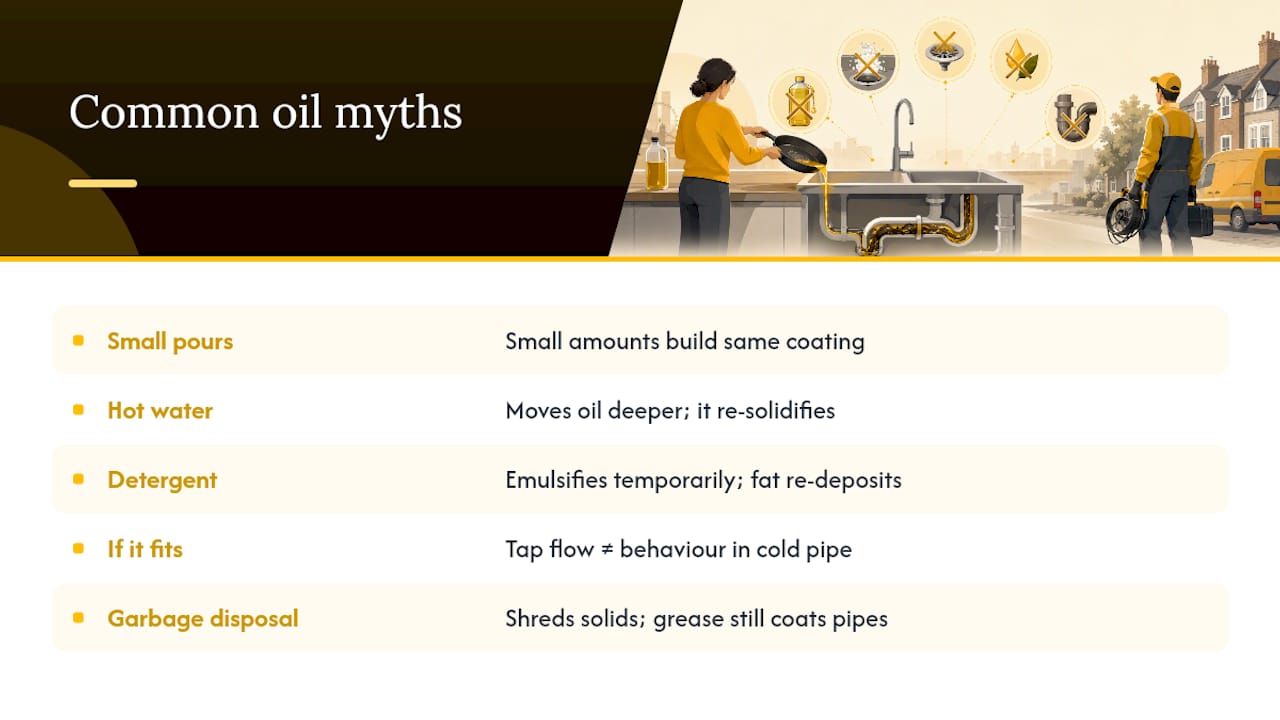
"A splash of oil is fine, it's only the big pours that matter." Small amounts are exactly how the problem starts. A teaspoon of oil after every meal builds the same layered coating as one large pour, just more slowly and less visibly.
"Hot water dissolves the oil." It does not dissolve anything. Hot water melts oil enough to move it further down the pipe, where it cools and resolidifies out of sight. This is one of the most persistent myths in home plumbing, and it is precisely why so many "cleared" sinks clog again weeks later.
"Washing-up liquid breaks the oil down completely." Detergent emulsifies fat temporarily, breaking it into smaller droplets that mix with water. Once that water cools in the pipe, the fat tends to separate out and re-deposit rather than vanishing.
"If it fits down the drain, it's fine to pour." Viscosity at the tap tells you nothing about behaviour twenty feet down a cold pipe. Thin frying oil and thick dripping cause the same buildup over time, just at different speeds.
"Garbage disposal units handle grease fine." A disposal unit shreds solids. It does nothing to stop liquid fat coating the pipe walls immediately downstream, so grease sails straight past the blades and into the drain line regardless.
Local rules and fines for improper oil disposal
Most households will never see a fine for pouring oil down a domestic sink, because enforcement in the UK focuses heavily on commercial premises. Restaurants, cafés, and takeaways are usually required to install and maintain grease management equipment, and water companies can issue charges or penalties where a business is found responsible for a sewer blockage linked to grease discharge.
The financial risk for homeowners is different but still real. If a household's grease contributes to a blocked shared drain or a burst pipe, liability for the repair bill, and potentially for damage to a neighbouring property, can fall on the resident responsible. Government guidance on drainage and waste disposal treats grease-related blockages as a known risk requiring proper management, which is the regulatory backdrop against which any dispute over blocked shared drains gets assessed.
Landlords carry a heavier compliance burden than owner-occupiers, particularly for houses in multiple occupation with shared kitchens, where poor oil disposal habits from several households can compound quickly into a single expensive blockage.
Setting up a grease trap in a home or small kitchen
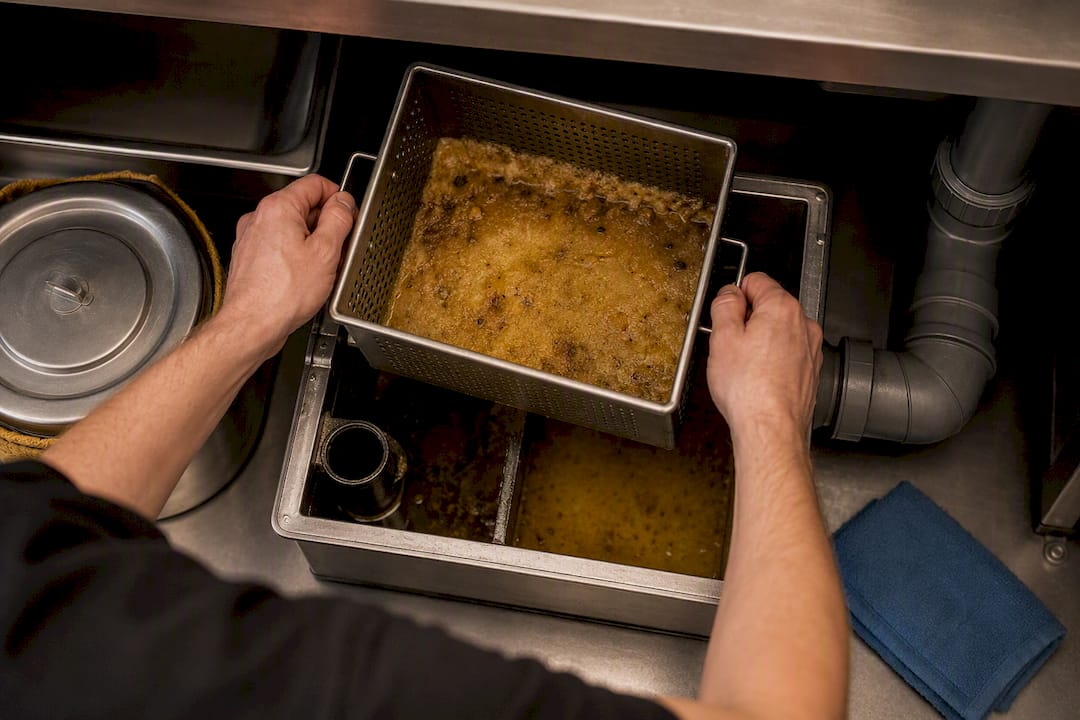
A grease trap is not just for commercial kitchens. It is a small interceptor fitted into the drainage line, usually under the sink or just outside the property, that catches fat and lets it cool and separate before wastewater reaches the main sewer connection.
For a busy household kitchen, particularly one that fries or roasts regularly, a compact under-sink grease trap can be plumbed in during a kitchen refit. It sits between the sink outlet and the main drain run, capturing grease in a removable basket or chamber that gets emptied and cleaned periodically, roughly every few weeks depending on how much frying happens.
For rental properties, shared houses, or anyone running a small food business from a domestic kitchen, a grease interceptor is worth discussing with a plumber during any drainage work. Landlords managing multiple tenants should treat it as preventive maintenance rather than an optional extra, since one overflowing trap in a shared kitchen can affect every flat on the same drainage run. Fitting one properly, sized to the kitchen's actual output, costs far less than the CCTV survey and jetting work needed after years of unmanaged grease.
Everyday habits that actually stop grease problems
Wiping pans before washing them is the single habit that prevents more blockages than anything else on this list. Pair it with a labelled container for used oil, kept somewhere consistent, and a quick monthly check of how quickly your sink drains.
If you are deep-frying for a gathering or batch-cooking with a lot of oil, plan disposal before you start cooking, not after three litres of used oil are cooling on the worktop with nowhere obvious to go. For landlords managing shared kitchens, a simple maintenance check on grease traps and drain flow each quarter catches problems while they are still cheap to fix.
— Christopher
Need it sorted today? Budgetrodz emergency drain unblocking
If your sink still will not drain after trying the steps above, Budgetrodz offers a faster route than waiting days for a callback. Working across Ellesmere Port, Wirral, Chester, and the surrounding area, the team targets a 90-minute response for emergency call-outs, using high-pressure jetting and CCTV diagnostics to find and clear grease blockages properly rather than just pushing them further down the line.

Pricing is agreed upfront before any work starts, so there are no surprises on the invoice once the drain is running clear again. When you call, it helps to have the basics ready: how long the sink has been slow or blocked, whether other fixtures in the property are affected, and anything you have already tried. For anything beyond a one-off emergency, such as recurring grease buildup in a kitchen that fries often, the full range of drainage services covers scheduled jetting and CCTV surveys too. If your drain has stopped completely or keeps backing up, get in touch with the emergency team and get it sorted properly rather than fighting the same clog every few weeks.
Sources
- How to Dispose of Cooking Oil — Enva
- How to dispose of cooking oil — Martha Stewart
- Greased up: cooking oil can’t go down the drain — The Guardian
- Don't pour cooking oil down the drain — Roto-Rooter