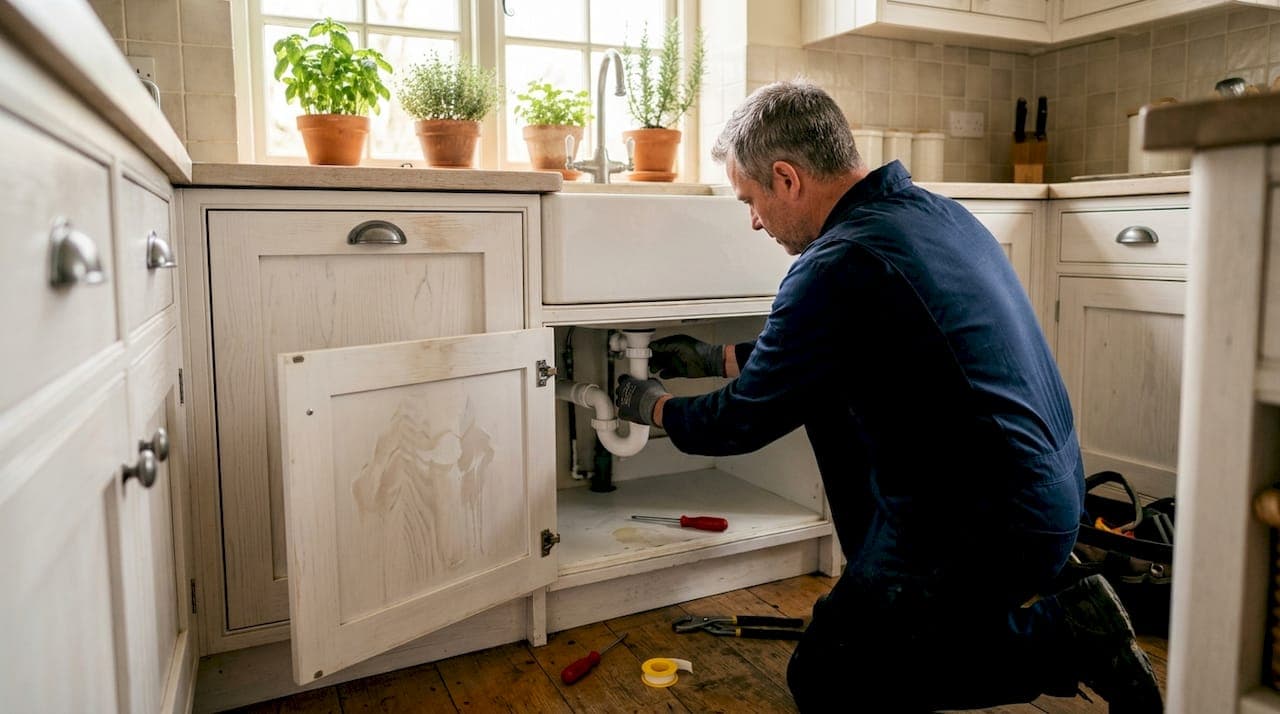
A sewer smell in your house almost always traces back to one of four problems: a dried-out P-trap, a blocked or damaged vent pipe, a cracked drain pipe, or a failed toilet wax seal. Each one lets sewer gas, a mixture of hydrogen sulphide, methane, and ammonia, escape into your living space instead of venting safely through the roof. The good news is that most cases are fixable in under an hour without specialist tools.
Here is what to check first:
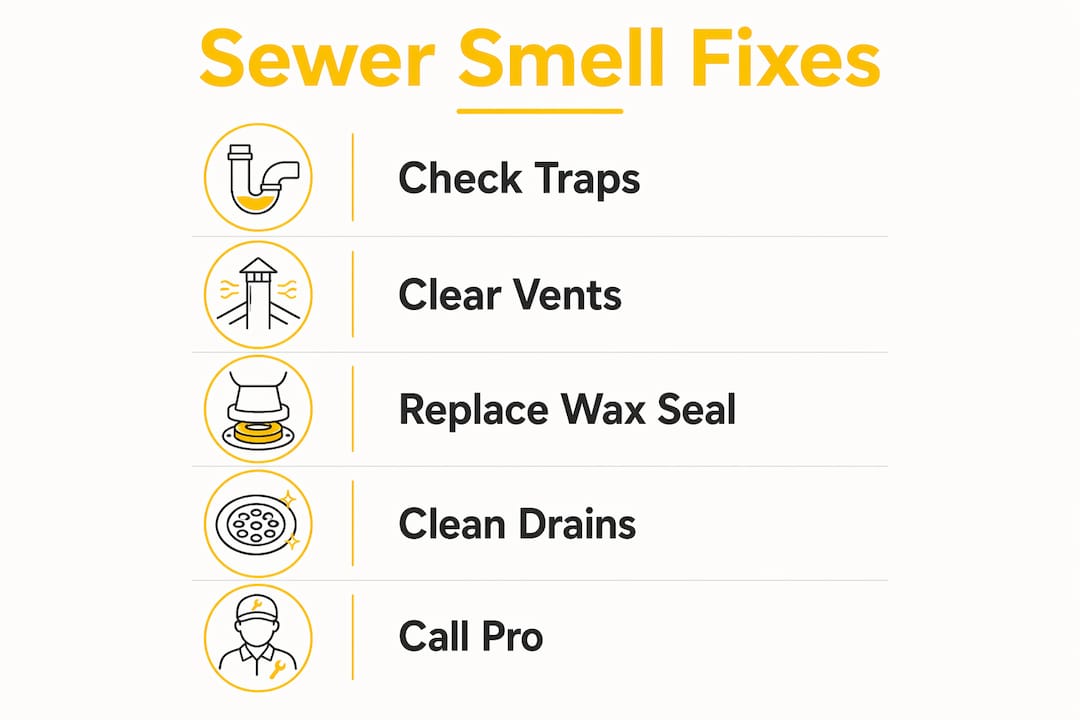
- Dry P-trap: Run water for a short time in any sink, shower, or bath you rarely use. If the smell clears, that was it.
- Blocked vent pipe: Listen for gurgling from multiple drains when you flush. Gurgling across several fixtures points to a vent blockage rather than a single clogged drain.
- Failed toilet wax seal: Kneel beside the toilet base and sniff. A smell strongest there, especially after flushing, suggests the wax ring has failed.
- Cracked drain pipe: A persistent odour that does not respond to any of the above, particularly one that worsens after rain, often means a cracked pipe under the floor or inside a wall.
What causes sewer smells in UK homes?
Dry P-traps are the most common cause of sewer odours inside homes, particularly in guest bathrooms, downstairs cloakrooms, or any drain that sits unused for weeks. The P-trap is the U-shaped pipe beneath every sink and shower that holds a small reservoir of water. That water is the only barrier between your home and the sewer system below. When it evaporates, sewer gas travels straight up through the drain opening.
Blocked or damaged vent pipes create a different problem. Every drain in your home connects to a soil and vent pipe that exits through the roof, carrying sewer gas safely away. When that pipe gets blocked by leaves, a bird's nest, or debris, the gas has nowhere to go and gets pushed back down through your drains. You will usually notice gurgling sounds from multiple fixtures at once, not just one.
Biofilm is a less obvious culprit. It is a sticky layer of bacteria, grease, soap residue, and organic matter that clings to pipe walls several inches below the drain opening, well beyond where any surface cleaner reaches. A sewage smell in the kitchen that returns days after cleaning is often biofilm, not a blocked drain.
A broken or aged wax ring at the toilet base allows sewer gas to leak around the seal with every flush. Signs include a faint smell near the toilet base, water staining on the floor around it, or a toilet that rocks slightly when you sit on it. Cracked drain pipes, particularly older cast-iron or clay pipes, can also release gas into wall cavities or under floors, producing a smell that seems to come from everywhere rather than one fixture.
How do you find the source of a sewer smell at home?
Work through these steps in order. Most homeowners find the answer by step three.
-
Localise the smell. Walk through each room and sniff near every drain, toilet base, and floor drain. A smell strongest at one fixture points to a fixture-level fix. A smell that is equally strong throughout the house, or that rises from lower-level drains, suggests a vent or main-line problem.
-
Run water in every unused drain. Spend 30–60 seconds running water in every sink, shower, and bath, then flush every toilet. Pour a jug of water into any floor drain in the utility room or basement. If the smell fades over the next hour, a dry P-trap was the cause.
-
Check for gurgling. Flush the toilet and listen. If the nearby bath or basin gurgles, or if drains throughout the house make noise when one fixture runs, that is a diagnostic indicator of a vent or main-line issue rather than a simple localised clog.
-
Inspect the toilet base. Gently rock the toilet. Any movement, water staining around the base, or a smell that peaks immediately after flushing all point to a failed wax ring.
-
Note when the smell is worst. Smell patterns that peak after flushing or change with wind direction indicate vent stack or pipe failure rather than a dirty drain. A smell that worsens after heavy rain often means a cracked pipe or main-line backup.
-
Check the sewer cleanout cap. The main drain line usually has a cleanout port in the basement or utility area. If the cap is loose, cracked, or missing, the entire sewer line is open to the house.
DIY fixes to remove sewer smells safely
Most drains smell in the bathroom or kitchen respond to one of these approaches before you need to call anyone.
- Refill dry P-traps. Run water in every infrequently used drain. For fixtures you know will sit unused for months, pour a tablespoon of mineral oil on top of the water after refilling. The oil floats on the surface and slows evaporation considerably.
- Clean drain stoppers and remove biofilm. Pull out the pop-up stopper in bathroom sinks and clear the hair and residue that collects around it. Pour half a cup of bicarbonate of soda followed by half a cup of white vinegar down the drain, leave it for 30 minutes, then flush with hot water. This loosens surface biofilm, though it will not reach deeper buildup.
- Use a drain snake or zip tool. For partial clogs holding decomposing material, a barbed plastic drain strip pulls out hair and debris from the first few inches of pipe far more effectively than any liquid cleaner.
- Seal or replace the toilet wax ring. If the toilet rocks or the smell is strongest at its base, the wax ring needs replacing. This is a manageable DIY job for a confident homeowner, but getting the right size ring matters.
- Avoid harsh chemical cleaners. Chemical drain cleaners often mask symptoms rather than remove the source, and repeated use can deteriorate older pipework. They do nothing for an open trap or a failed seal.
- Vent pipe clearing. If gurgling from multiple fixtures confirms a vent blockage, clearing it requires roof access. This is one job where professional help is the safer call.
Pro Tip: If the drains smell in your bathroom despite regular use, a dry trap is unlikely to be the cause. A P-trap that dries out in a fixture you use daily almost always means the vent pipe is creating negative pressure and siphoning the trap water away, not simple evaporation.
Keeping exterior drainage clear also helps. Blocked gutters can contribute to ground saturation near the foundation, which puts pressure on drain joints. Clean gutters support home drainage by directing rainwater away from the building properly.

When should you call a professional plumber?
Some sewer odour problems are beyond DIY, and recognising them early saves money and protects your health.
- Multiple fixtures are affected. Slow drainage, gurgling, or odours across two or more fixtures at once point to a vent or main-line problem that no consumer tool will reach.
- Sewage backs up into a bath, shower, or floor drain. This is wastewater exposure and a main-line emergency.
- A dry trap keeps returning in a fixture you use every day. Persistent dry traps in commonly used fixtures indicate vent blockage or negative pressure siphoning the seal, not evaporation.
- The smell returns within a day of thorough cleaning. Recurring odour after proper mechanical cleaning suggests the cause is deeper in the line or in the vent system.
- You notice dizziness, nausea, or headaches alongside the smell. These symptoms alongside a persistent sewer odour warrant immediate ventilation and professional attention.
Persistent smells from multiple fixtures or recurring odours despite cleaning point to main sewer line problems that require a professional CCTV drain survey to diagnose correctly. A camera inspection identifies cracked pipes, root intrusion, and partial blockages that no surface test can detect.
Is it safe to stay in a house that smells of sewage?
At the low concentrations typical of a dried trap or a small wax-ring failure, sewer gas is unpleasant but not immediately dangerous in a ventilated space. The concern rises with concentration and duration. Exposure to sewer gas, including hydrogen sulphide and methane, can cause headaches and nausea, and strong smells should not be left unaddressed.
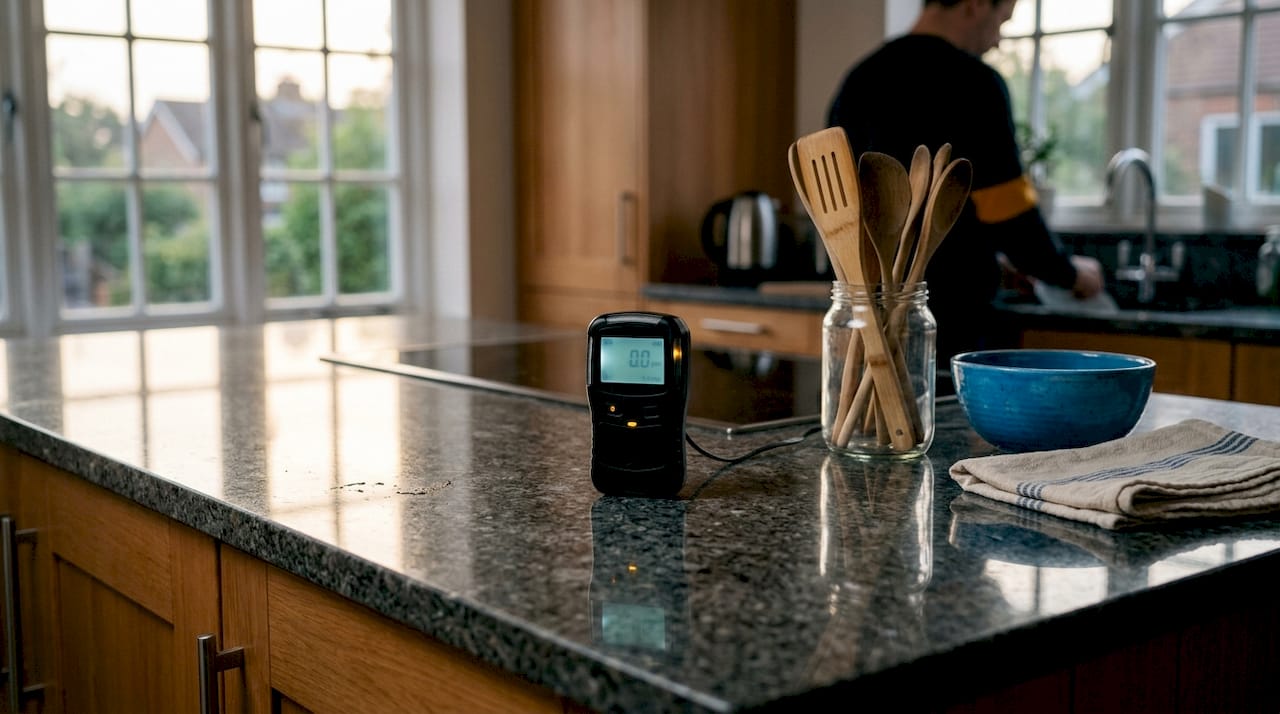
Sewer gas is also flammable at high concentrations, and a major sewer line break in an enclosed space requires immediate evacuation. Never use an open flame near a strong sewer gas smell. If the odour is widespread, multiple household members feel unwell, or ventilation does not reduce the smell, leave the property and call for professional help.
How to prevent sewer smells from coming back
A few simple habits stop most odours from returning.
- Run water in every infrequently used drain regularly, including floor drains in utility rooms and basement bathrooms.
- Clean drain stoppers monthly in bathrooms and kitchen sinks to prevent biofilm from establishing itself.
- Pour mineral oil into floor drains that have no regular water flow to slow trap evaporation.
- Arrange a professional drain jetting service every year or two for older properties, particularly those with cast-iron or clay pipework. High-pressure jetting removes deep grease and biofilm buildup that household cleaning cannot reach.
- Check roof vent pipes annually, especially after autumn, when leaves and debris are most likely to cause blockages.
- Have a CCTV drain inspection carried out if you are buying an older property in Cheshire. Root intrusion and cracked joints often show no symptoms until they cause a backup.
Health risks of prolonged exposure to sewer gases
Sewer gas is a mixture of hydrogen sulphide, methane, ammonia, and carbon dioxide. Hydrogen sulphide is responsible for the rotten-egg smell and is the component that poses the most direct health risk. At low concentrations it causes headaches, nausea, and eye irritation. At higher concentrations it dulls your sense of smell, which is particularly dangerous because you stop noticing the odour even as exposure continues.
Methane is odourless but flammable, and in an enclosed, poorly ventilated space it can accumulate to dangerous levels. Prolonged exposure to sewer gases at elevated concentrations has been linked to respiratory irritation and, in extreme cases, loss of consciousness. The practical takeaway is straightforward: a sewer smell that persists despite basic fixes, fills more than one room, or is accompanied by any physical symptoms requires prompt professional attention, not an air freshener.
Trusted local drainage specialists in Cheshire
When DIY fixes do not hold, or when the problem clearly involves the main line, you need a reliable local specialist who can respond quickly and give you a straight price.
Budgetrodz covers Ellesmere Port, Chester, Wirral, and the wider Cheshire area with a typical response time of 90 minutes. The team handles everything from blocked toilets and sinks to full CCTV drain surveys and high-pressure jetting, all at fixed prices with no hidden fees. With a 5.0 rating from over 50 Google reviews, Budgetrodz has built a strong local reputation for arriving fast and resolving the problem on the first visit.

For urgent sewer odour issues anywhere in Cheshire, Budgetrodz offers 24/7 emergency drain unblocking with transparent, fixed-fee callouts. No waiting until Monday morning.
The Drain Unblocking Company serves Cheshire and Greater Manchester, specialising in drain clearing and relining with clear, honest pricing.
DHC Utilities offers drain jetting, CCTV surveys, and same-day call-outs across Cheshire, alongside water leak detection and pipe repairs.
Key takeaways
A sewer smell in your house almost always comes from a dry P-trap, a blocked vent pipe, a failed toilet wax seal, or a cracked drain, and fixing the right one quickly protects both your health and your pipework.
| Point | Details |
|---|---|
| Start with the P-trap | Run water for 30–60 seconds in unused drains; this resolves most single-fixture odours immediately. |
| Gurgling signals a bigger problem | Gurgling across multiple fixtures points to a vent or main-line issue, not a localised clog. |
| Biofilm needs mechanical removal | Surface cleaners do not reach biofilm deep in pipes; a drain snake or professional jetting is required. |
| Know when to stop DIY | Sewage backing up, multiple affected fixtures, or returning dry traps in used fixtures all need a plumber. |
| Budgetrodz for Cheshire emergencies | Budgetrodz offers 90-minute response, fixed pricing, and CCTV surveys across Ellesmere Port, Chester, and Wirral. |