Sewage appearing in your shower almost always means one thing: a main sewer line blockage. Stop using every tap, toilet, and appliance in the house immediately. Raw sewage carries harmful bacteria, viruses, and parasites that pose a genuine health risk, and the longer water keeps flowing, the more contaminated material backs up into your home. Professional clearance using a CCTV drain survey and high-pressure jetting is almost always required. This is not a job for a plunger.
Table of Contents
- What to do in the first 30 minutes when sewage appears
- How to tell whether it is a main sewer blockage or a local shower problem
- Safe DIY steps that will not make things worse
- When to call a drainage specialist and what they will do
- Typical UK costs and how long repairs take
- How to clean up safely after a sewage backup
- Why a local emergency drainage specialist makes the difference
- Key takeaways
- The thing most homeowners get wrong
- Budgetrodz: emergency drainage when you need it fast
- Useful sources and next steps
What to do in the first 30 minutes when sewage appears
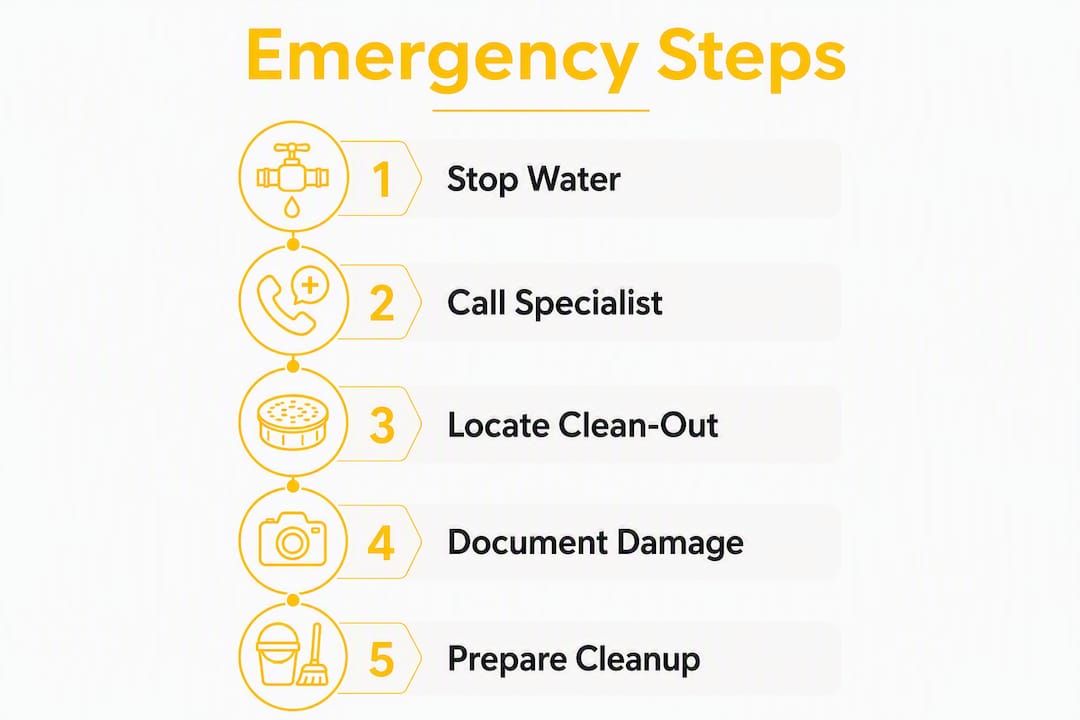
Speed matters here, but panicking makes things worse. Work through this in order.
Stop all water use immediately. Tell every person in the house: no flushing, no running taps, no dishwasher, no washing machine. Every litre of water you send into the system adds pressure behind the blockage and pushes more sewage up through the lowest outlet, which is usually your shower.
Contain the area.
- Close the bathroom door and keep children and pets out.
- Lay old towels or absorbent cloths at the threshold to stop contaminated water spreading to carpets or adjoining rooms.
- Do not walk through the affected area without rubber boots or waterproof footwear.
- If sewage is actively rising, turn off the mains water supply to reduce incoming flow.
Protect yourself before touching anything.
- Wear rubber gloves and, if available, eye protection and a face mask.
- Bag and seal any items that have come into contact with sewage for later assessment.
- Wash hands thoroughly with soap and warm water after any contact, even indirect.
Call an emergency drainage specialist. Do not wait to see whether it clears on its own. It will not.
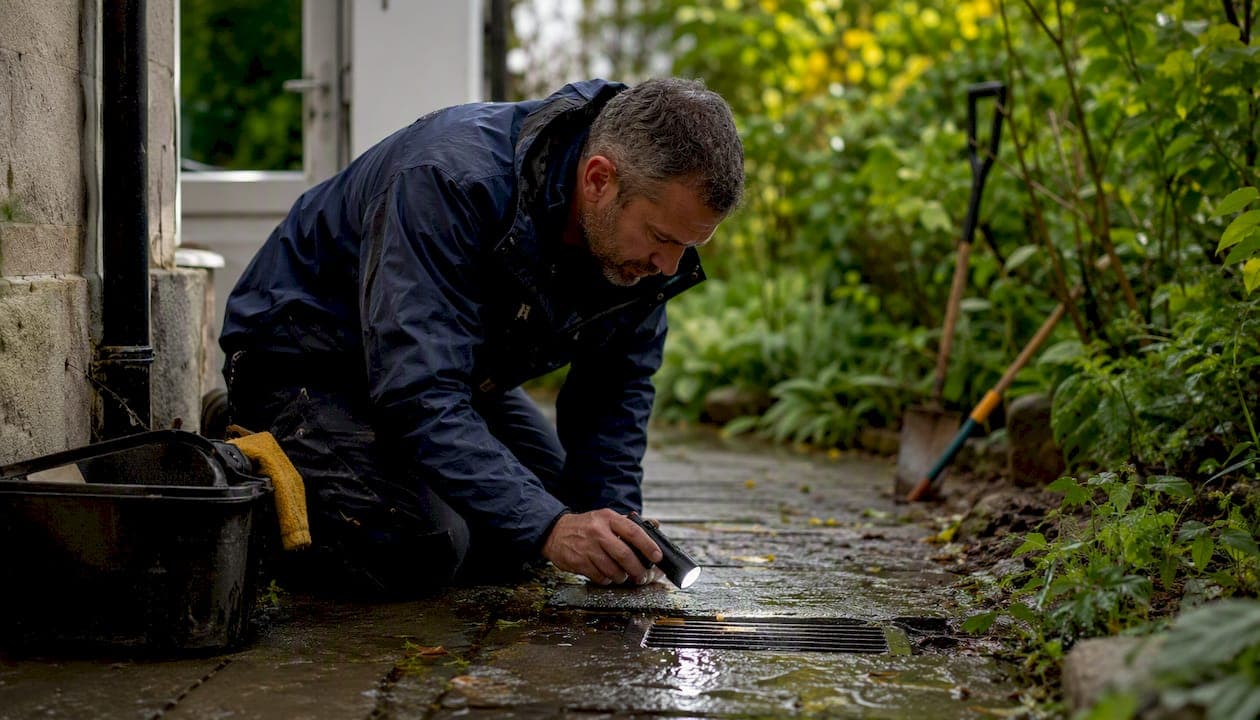
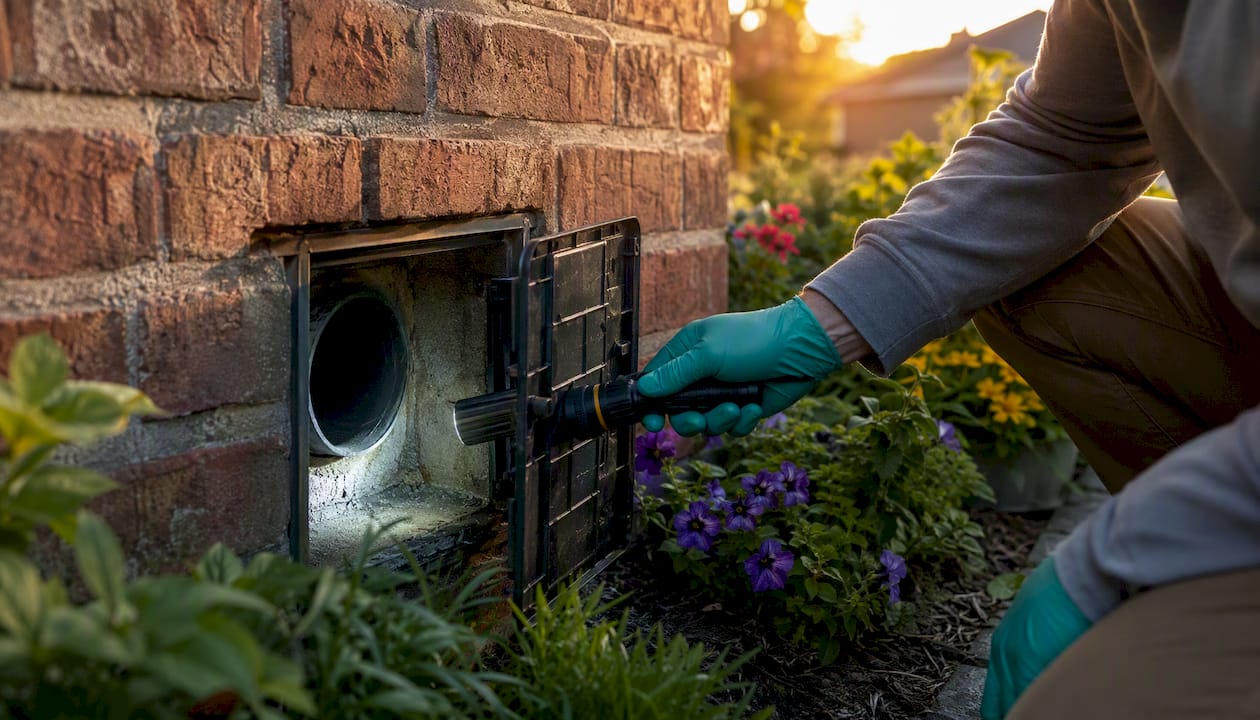
Pro Tip: If you can see an external clean-out access point or inspection chamber in your garden, note its location before the engineer arrives. It gives them an immediate entry point for rodding or jetting and can cut job time significantly.
How to tell whether it is a main sewer blockage or a local shower problem
The distinction matters because the two problems have very different solutions. A local blockage in the shower trap or waste pipe is often a straightforward fix. A main sewer blockage is a system-wide emergency.
A shower drain is typically the lowest drainage point in a property, so when the main line is blocked, wastewater takes the path of least resistance and escapes there first. That is why sewage in the shower is so often the first visible sign of a much larger problem.
The clearest diagnostic test: flush a toilet or run a tap and watch whether the shower drain rises or overflows. If it does, the blockage is in a shared drain or the main sewer line, not in the shower itself. Do not run this test if sewage is already visible, as it will make things worse.
| Symptom | Likely cause |
|---|---|
| Multiple fixtures affected (toilet, sink, shower) | Main sewer line blockage |
| Sewage rises after flushing elsewhere in the house | Main sewer line blockage |
| Gurgling from other drains or toilets | Main sewer line or vent blockage |
| Strong sewer odour throughout the property | Main sewer line blockage |
| Slow drainage in shower only, no other symptoms | Local shower trap or waste pipe clog |
| Visible hair or soap residue at the grate | Local shower trap blockage |
| No gurgling, no smell from other fixtures | Local shower trap blockage |
Gurgling noises from sinks or toilets are often an early warning sign that a blockage is developing. Treat persistent gurgling as a prompt to stop water use and call a professional before the situation escalates to a full backup.
For more on identifying sewer smells and their causes, the Budgetrodz blog covers the diagnostic steps in detail.
Safe DIY steps that will not make things worse
Be honest with yourself here. If multiple fixtures are affected, or if sewage is actively rising, there is nothing useful a non-expert can do to fix the underlying problem. What you can do is limit the damage and keep your household safe.
If symptoms point to a local shower clog only:
- Put on rubber gloves before touching anything near the drain.
- Remove the shower grate and pull out any visible hair, soap, or debris by hand. Bag it immediately.
- If a handheld drain snake designed for shower wastes is available, use it carefully to clear the immediate trap. Do not force it.
- Pour a kettle of hot (not boiling) water slowly down the drain to shift soap residue.
- Replace the grate and run a small amount of water to check whether drainage has improved.
What you must not do, regardless of the situation:
- Do not plunge a drain when you suspect a main sewer blockage. Plunging and chemical drain cleaners are ineffective against main-line blockages and can push sewage further into the property or damage ageing pipe joints.
- Do not pour bleach, caustic soda, or commercial drain unblockers into a contaminated drain. They will not reach the blockage and create additional hazards.
- Do not open manhole covers unless you are a trained professional. Sewer gases are toxic and confined spaces require specialist equipment.
- Do not hose down contaminated areas outside, as this spreads pathogens into soil and neighbouring ground.
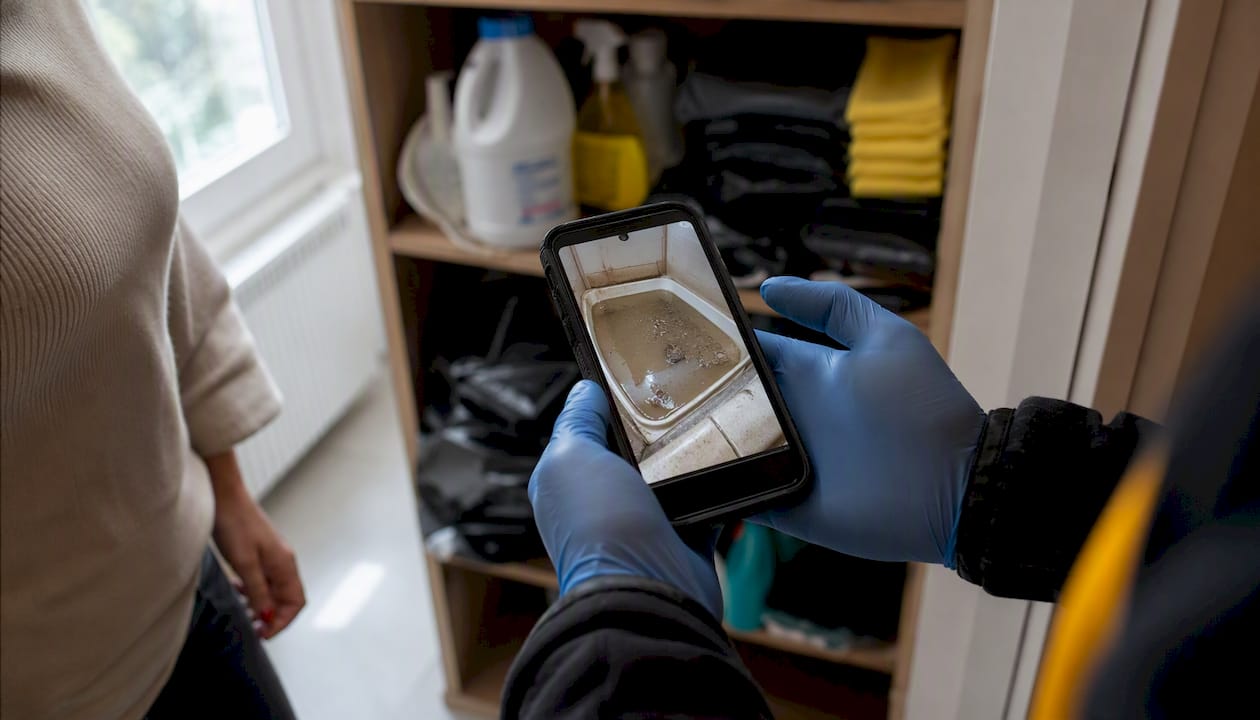
Pro Tip: Photograph the affected area before touching anything. A timestamped photo of the sewage level, the fixtures affected, and any visible damage is exactly what your insurer and the arriving engineer will want to see. It also helps you avoid accidentally spreading contamination while moving around the bathroom.
When to call a drainage specialist and what they will do
Call an emergency drainage specialist immediately if:
- Sewage is visible in the shower or any other fixture.
- More than one fixture is draining slowly or backing up.
- You can hear gurgling from toilets or sinks.
- There are vulnerable people in the household, including young children, elderly residents, or anyone with a compromised immune system.
- You can smell sewer gas inside the property.
When the specialist arrives, they will assess the clean-out access points first, then run a CCTV drain survey to identify the exact location and cause of the blockage. Common causes include tree root ingress, accumulated grease, non-flushable items such as wet wipes, and collapsed or offset pipework. In older UK properties, clay pipes are particularly vulnerable to root intrusion and ground movement.
Once the cause is confirmed, the engineer will typically use one or more of the following:
- High-pressure water jetting: A powerful jet of water that breaks up and flushes blockages, including grease and compacted debris. Effective for most main-line blockages.
- Mechanical rodding (electric eel): A flexible rotating rod used to cut through or dislodge solid obstructions where jetting alone is insufficient.
- Root cutting: Specialist cutting heads attached to jetting or rodding equipment, used when tree roots have penetrated the pipe.
- Drain relining: Where a pipe is cracked or partially collapsed, a resin liner is inserted and cured in place, restoring structural integrity without excavation.
- Excavation and replacement: Reserved for severely collapsed pipes where relining is not viable.
When you call, ask the specialist: what is the typical response time to your postcode? Is pricing fixed or based on time and materials? Will you receive CCTV footage and a written report after the job? A reputable company will answer all three clearly.
After clearance, keep the CCTV footage and written job report. These are the documents your insurer will ask for, and they inform any follow-up repair decisions such as relining versus full pipe replacement.
Typical UK costs and how long repairs take
Costs vary considerably depending on location, the severity of the blockage, and what the CCTV survey reveals. The table below gives a general sense of what to expect; always get a written quote before work begins.
| Service | Typical timeframe | Cost factors |
|---|---|---|
| Emergency call-out and clearance | 1–4 hours on site | Complexity, time of day, access |
| CCTV drain survey | 1–2 hours | Pipe length, number of access points |
| High-pressure jetting | 30–90 minutes | Blockage severity, pipe condition |
| Root cutting | 1–3 hours | Root extent, pipe diameter |
| Drain relining | Half to full day | Pipe length, liner specification |
| Excavation and pipe replacement | Multiple days | Depth, ground conditions, reinstatement |
Factors that push costs higher include root intrusion requiring specialist cutting heads, collapsed pipes that cannot be relined, after-hours or weekend call-outs, and limited access to clean-out points. A job that looks like a simple clearance can become a relining project once the CCTV footage is reviewed.
United Utilities aims to inspect sewage flooding inside a property within two hours of a report and operates a refund scheme for sewerage charges following qualifying incidents. If your sewage backup originates from a public sewer rather than your private drain, contact your water company as well as a private drainage specialist.
The typical sequence from call to resolution: call placed, engineer dispatched (often within 90 minutes for local specialists), initial assessment and clean-out access, jetting or rodding to clear the blockage, CCTV survey to confirm clearance and identify any structural damage, written report issued, follow-up repair quoted if needed.
How to clean up safely after a sewage backup
Sewage contains bacteria, viruses, fungi, and parasites that can cause serious illness. Do not begin cleaning until the drainage has been professionally cleared and the source of the backup is confirmed as resolved.
Before you start:
- Wear rubber gloves, waterproof boots, eye protection, and a face mask as a minimum.
- Open windows to ventilate the space.
- Keep anyone not involved in the clean-up out of the area.
Cleaning non-porous surfaces (tiles, sealed concrete, plastic fittings):
- Remove standing water using a mop, wet vacuum, or absorbent cloths. Bag all waste immediately.
- Scrub surfaces with hot water and an appropriate disinfectant. Bleach-based solutions are effective on non-porous materials.
- Rinse thoroughly and allow to dry completely before using the space.
Porous materials (bath mats, towels, timber bath panels, grout):
- Soft furnishings and fabrics that have been in contact with sewage should be bagged and either laundered at the highest safe temperature or disposed of.
- Heavily contaminated grout or timber may require specialist treatment or replacement.
Outside contamination: UK industry guidance advises against using harsh disinfectants on gardens after outdoor sewage contamination. Natural drying and sunlight are often safer and more effective. Your water company may advise a quarantine period for affected ground. Do not hose contaminated soil into drains or neighbouring land.
Pro Tip: Keep every receipt from cleaning materials, disposal bags, and any items you replace. Combined with your timestamped photos and the engineer's report, this forms the evidence pack your insurer needs to process a claim.
When contamination has spread to carpets, underfloor areas, or significant areas of timber, bring in a specialist remediation company rather than attempting the clean-up yourself. The health risk is not worth the saving.
Why a local emergency drainage specialist makes the difference
When sewage is rising in your shower, the two things that matter most are speed and accuracy. A fast response stops more sewage entering the property; an accurate diagnosis stops the same problem recurring in three months.
Budgetrodz covers Ellesmere Port, Wirral, Chester, Liverpool, Wrexham, and surrounding areas with a typical response time of 90 minutes. The team carries high-pressure jetting equipment and CCTV camera systems on every emergency call-out, so the blockage can be cleared and surveyed in a single visit where conditions allow.
Transparent pricing means you know the cost before the engineer starts, not after. A written job report and CCTV footage are provided where a survey is carried out, giving you a clear record for insurance or future repair decisions. Budgetrodz holds a 5.0 rating from over 50 Google reviews, with customers consistently noting the speed of response and clarity of communication.
For background on external blockages and how they connect to internal backups, the Budgetrodz guide to blocked outside drains covers the full picture.
Key takeaways
Sewage in the shower almost always signals a main sewer line blockage: stop all water use immediately, contain the area, and call an emergency drainage specialist before attempting any repair yourself.
| Point | Details |
|---|---|
| Stop water use first | Turn off taps, do not flush, and warn the household before doing anything else. |
| Diagnose before acting | Multiple fixtures affected or gurgling elsewhere means a main sewer blockage, not a local clog. |
| Avoid plunging and chemicals | These make main-line blockages worse and can damage ageing pipe joints. |
| PPE before clean-up | Gloves, eye protection, and a face mask are the minimum before touching any contaminated surface. |
| Budgetrodz for emergencies | Budgetrodz covers Ellesmere Port, Wirral, and Chester with a typical 90-minute response, fixed pricing, and CCTV surveys. |
The thing most homeowners get wrong
The most common mistake I see on emergency call-outs is the gap between the first sign of a problem and the call for help. A homeowner notices a slow shower drain on Monday, tries a bottle of chemical unblocker, and calls us on Thursday when sewage is coming up through the floor. By that point, what might have been a straightforward jetting job has become a contamination clean-up and a structural survey.
Wet wipes are the single most frequent culprit in this area. They do not break down in the pipe the way the packaging implies, and they accumulate over months until the line is effectively sealed. Tree root ingress is the second most common cause in older properties, particularly where clay pipes run beneath established gardens. Neither of these responds to anything a homeowner can safely do themselves.
The other thing worth saying: a CCTV survey after clearance is not an upsell. It is the only way to know whether the pipe wall is intact or whether you are six months from the same emergency. The footage takes twenty minutes to capture and can save you thousands in repeat call-outs or a missed structural defect.
Budgetrodz: emergency drainage when you need it fast
Sewage in your shower is not something to manage over a few days. You need the drain cleared, the cause identified, and the property made safe, ideally within the same visit.
Budgetrodz provides 24/7 emergency drain unblocking across Ellesmere Port, Wirral, Chester, Liverpool, Wrexham, and North Wales, with a typical response time of 90 minutes. Every emergency call-out includes an initial assessment and high-pressure jetting where needed. CCTV surveys are available on the same visit, giving you footage and a written report to keep for insurance or future reference. Pricing is fixed before work starts, with no hidden fees.
When you call, have your address, a brief description of the symptoms, and any photos ready. That information lets the team dispatch the right equipment immediately and cuts time on site.
To book an emergency call-out or get a quote for a CCTV drain survey, contact Budgetrodz now.
Useful sources and next steps
If sewage has backed up into your home or garden, these UK resources are worth consulting alongside professional drainage advice.
- United Utilities: sewage flooding in your home or garden — report flooding from a public sewer, understand inspection timescales, and check whether you qualify for a sewerage charge refund.
- WRc Group: sewage flooding guidance — industry-level guidance on outdoor contamination, including advice on garden quarantine periods and safe clean-up practice.
- St Lawrence County: sewage clean-up procedures — detailed PPE and disinfection guidance for sewage-contaminated surfaces and items.
Practical next steps:
- Call an emergency drainage specialist before using any water in the property.
- Photograph the affected area and keep all timestamped images.
- Keep every receipt for cleaning materials, replacement items, and professional services.
- Request a written job report and CCTV footage from your drainage contractor.
- If contamination has spread to porous materials, contact a specialist remediation company.
- Report any flooding that originates from a public sewer to your water company (United Utilities covers the North West).
- Consider a follow-up CCTV drain survey after clearance to assess pipe condition and avoid a repeat incident.
This article provides general guidance only and is not a substitute for advice from a qualified drainage professional or your water company. Always confirm current reporting procedures and eligibility criteria directly with the relevant authority.