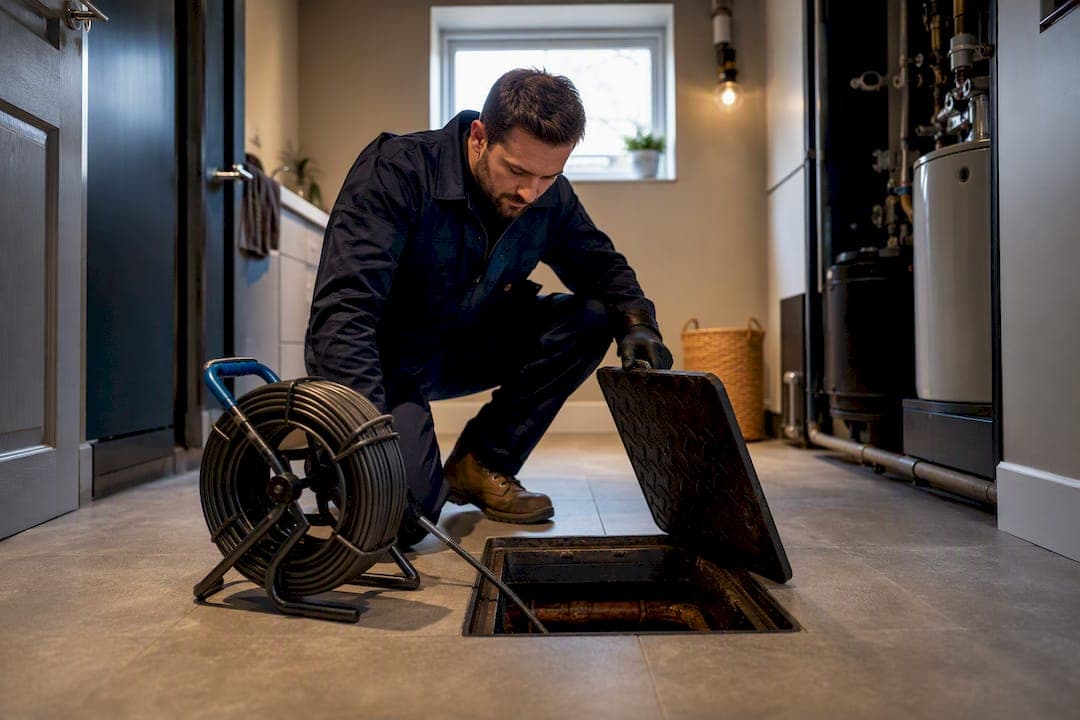
Kitchen drains need attention every 1 to 2 months, bathroom sinks and showers every 1 to 3 months, and your main sewer line benefits from a professional check about once every year or two. Outside drains should get a look at least twice a year, especially in spring and autumn. Heavy cooking, an older property, or nearby trees push all of these towards the shorter end. If you're dealing with sewage backup or clogs that keep coming back, skip the schedule and call a professional straight away.
TL;DR:
- Kitchen drains require cleaning every 1 to 2 months, especially with frequent cooking or oily waste, while bathroom drains should be maintained every 1 to 3 months.
- Outside drains and main sewer lines need inspections or professional cleaning every 12 to 24 months, with more frequent visits if there are older pipes or nearby trees.
- Signs such as slow drainage, gurgling pipes, bad odors, or multiple fixture clogs indicate immediate cleaning is necessary beyond scheduled maintenance.
- DIY maintenance includes weekly hot water flushes and monthly baking soda and vinegar treatments, but professional service is essential for severe or persistent issues.
- Most household drain problems can be prevented with regular, proactive maintenance, avoiding costly emergency repairs and extensive pipe damage.
Table of Contents
- Recommended drain cleaning frequency by type
- What changes how often you need to clean drains
- A simple DIY drain maintenance routine that actually works
- How often should you book a professional drain service?
- Signs your drains need cleaning right now
- A copyable maintenance checklist for homes and rental properties
- Why most homeowners get drain maintenance wrong
- How Budgetrodz keeps your drains clear without the guesswork
- Sources
Recommended drain cleaning frequency by type
Not every drain in your house works at the same pace, and treating them all the same is where most maintenance schedules fall apart. A kitchen sink sees grease, food particles, and starch several times a day. A bathroom drain deals mainly with hair and soap scum, which builds up slower but just as stubbornly. Match the schedule to what's actually going down each one.
- Kitchen drains: clean every 1 to 2 months, or monthly if you cook most nights. Fat and food debris build up fast and narrow the pipe from the inside out.
- Bathroom sinks and showers: every 1 to 3 months. Hair and soap scum accumulate gradually, so you'll usually get a warning in the form of slower drainage before a full blockage.
- Toilets: no fixed cleaning interval, but inspect once a year and any time you notice repeated flushing issues. A toilet that needs plunging every fortnight has a deeper problem worth investigating.
- Main sewer line: professional cleaning or inspection every 12 to 24 months, depending on the age of your pipework and whether you've had trouble before.
- Outside and floor drains: check at least in spring and autumn, and again after any heavy storm. Leaves, silt, and garden debris collect fastest during those seasons.
If your outside drains back up regularly, our guide on clearing a blocked outside drain walks through the usual causes and fixes.
What changes how often you need to clean drains
The baseline schedule above assumes an average household. Plenty of homes aren't average, and several everyday factors can shrink those intervals considerably.
- Household size and cooking habits: more people means more water, more food waste, and more soap going down every drain, day after day.
- Garbage disposal use: grinding food waste regularly, especially fibrous scraps or fat, demands tighter cleaning cycles than a kitchen without one.
- Older or cast iron pipework: ageing pipes corrode internally, creating rough surfaces where debris catches instead of flushing through.
- Trees near the sewer line: roots seek out moisture and can infiltrate pipe joints, which is a slow but serious problem that needs periodic CCTV checks.
- Septic systems: these are far less forgiving of harsh chemicals and heavy solids, so more frequent, gentler maintenance pays off.
If two or more of these apply to your property, treat the shorter end of every interval as your default, not the exception.
A simple DIY drain maintenance routine that actually works
You don't need special equipment for most of this, just consistency. A basic weekly and monthly rhythm handles the bulk of what causes clogs before they start.
Weekly:
- Flush kitchen and bathroom drains with hot water after heavy use, particularly after cooking with any oil or fat.
- Clear hair, food scraps, and other debris from strainers and plugholes.
- Give shower and sink strainers a quick rinse so nothing sits and hardens overnight.
Monthly:
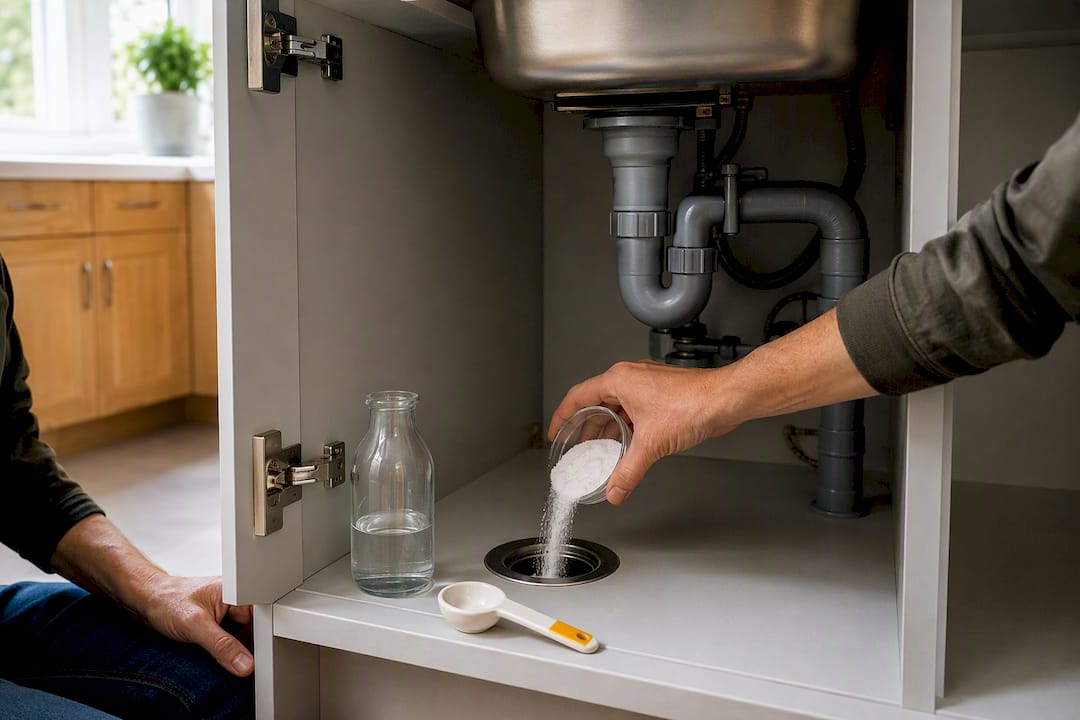
- Pour baking soda followed by vinegar down the drain, leave for 15 minutes, then flush with hot water, or use an enzyme cleaner instead.
- Remove and clean the U-bend and strainer where fitted, since this is where most hidden buildup collects.
- Run hot water through the garbage disposal for a minute to clear residue clinging to the blades.
Avoid pouring cooking fat down any sink, and go easy on shop-bought chemical drain cleaners. Plumbing professionals warn that frequent use of harsh chemicals can eat away at pipe linings and cause real damage to septic systems over time. Never force an unfamiliar tool down a drain either. A cheap drain snake handles most trap clogs safely; anything beyond that is a job for someone who knows the pipework.
Pro Tip: Keep a small tub of baking soda and a bottle of white vinegar under the sink specifically for this job. You'll actually do the monthly treatment if the ingredients are already there, rather than putting it off until the drain starts complaining.
How often should you book a professional drain service?
Most properties do well with professional drain cleaning or inspection once every 12 to 24 months. If your home falls into a higher risk category, older pipes, disposal use, nearby trees, shorten that to an annual visit.
A proper professional visit typically covers more than a quick flush:
- CCTV survey to locate cracks, root intrusion, or silt build-up you can't see from above ground.
- High-pressure jetting to clear grease, scale, and debris stuck to pipe walls that DIY treatments can't reach.
- Descaling, particularly in older properties where limescale narrows the pipe over years.
- Root cutting, where tree roots have worked their way into joints or cracks.
Call a professional immediately, not on the usual schedule, if you get sewage backing up, several fixtures blocking at once, or gurgling and bad smells that won't clear. Preventive servicing on a regular schedule almost always costs less than an emergency callout after a pipe finally gives up. Our CCTV drain survey and jetting services cover both the diagnostic and the clearing side in one visit.
Signs your drains need cleaning right now
Some signals mean don't wait for your next scheduled check.
- Water pooling or draining slowly in sinks, showers, or the bath.
- Gurgling noises from pipes or the toilet after you flush or run a tap.
- A persistent bad smell from a drain or an outside manhole.
- Several fixtures clogging around the same time, or sewage backing up anywhere in the property.
Any of these point to something further down the system than a strainer clean will fix. If your pipes are making noise after every flush, our guide to gurgling drains explains what's usually behind it.
A copyable maintenance checklist for homes and rental properties
Print this or paste it into a property maintenance log. It covers the full cycle from weekly habits to the annual professional visit.
- Weekly: clear strainers of hair and debris; flush kitchen and bathroom drains with hot water.
- Monthly: baking soda and vinegar or enzyme treatment; remove and clean the U-bend and stoppers.
- Every 12 to 24 months: professional CCTV survey and jetting on the main sewer line, sooner if you have older pipework or trees nearby.
- Landlords and property managers: log every clean and professional visit against the property file. It's useful evidence if a tenant reports a blockage later, and it flags patterns across a portfolio that a single spot check would miss. Our preventative drain cleaning guide has a fuller version of this log for multi-property use.
Why most homeowners get drain maintenance wrong
Most drain advice online treats cleaning as reactive, something you do once things go wrong. That's backwards. The households and landlords who never end up with an emergency callout are the ones who treat the monthly baking soda routine as fixed as bin day, not an optional extra squeezed in when they remember.
Fixing a blockage that's already formed costs far more, in time and money, than the maintenance that would have prevented it. Our typical response time on genuine emergencies runs around 90 minutes, and the use of high-pressure jetting and CCTV inspection on nearly every callout helps avoid guessing at what's blocked in a pipe. Choose professional help over more DIY the moment a clog returns after you've already cleared it once. That pattern means the problem sits further down the line than a strainer or a bottle of vinegar can reach.
— Christopher
How Budgetrodz keeps your drains clear without the guesswork
This company provides emergency drain unblocking, high-pressure jetting, and CCTV surveys across Ellesmere Port, Wirral, Chester, and the surrounding areas, with fixed pricing agreed upfront and no hidden extras added once the van arrives.

Most callouts get a technician on site within around 90 minutes, whether it's a blocked toilet at night or a main line that's started backing up on a weekend. If you'd rather not wait for a problem to escalate, book a scheduled CCTV survey and jetting visit through our drainage services page instead. For anything urgent right now, head straight to our emergency drain unblocking page and get a fixed-price technician on the way.
Sources
- How often should you clean drains?
- Trusted guide to how often you should schedule professional drain cleaning
- Why you should avoid drain unblockers in the UK