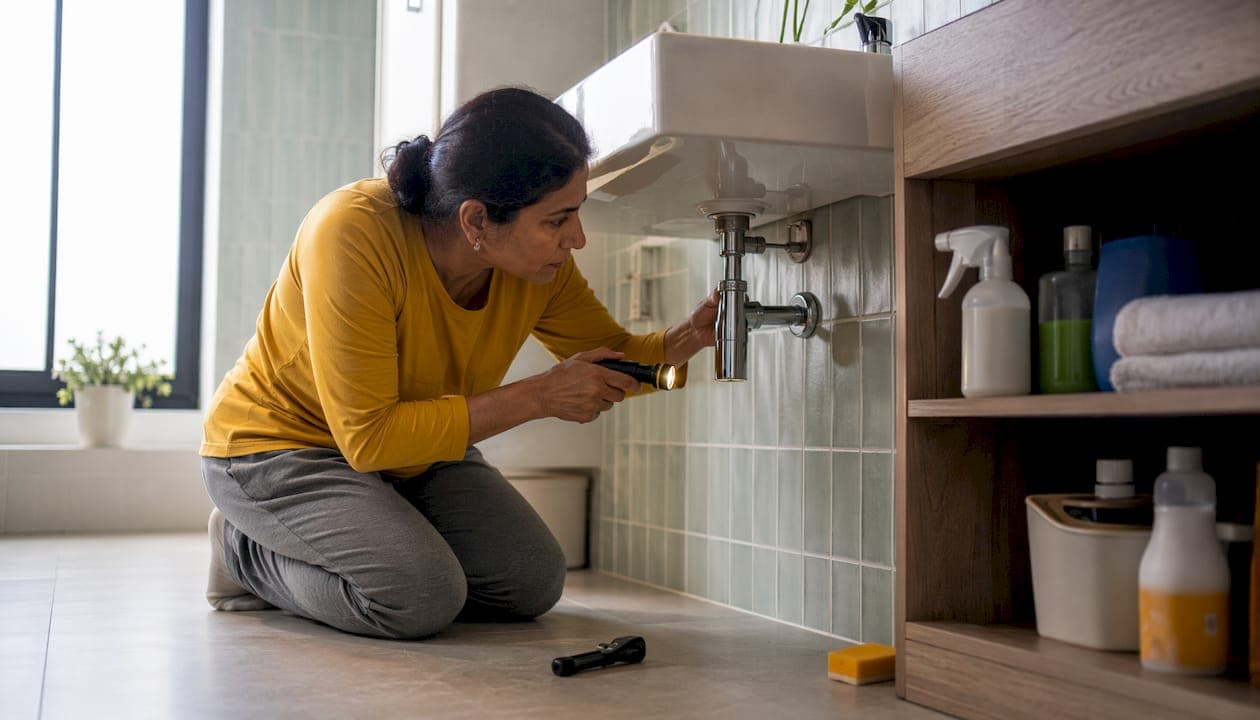
A gurgling drain usually means air is being pulled through a water-filled P-trap because the drainage system cannot ventilate properly. The three most common culprits are a blocked vent stack, a partial blockage in the drain line, or backpressure from a shared sewer. Before you reach for any chemicals, run a quick cross-fixture test to find out whether the problem is local to one sink or affecting the whole house. If you smell sewage or see slow drains everywhere, stop using water and call a professional straight away. Budgetrodz typically reaches Cheshire properties promptly for emergency callouts.
**Quick stat: Professional vent clearing from the roof typically costs between £150 and £250 depending on access and complexity — far less than the water damage a sewage backup can cause.
Table of Contents
- What do gurgling drains actually tell you?
- Five-minute checks to narrow down the problem
- Most likely causes of a gurgling drain
- Who is responsible for the drain — you or the council?
- Safe DIY fixes to try before calling a plumber
- What not to use on a gurgling drain
- When should you call a drainage professional?
- How drainage professionals diagnose and fix the problem
- How Budgetrodz handles gurgling drains across Cheshire
- Key takeaways
- What homeowners commonly get wrong about gurgling drains
- Need help now? Budgetrodz is ready across Cheshire
- Useful sources and contacts
What do gurgling drains actually tell you?
Gurgling is your plumbing struggling to breathe. Every drain connects to a drain-waste-vent (DWV) system: wastewater leaves through the drain line while air enters through vent pipes that rise through the roof. When that airflow is disrupted, negative pressure builds up and pulls air through the nearest water-filled trap, producing the characteristic glug-glug sound. The trap water is what keeps sewer gases out of your home, so a gurgling drain is also a warning that the seal may be weakening.
The noise itself is not dangerous, but what causes it can be. A blocked vent or sewer line can allow methane and hydrogen sulphide to enter the property if the trap seal fails completely.
Five-minute checks to narrow down the problem
Run these before touching anything else.
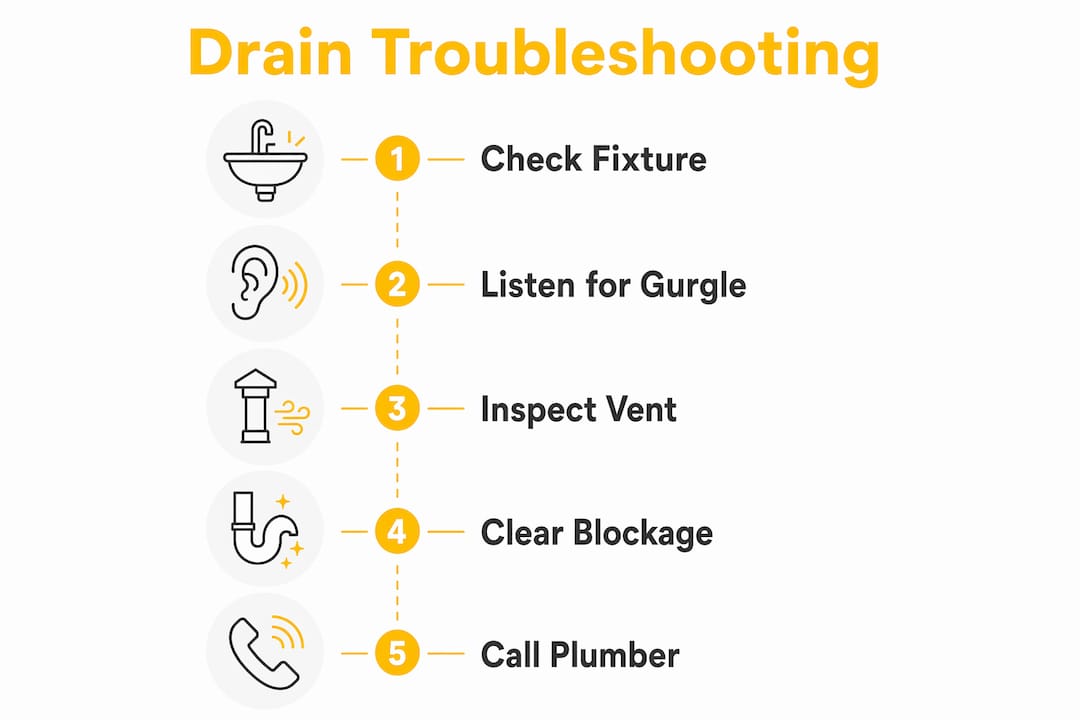
- Cross-fixture test: Fill a sink to the brim, then release the plug. Watch and listen to nearby fixtures — a gurgling toilet or shower drain during this test points to a shared drain line or vent blockage rather than a single-fixture clog.
- Flush test: Flush a toilet and note whether the gurgling sink responds. If it does, the two fixtures share a drain run that is partially obstructed.
- Washing machine drain test: Run a spin cycle and watch the kitchen sink. Gurgling during the machine's fast pump-out suggests a shared vent or undersized pipe connection.
- Trap inspection: Look under the sink. Check the P-trap for low water level, visible cracks, or an old S-trap configuration (S-traps are prone to siphoning and are no longer permitted in new UK installations).
- Smell check: Sewer gas smell with the gurgling is a red flag. Stop using water and call a drainage professional.
Pro Tip: If gurgling only happens at one fixture and stops after a few seconds, the blockage is almost certainly local to that drain. If multiple fixtures respond, the problem is further down the system.
Most likely causes of a gurgling drain
Blocked or restricted vent stack
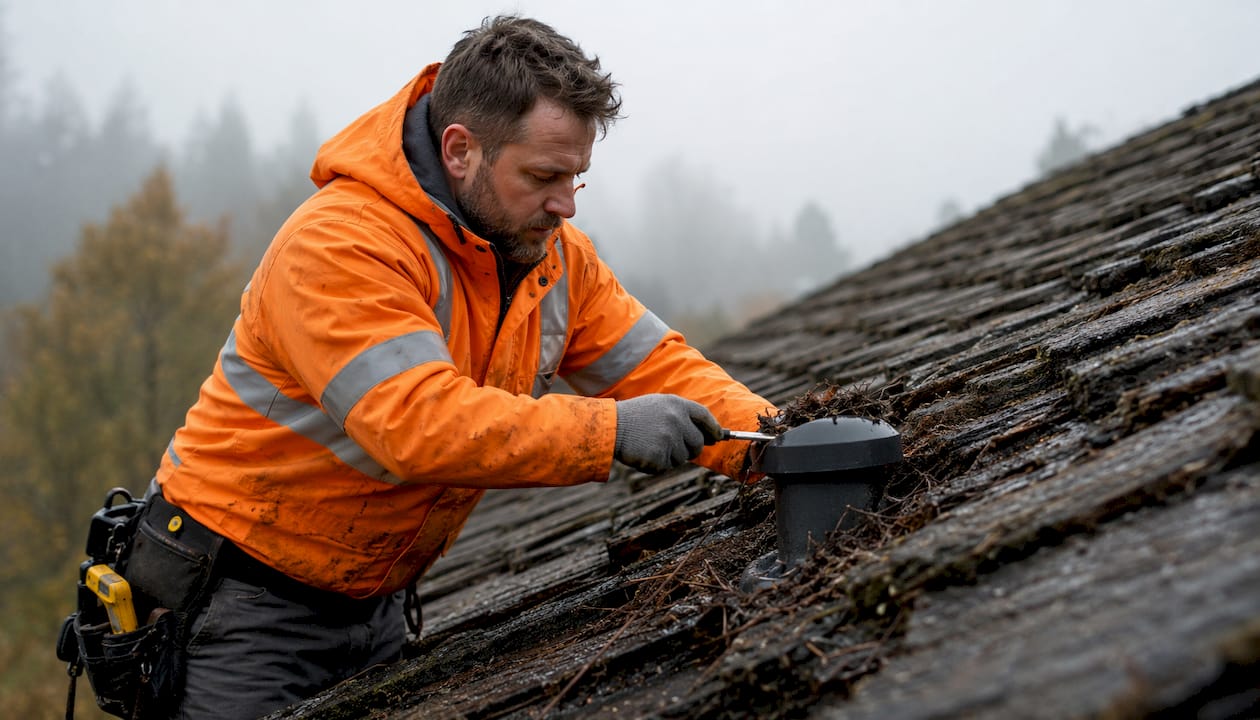
Leaves, bird nests, or frozen condensation can block the roof vent. When the vent is restricted, the drain system draws air through whichever trap is nearest, causing gurgling across multiple fixtures simultaneously. This is the cause most homeowners miss because it is invisible from inside the house.
Partial blockage in the drain line
Grease, hair, and soap scum accumulate over time and narrow the pipe bore. Water flowing past the restriction creates alternating pressure and vacuum, pulling air through the P-trap. A single-fixture gurgle with slow drainage almost always points here first.
Incorrect trap or missing air-admittance valve
S-traps self-siphon. Unvented drain runs and failed or missing air-admittance valves (AAVs) produce the same symptom. AAVs are a legitimate solution in some configurations, but they do not replace a blocked roof vent and are subject to local building regulations.
Septic system problems
If your property uses a septic tank, gurgling across multiple fixtures combined with soggy patches in the garden or an outdoor sewage smell suggests a full tank, blocked inlet, or failing drainfield. Pumping the tank and seeing a brief improvement is a strong indicator that the drainfield is the underlying issue, which requires a septic contractor rather than a standard plumber.
Who is responsible for the drain — you or the council?
Private pipework inside your property boundary is your responsibility: the fixtures, traps, and the lateral drain running from your house to the public sewer. Once the drain crosses the property boundary and connects to the public sewer, responsibility passes to your water and sewerage company. Highway gullies on the road outside are the responsibility of Cheshire West and Chester Council or the relevant local authority.
A practical test: if the gurgling resolves after the council clears a blocked highway gully, the problem was always public. If it persists, the fault is on your private lateral or inside the house.
When you call your water company, have your address ready, describe the symptoms clearly, and note whether neighbours are affected. Multiple properties reporting the same issue shifts the probability firmly toward a public sewer fault.
Safe DIY fixes to try before calling a plumber
- Plunge the affected fixture. Add an inch of water to the sink or basin, seat a cup plunger firmly over the drain, and plunge vigorously for 30–60 seconds. Repeat twice. If the water clears and the gurgling stops, the blockage was local and shallow.
- Remove and clean the P-trap. Place a bucket under the trap, unscrew the slip-joint nuts by hand, and clear any debris. Refit and run water to check the seal. Do not attempt this if the pipework looks corroded or cracked.
- Use a short hand auger (3–6 ft). Feed it into the drain tailpiece and rotate to break up or retrieve the obstruction. Stop if you feel significant resistance — forcing a powered snake without knowing the pipe layout risks damaging joints.
- Clear the roof vent (only if safe to do so). Soft debris usually washes down with a garden hose fed into the vent opening. Harder obstructions need a short auger. Never attempt roof access alone, in wet or windy conditions, or if you are not confident working at height.
Wear gloves and eye protection throughout. Stop immediately if you smell sewage at any point.
What not to use on a gurgling drain
- Baking soda and vinegar: The fizzing reaction is satisfying but ineffective for venting faults and does little against a solid blockage. It will not clear a blocked roof vent under any circumstances.
- Harsh chemical drain cleaners: These can damage older plastic and lead pipework, kill the beneficial bacteria in a septic tank, and offer no benefit at all when the root cause is a ventilation problem rather than a clog.
- Repeated powered snaking without knowing the layout: Pushing a long motorised snake blindly can displace a blockage further into the system or crack an ageing pipe joint.
- Installing an AAV as a permanent fix for a blocked vent: An AAV fitted over an uncleared vent blockage masks the symptom without solving it. Check current UK building regulations and clear the actual vent first.
When should you call a drainage professional?
Call immediately if you see any of these:
- Sewage smell inside the property alongside the gurgling
- Water backing up into the bath or shower when you flush the toilet
- Standing water or soggy patches in the garden near the drain run
- Gurgling across three or more fixtures at once
Same-day call if:
- DIY plunging and trap cleaning have not resolved the issue
- The gurgling returns within days of clearing
- Drains are slow throughout the house
Book an inspection within a few days if:
- A single fixture gurgles occasionally but drains freely
Typical UK cost guide
| Job | Ballpark cost | Typical timescale |
|---|---|---|
| Emergency drain unblocking (rodding/jetting) | — | Same day / within 90 min |
| Roof vent clearing | £150–£250 | Same day |
| CCTV drain survey | — | Booked appointment |
| Drain relining (per metre) | — | 1–2 days |
Costs are indicative and vary by access, location, and complexity. Ask for a fixed quote before work begins.
How drainage professionals diagnose and fix the problem
| Method | What it does | Best for |
|---|---|---|
| CCTV camera survey | Locates blockages, cracks, and root intrusion precisely | Recurring gurgles, pre-purchase checks, shared-drain disputes |
| High-pressure jetting | Blasts grease, scale, and debris from pipe walls | Partial blockages, grease-heavy kitchen drains |
| Mechanical rodding | Breaks up solid obstructions with rotating rods | Compacted blockages, tree root intrusion |
| Root cutting | Removes root ingress with a rotating cutter head | Older clay or pitch-fibre pipes with root penetration |
| Drain relining | Inserts a resin liner to seal cracks without excavation | Cracked or collapsed sections of private lateral |
| Smoke/trace testing | Identifies vent faults and cross-connections | Complex multi-fixture gurgling with no obvious blockage |
A targeted CCTV survey reduces unnecessary excavation by pinpointing the restriction and indicating whether jetting, root cutting, or relining is the right next step. Camera inspection combined with sonde locating also confirms whether the fault sits on your private lateral or in the public sewer, which determines who pays.
How Budgetrodz handles gurgling drains across Cheshire
Budgetrodz covers Ellesmere Port, Wirral, Chester, and the wider Cheshire area with a full range of drainage services for exactly this kind of problem.
- Emergency drain unblocking: Available 24/7, with a typical response time of 90 minutes for urgent callouts.
- High-pressure jetting: Clears partial blockages and grease build-up that rodding alone cannot shift.
- CCTV drain surveys: Camera inspections locate the fault precisely before any repair work begins, reducing guesswork and unnecessary digging. CCTV surveys are available as standalone bookings or included with complex clearing jobs.
- Drain relining and root cutting: For damaged or root-invaded sections of private lateral.
- Fixed pricing: No hidden call-out fees; you receive a clear quote before work starts.
- 5.0 rating from over 50 Google reviews, reflecting consistent turnaround and reliability across the region.
Key takeaways
Gurgling drains are a ventilation or blockage signal, not a cosmetic nuisance — address the root cause early and you avoid a far more expensive sewage backup.
| Point | Details |
|---|---|
| Test before you act | Run the cross-fixture test first to tell whether the problem is local or system-wide. |
| Avoid chemicals | Baking soda, vinegar, and harsh drain cleaners do not fix venting faults and can damage pipes or septic systems. |
| Know who is responsible | Internal pipework and your private lateral are your responsibility; the public sewer beyond your boundary is your water company's. |
| Roof vent clearing costs | Professional vent clearing typically costs £150–£250 — book a pro if you cannot safely access the roof. |
| Budgetrodz local response | Budgetrodz offers 24/7 emergency drain unblocking across Cheshire, with prompt arrival times and fixed pricing. |
What homeowners commonly get wrong about gurgling drains
Most people treat a gurgling drain as a clog and reach for a bottle of chemical cleaner. That fixes nothing when the real problem is a blocked vent stack, because the chemistry cannot travel upward through 10 metres of pipework to clear a bird's nest from a roof opening. What it does do is sit in the trap, slowly degrading the pipe material and killing the bacteria in a septic system.
The other thing people underestimate is how quickly a partial blockage becomes a full one. Air escaping through a partial obstruction carries fine debris with it, and that debris settles on the edges of the blockage. Left alone, a drain that gurgles occasionally becomes a drain that backs up completely, usually at the worst possible moment. A five-minute plunge or a professional rodding job costs a fraction of the cost of emergency sewage remediation.
If plunging and trap cleaning have not worked, the next logical step is a professional assessment of the vents and pipework, not another bottle of cleaner.
Need help now? Budgetrodz is ready across Cheshire
When DIY checks have not resolved the problem, or when you are seeing red-flag symptoms like sewage smell or multi-fixture backups, you need someone on-site fast.

Budgetrodz provides 24/7 emergency drain unblocking across Ellesmere Port, Wirral, Chester, and Cheshire, with a typical arrival time of 90 minutes. Every emergency visit includes a visual inspection and rodding or jetting as required. Where the cause is unclear, a CCTV survey with written findings can be added at the same visit, so you leave the appointment knowing exactly what the problem is and what fixing it will cost. Fixed pricing means no surprises on the invoice. Call or book online to get a drainage engineer to your door today.
Useful sources and contacts
- Cheshire West and Chester Council — drainage and flooding: cheshirewestandchester.gov.uk — report highway gully blockages and flooding on public roads.
- Your water and sewerage company: United Utilities covers most of Cheshire. Contact them to report public sewer faults or to check which side of the boundary a drain fault sits on.
- Budgetrodz emergency drain unblocking: budgetrodz.com/emergency — 24/7 callouts across Cheshire with 90-minute response.
- Budgetrodz CCTV drain surveys: budgetrodz.com/cctv-surveys — camera inspections for complex faults, pre-purchase surveys, and shared-drain disputes.
- Budgetrodz drainage services: budgetrodz.com/services — full service list including jetting, rodding, relining, and root cutting.
This article is general information for UK homeowners and is not a substitute for professional drainage advice. Always confirm current regulations and responsibilities with your water company or a qualified drainage engineer for your specific situation.