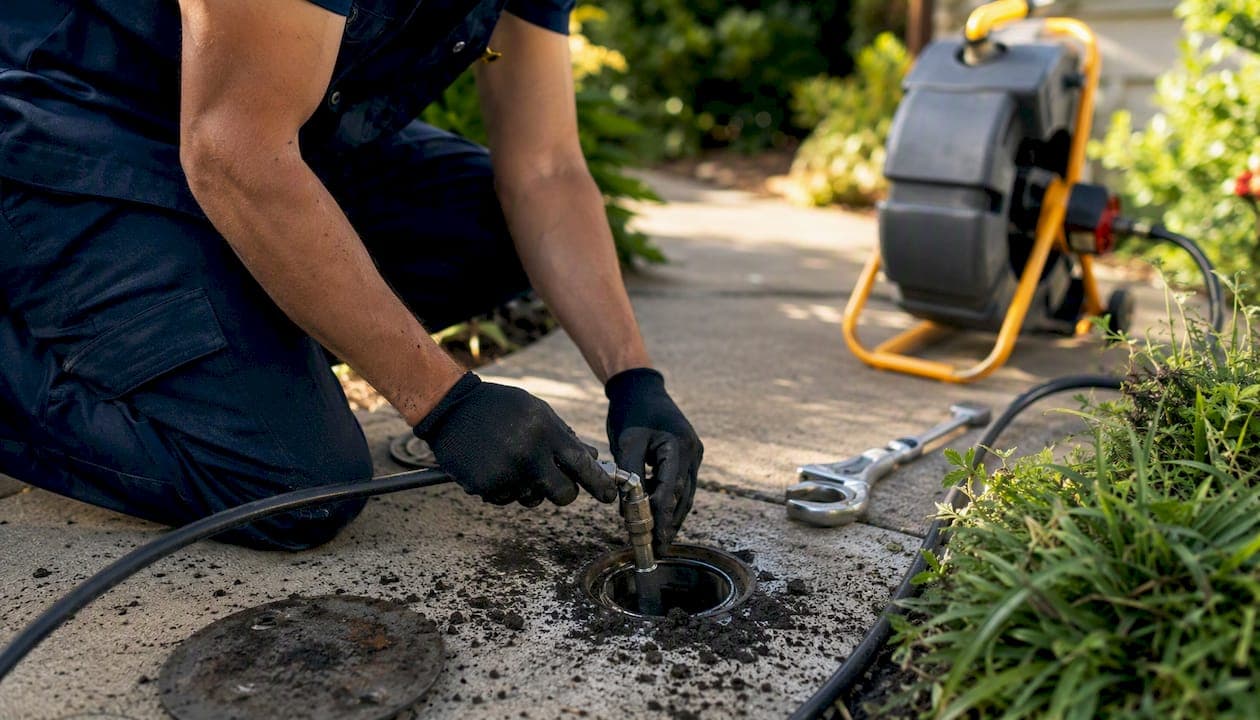
Call Budgetrodz emergency line now and stop using every water outlet in the property. That is the single most important thing you can do in the next sixty seconds. A 24/7 emergency drain unblocking service can typically reach you within 90 minutes across Ellesmere Port, Wirral, Chester, Liverpool, Wrexham, and North Wales. While you wait, here is what to do and what to avoid:
Do this immediately:
- Turn off the mains stopcock if sewage is backing up or water is pooling near appliances.
- Move valuables, rugs, and electrical items away from any wet area.
- Open windows to ventilate the space if you can smell sewer gas.
- Contain any visible sewage overflow with old towels or sandbags if you have them.
- Photograph the manhole cover, the overflow point, and any visible water line before anything is disturbed.
Do not:
- Pour chemical drain cleaner down the drain. Chemical cleaners can damage pipes and create serious hazards for the engineer who opens the drain next.
- Attempt to rod beyond the first accessible section of pipe.
- Use electrical appliances in any area where water is standing.
Pro Tip: If you have a wet/dry vacuum and disposable gloves, you can remove standing water from a flooded floor while you wait for the engineer. Wear rubber-soled footwear and keep the vacuum away from any electrical sockets.
Key takeaways
A blocked drain emergency requires you to stop all water use immediately, call a 24/7 local drain service, and photograph the overflow before anything is disturbed.
| Point | Details |
|---|---|
| Stop water use first | Turn off taps and appliances immediately to prevent the blockage worsening. |
| Call Budgetrodz now | 24/7 emergency response with a typical 90-minute arrival across the service area. |
| Photograph everything | Images of the overflow and manhole protect you if responsibility is disputed. |
| Know who owns the pipe | Private drains are your cost; public sewer blockages are the water company's responsibility. |
| Avoid chemical cleaners | They damage pipes and create hazards for the engineer; use a plunger only on single-fixture clogs. |
Table of Contents
- Is a blocked drain actually an emergency?
- Safe short-term steps to reduce damage before help arrives
- Who is responsible for the blocked drain, and who should you call first?
- What does an emergency drain engineer do when they arrive?
- What will it cost and how fast will help arrive?
- How to choose the right emergency drain service quickly
- What to have ready when the engineer arrives
- Budgetrodz: 24/7 emergency drain unblocking across Cheshire, Wirral and beyond
- What most people get wrong in the first thirty minutes
- Budgetrodz: the direct line when your drain cannot wait
- Sources
Is a blocked drain actually an emergency?
Not every slow drain needs a midnight call-out. A single basin draining sluggishly is usually a build-up of hair or soap scum, and a plunger or hand auger often sorts it. The situation becomes a genuine emergency when any of the following apply:
- Sewage or dirty water is backing up into a toilet, bath, or shower tray.
- More than one fixture is draining slowly or not at all at the same time.
- You can hear gurgling from a toilet or drain you are not currently using.
- There is a strong sewer smell inside the property.
- Water is pooling outside near a manhole or inspection chamber.
- A toilet is completely blocked and there is no second toilet available.
A quick diagnostic: run a tap in one room and watch whether a drain in a different room reacts. If it gurgles, fills, or backs up, the blockage is in the main line, not just a single branch pipe. That is a professional job, not a DIY one. Recurring clogs or multiple affected fixtures point to main-line problems where camera surveys and high-pressure jetting are the appropriate response.
Safe short-term steps to reduce damage before help arrives
Work through these in order, and stop any DIY attempt the moment it is not working.
- Stop all water use. Tell everyone in the property not to flush toilets, run taps, or use appliances connected to drainage.
- Isolate appliance supplies. Turn off the supply valve behind the washing machine and dishwasher if either is near the affected drain.
- Ventilate. Open windows and doors. Sewer gas contains hydrogen sulphide, which is toxic at high concentrations.
- Move valuables and electrics. Get anything at floor level away from the wet area before water spreads further.
- Try a plunger on a single-fixture clog only. If one sink or toilet is blocked and no other fixture is affected, a few firm plunges are reasonable. Give it two minutes. If nothing shifts, stop.
- Clear the P-trap if accessible. Under a basin, the curved pipe section often traps debris. Place a bucket underneath, unscrew the trap, clear it, and replace it. This is the limit of safe homeowner intervention.
What to avoid entirely:
- Chemical drain cleaners. They rarely clear a main-line blockage and can damage older pipework while leaving a hazardous residue.
- Forceful rodding beyond the first accessible section. You risk pushing the blockage deeper or damaging a joint.
- Electrical appliances anywhere near standing water.
Pro Tip: Disposable nitrile gloves, a bucket, and a mop are the three most useful things to have ready. If you have them, put them on before you do anything else near the affected area.
Who is responsible for the blocked drain, and who should you call first?
The rule is straightforward. Property owners are responsible for private drains within their boundary; if the blockage is in the public sewer, the water company clears it at no charge. The practical question is which side of the boundary the problem sits on.
Private drain: the pipe that runs from your property to the public sewer, entirely within your land. Your responsibility.
Shared private drain (lateral drain): a pipe shared with neighbours but still within private boundaries. Usually your responsibility, though this varies.
Public sewer: the pipe that collects waste from multiple properties and runs under the street. The water company's responsibility.
Call order:
- Call Budgetrodz first on the 24/7 emergency line. A local engineer can attend within 90 minutes, inspect the drain, and tell you definitively whether the blockage is on your side or the public sewer.
- If the engineer confirms a public-sewer issue, contact your regional water company. NI Water, for example, publishes a target of attending within four hours of a reported sewer flood. United Utilities and other regional providers have comparable commitments, though response windows vary.
- Keep photographs of the overflow and the manhole location. You will need them if you submit a claim or dispute responsibility.
The Gov also set out technical responsibilities for drainage design and maintenance, which can be relevant for newer developments or shared drainage arrangements.
What does an emergency drain engineer do when they arrive?
Expect a methodical process, not a quick poke with a rod. Here is the typical sequence:
- Safety and site check. The engineer assesses whether sewage has surfaced, whether gas is present, and whether the area is safe to work in.
- Symptom review. They will ask which fixtures are affected, when it started, and whether you have tried anything. This is why your photographs and notes matter.
- Manhole inspection. Lifting the nearest inspection chamber tells the engineer immediately whether the blockage is upstream or downstream of that point.
- Powered rodding or high-pressure jetting. For most residential blockages, jetting at up to 4,000 PSI clears grease, scale, and debris that rodding alone cannot shift.
- CCTV camera survey. For main-line or recurring problems, a camera is fed through the pipe to locate the exact blockage, identify root intrusion, collapsed sections, or joint displacement.
- Root cutting or relining. Where tree roots or structural damage are found, the engineer may cut roots on the same visit or recommend a no-dig lining repair.
- Post-clear confirmation. A final camera pass or flow test confirms the drain is running freely before the engineer leaves.
Camera inspection combined with high-pressure jetting is the standard for main-line blockages. A temporary rod-and-clear without a camera check is how the same drain ends up blocked again six weeks later.
Severn Trent Water notes that the most common culprits are wet wipes, sanitary products, and congealed cooking fat. None of these respond well to rodding alone.
What will it cost and how fast will help arrive?
Private emergency drain firms typically reach local properties within 60–120 minutes of a call. Budgetrodz targets 90 minutes across its service area. Water companies attending a confirmed public-sewer flood generally aim for a four-hour window, though this varies by provider and time of call.
On cost, UK pricing guides show that drain unblocking jobs typically include a call-out element, a fixed unblocking rate, and potential additional charges for repair work, relining, or after-hours attendance. VAT applies on top.
What to ask before you confirm a booking:
- Is the price fixed, or is it a call-out fee plus hourly rate?
- Are after-hours or weekend rates different, and by how much?
- Is VAT included in the quoted figure?
- Is there a workmanship guarantee on the clearance?
Budgetrodz operates on fixed-price call-outs with no hidden fees. Ask for the price to be confirmed before the engineer sets off, and get it in writing if possible.
How to choose the right emergency drain service quickly
When you are stressed and water is rising, it is easy to book the first number you find. These questions take under two minutes on the phone and will protect you.
Ask on the call:
- What is your typical response time to my postcode?
- Is the price fixed, or will it change once the engineer is on site?
- Are you fully insured for drainage work?
- Do you use CCTV and high-pressure jetting, or just manual rodding?
- Can you provide a workmanship guarantee?
Red flags to end the call:
- No fixed address or local presence.
- Vague pricing ("it depends") with no commitment to a figure before arrival.
- Cash-only payment demanded before work starts.
- Pressure to agree to extensive repairs before the engineer has inspected anything.
- No mention of insurance when asked directly.
Trust signals to expect from a reliable firm:
- 24/7 availability with a real person answering.
- Fixed-price policy stated clearly.
- Local engineer, not a national call centre dispatching from far away.
- Verifiable Google reviews with named customers.
- Short-term workmanship guarantee on the clearance.
What to have ready when the engineer arrives
Getting this right saves time and keeps the call-out short.
- Manhole location. Know where the nearest inspection chamber is, inside or outside the property.
- Photos and video. Show the engineer what you saw before anything was moved or cleaned.
- Keys and gate codes. If access requires unlocking a side gate or outbuilding, have the key ready.
- Mains stopcock location. Know where it is in case the engineer needs to isolate the supply quickly.
- Recent history. Note any DIY attempts, chemicals used, or previous blockages in the last few months.
- Insurer details. If sewage has entered the property, your home insurer may need to be notified.
Pro Tip: Clear a direct path from the street to the manhole before the engineer arrives. Hoses, garden furniture, and parked vehicles add time. A clear route means the engineer gets to work faster.
Budgetrodz: 24/7 emergency drain unblocking across Cheshire, Wirral and beyond
Budgetrodz responds to drain emergencies across Ellesmere Port, Wirral, Chester, Liverpool, Wrexham, North Wales, and surrounding areas, with a typical arrival time of 90 minutes from your call. Every job uses CCTV surveys and high-pressure jetting where needed, not just a rod and a hope.
What the service covers:
- 24/7 emergency drain unblocking for blocked toilets, sinks, showers, and main lines.
- High-pressure jetting for grease, scale, and compacted debris.
- CCTV drain surveys to locate and diagnose the exact problem.
- Drain relining, root cutting, and structural repairs.
- Commercial drainage for restaurants, offices, and landlords.
Call the Budgetrodz emergency line or visit the full services page to see what is covered in your area.
What most people get wrong in the first thirty minutes
The standard advice in a drain emergency is to call a plumber. That is correct, but it misses the more consequential decision: what you do in the ten minutes before the engineer is booked.
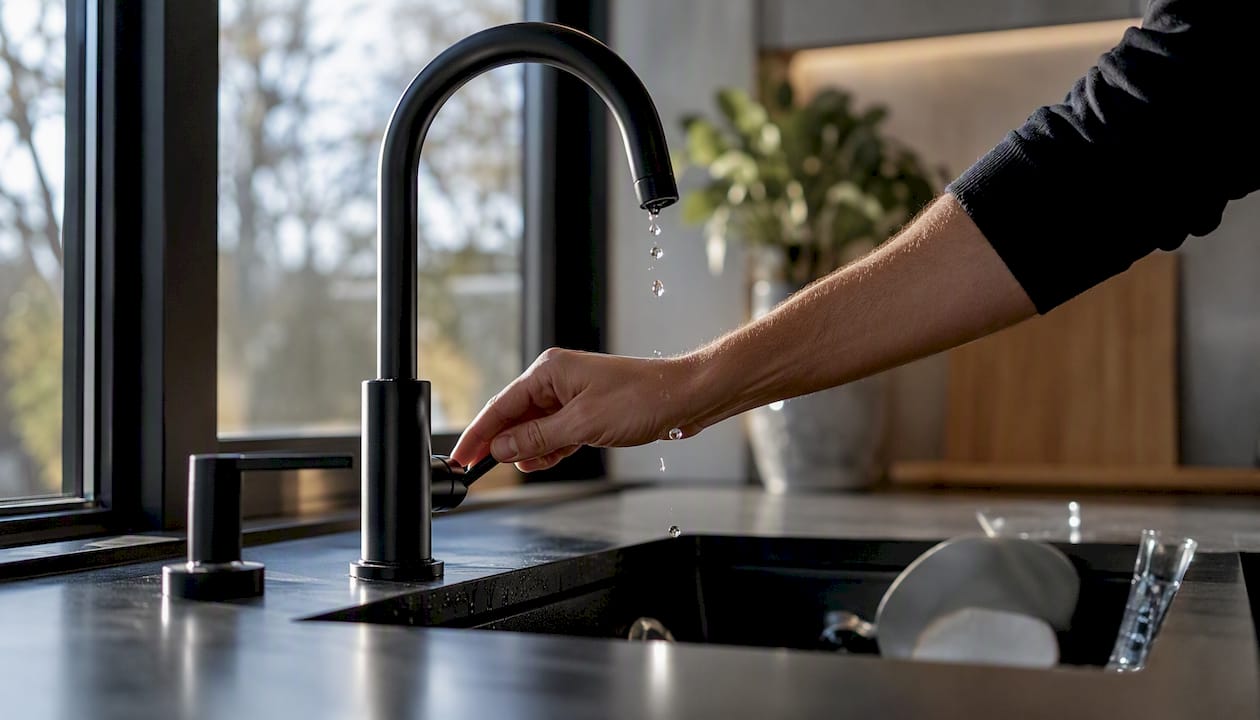
Most homeowners either do too much or too little. The "do too much" group reaches for chemical drain cleaner because it feels like action. It rarely clears a main-line blockage, and it leaves a caustic residue that the engineer then has to work around, sometimes making the job more expensive. The "do too little" group keeps using water because they are not sure whether the situation is serious. By the time the engineer arrives, what was a contained blockage has become a flooded utility room.
The more useful instinct is to treat the first ten minutes as evidence-gathering and containment, not repair. Stop the water, photograph the scene, ventilate the space, and call. Everything else can wait for someone with the right equipment.
There is also a persistent myth that water companies will attend quickly for any drain problem. They will not. Their obligation is to the public sewer, and their response windows reflect that. If the blockage is on your private drain, a water company call is a delay, not a solution. A local private engineer with a 90-minute response time is the faster and more direct route to getting your drainage restored.
Budgetrodz: the direct line when your drain cannot wait
When sewage is backing up or drainage has stopped entirely, the gap between a 90-minute response and a four-hour wait matters enormously. Budgetrodz covers Ellesmere Port, Wirral, Chester, Liverpool, Wrexham, and North Wales around the clock, with fixed pricing confirmed before the engineer sets off and no surprise fees when the job is done.
Every emergency call-out includes a full site assessment, high-pressure jetting where needed, and a CCTV check on main-line jobs so the same problem does not return in six weeks. For commercial properties, restaurants, and landlords managing multiple sites, the commercial drainage service covers planned maintenance as well as emergency response.
Call the Budgetrodz emergency line now for an immediate response and a fixed price before work begins.
Sources
- United Utilities — Blocked drains
- Gov
- NI Water — I have a blockage / blockages
- Severn Trent Water — Blocked drains
- AlertPlumber — Clogged drain: DIY fix or call a plumber
- Plumbing By The Book — Drain repair guide: clear any clog & when to call a pro 2026
- This Old House — How to prevent sink clogs
Contact your regional water company for a public-sewer issue; call a private emergency engineer like Budgetrodz for anything on your side of the boundary.