Stop flushing and turn off the water supply straight away. If you can see the toy and reach it safely, pull it out by hand; if not, work through the ordered steps below, starting with the least invasive, before calling a professional. Acting fast and in the right order stops a simple mishap becoming a proper plumbing repair.
TL;DR:
- Toys lodged in the toilet's trap are typically reachable with manual retrieval, vacuum, or auger if action is taken before the object moves beyond the trap.
- Repeated flushing or plunging can push a toy further into the piping, making removal more difficult or causing backup issues in the whole plumbing system.
- Chemical drain cleaners are ineffective on rigid toys and may damage the toilet seals or porcelain, increasing repair costs or the need for professional help.
- Removing the toilet is necessary only if the toy has moved past the trap and cannot be retrieved with manual tools or a closet auger, which requires turning off the water and reseating the toilet.
- If DIY methods fail or you feel unsure, professional drain unblocking services have specialized equipment that can locate and extract the toy quickly and safely.
Table of Contents
- How do I check a toilet safely when a toy goes down?
- What's the safest way to get a toy out of the toilet?
- Why plunging or bleach won't shift a toy
- When does the toilet need to come off entirely?
- When should you stop and call a plumber?
- How can you stop this happening again?
- A publisher's note on toilet rescues
- Prefer a professional to sort it fast?
- Sources
- FAQ
How do I check a toilet safely when a toy goes down?
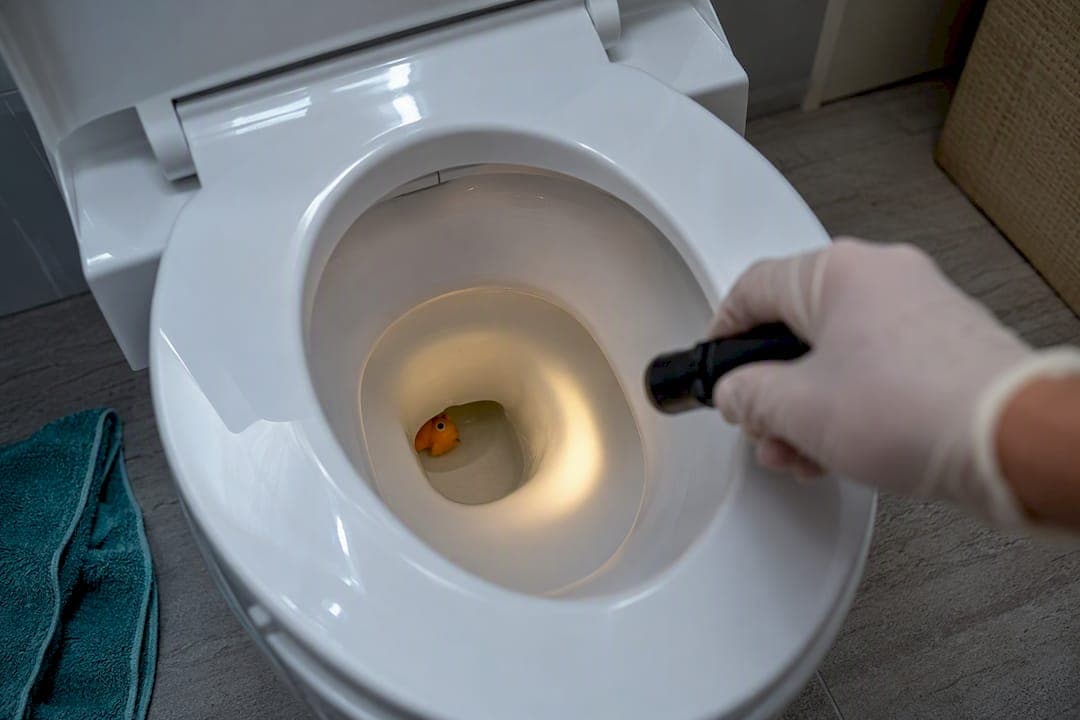
Before touching anything, look into the bowl with a torch or your phone light. Toys almost always lodge in the S-bend, the curved trap built into the base of the toilet, so you're checking for a shape or colour just below the waterline rather than something deep in the pipework.
Don't flush again "to see if it goes down." Every extra flush pushes more water and pressure against the toy and raises the risk of an overflow onto your bathroom floor.
Turn off the water at the isolation valve behind or beside the toilet, usually a small oval tap on the supply pipe. If there's no valve, lift the cistern lid and hold the float up, or simply avoid using the toilet until the problem is sorted.
Then get set up properly:
- Put on rubber gloves before touching anything in or near the bowl
- Lay old towels around the base to catch drips and protect flooring
- Keep a bucket nearby for bailing out water if the bowl is too full to work in
- Bail out excess water first if the bowl is close to overflowing, so you're not working blind
Once the water's under control and you can see what you're dealing with, you're ready to attempt retrieval.
What's the safest way to get a toy out of the toilet?
Work through these methods in order. Stop as soon as the toy is out.
- Reach in by hand. If the toy is visible and within arm's length, glove up and lift it straight out rather than dragging it sideways, which can push it deeper into the trap.
- Try a wet/dry vacuum. Wrap an old towel around the vacuum hose to form a tight seal against the bowl opening, creating a gasket that stops air leaking in and keeps suction strong. Turn the vacuum on before fully sealing the gasket, then extract slowly and steadily rather than yanking the hose free.
- Fashion a hook. A wire coat hanger straightened out with the end bent into a small hook can snag a toy that's just out of finger reach. Wrap tape around the hook end first, since bare wire can scratch or chip glazed porcelain.
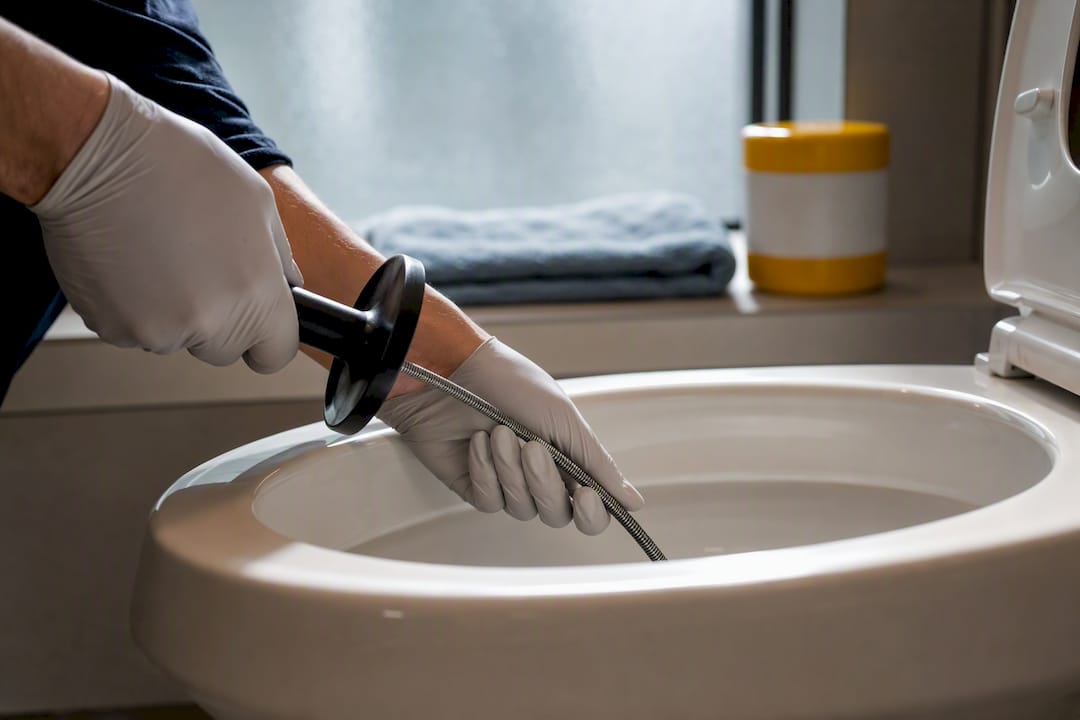
- Use a closet auger. This is the tool built specifically for toilet traps, with a protective rubber sleeve that shields the bowl from the metal cable as you work. Feed the cable in gently, rotate the handle to snag the toy, and pull back slowly rather than forcing it.
Extraction beats displacement every time: the goal at every stage is pulling the object back up, never pushing it further round the bend.
Pro Tip: If the vacuum or auger meets resistance, stop and back off slightly rather than pushing harder. Forcing a jammed tool can wedge the toy tighter or scratch the trap.
Once the toy is out, wash your hands and gloves thoroughly, disinfect any tools that touched the bowl, and run two or three test flushes. If drainage still seems slow or you hear gurgling, something may still be lodged.
Why plunging or bleach won't shift a toy
Reaching for the plunger is the instinctive move, but it's usually the wrong one for a solid object. Plunging drives a hard toy deeper into the S-bend trap, and enough force can push it past the trap into the main sewer lateral, where it's no longer reachable by hand, vacuum, or auger.
Chemical drain cleaners don't help either. They're formulated to break down organic waste and grease, not rigid plastic, so pouring them in achieves nothing for a lodged toy while potentially damaging seals or the porcelain itself.
The real cost of getting this wrong:
- A shallow, simple retrieval becomes a deep blockage further down the pipe
- A single-toilet problem can turn into a whole-house backup if the object reaches a shared lateral
- What could have been free DIY recovery becomes a paid callout, or worse, a pipe repair
When does the toilet need to come off entirely?
If the toy has travelled past the trap and neither the vacuum nor the auger can snag it, sitting at what plumbers call the horn (the point where the trap meets the outlet), removing the toilet becomes the only remaining DIY option. This is a bigger job than most parents expect.
- Turn off the water supply and disconnect the supply line.
- Empty the tank and bowl using a sponge or small container.
- Unbolt the toilet from the floor flange and lift it clear, ideally with a second person helping.
- Inspect the horn and outlet by torchlight and clear the toy.
- Fit a new wax ring before lowering the toilet back into place and rebolting it.
Toilets are heavy, awkward, and easy to crack if dropped or knocked against tiling. A poorly reseated wax ring can also cause slow leaks that go unnoticed for weeks, which is exactly the kind of job where a professional toilet unblock often costs less in the long run than a botched DIY reseal.
When should you stop and call a plumber?
Some signs mean it's time to put the tools down. If the vacuum and auger have both failed, or you're not confident lifting and reseating a toilet yourself, that's your cue to call in help rather than push on.
Watch for these warning signs specifically:
- Water backing up repeatedly even after the visible blockage seems cleared
- Gurgling noises coming from other drains, like the bath or sink, when you flush
- The same blockage recurring within days of "fixing" it
- Any smell of sewage or signs of a leak around the base of the toilet
Most flushed-toy recoveries are genuinely straightforward if the object is still sitting in the trap, but delay lets it migrate further and turns a five-minute job into a costly one. A tradesperson arriving with a specialist auger, a CCTV camera to see exactly where the toy has ended up, and jetting equipment for anything left behind can resolve in one visit what an afternoon of home attempts couldn't. If you're seeing repeat trouble even after a successful retrieval, it's worth reading up on why toilets keep blocking before it happens again.
How can you stop this happening again?
A few small changes cut the odds of a repeat trip to the bathroom with a torch and a coat hanger.
- Fit a simple toilet-lid lock, the same childproofing catches used on cupboards work well here
- Keep the bathroom door closed when small children are unsupervised
- Store small toys, bath toys included, in a cabinet or box out of reach rather than left near the toilet
- Set a clear, repeated rule with children: toys go in the toy box, not the bowl
Pro Tip: Bath time is the biggest risk window. A toy left on the edge of the tub has a habit of ending up in the toilet an hour later, so do a quick sweep of loose toys before you leave the bathroom.
Lid locks and supervision are cheap, low-effort fixes compared with a repeat plumbing callout, and they tend to work far better than reminders alone with younger children.
A publisher's note on toilet rescues
We've covered toilet unblocking on the Budgetrodz blog for years, and the pattern with flushed toys is consistent: most are recoverable with nothing more than gloves and a vacuum, provided you act before the water rises further. Some aren't, and that's when a fast response matters more than bravado. Not every rescue needs a professional, but the ones that do need one quickly.
— Christopher
Prefer a professional to sort it fast?
If the DIY steps above haven't shifted the toy, or you'd rather not lift a toilet off the floor on a Tuesday evening, A specialist drain unblocking service is ideal for exactly this moment. It offers a typical rapid response in the local area, with clear upfront pricing and no guessing on cost.

When you call, expect an engineer arriving with specialist tools such as closet augers, high-pressure jetting equipment, and CCTV inspection kit to see exactly where the toy has lodged rather than working blind. That combination handles the cases where a coat hanger and a vacuum genuinely can't reach, and it means the service includes proper reseating to avoid leaks later. Try the DIY steps first where it's safe to do so. When you need it sorted properly and quickly, book Budgetrodz's emergency drain unblocking service and get someone on the way.
Sources
- Engineerskill
- How to safely retrieve non-flushable items from toilet trap — Flow Pro Plumbing
- What should you do if your child flushes a toy down the toilet — HomeServe
FAQ
What happens if a toy gets flushed down the toilet?
It usually lodges in the toilet's built-in S-bend trap, which can cause slow draining, gurgling, or a full blockage. Most toys stay retrievable with manual reach, a wet/dry vacuum, or a closet auger if you act before repeated flushing pushes them further round the bend.
What happens if an object gets flushed down the toilet and won't come back up?
If it's travelled past the trap toward the horn or beyond, standard tools like a vacuum or auger may not reach it, and removing the toilet becomes the only DIY option left. At that point, calling a plumber with CCTV inspection equipment to locate it precisely is usually the safer and faster route.
How do I fix a toilet that has a toy stuck in it?
Turn off the water supply, then try manual retrieval, a wet/dry vacuum with a towel gasket, or a closet auger in that order, always pulling the object back up rather than pushing it further in. Avoid plunging or chemical cleaners, since both can wedge a rigid toy tighter or damage the toilet's seals.
How do I unclog a toilet that has an object stuck in it?
Never plunge a hard object; use a closet auger instead, which has a protective sleeve designed to snag solid items without scratching the porcelain. If the auger and vacuum both fail, or you see gurgling in other drains and recurring backups, that's the signal to book professional help such as Budgetrodz's emergency callout.
Can a plunger make a flushed toy worse?
Yes. Plunging can drive a rigid toy deeper into the trap or push it into the main sewer line, turning an easy retrieval into a much harder one to reach.