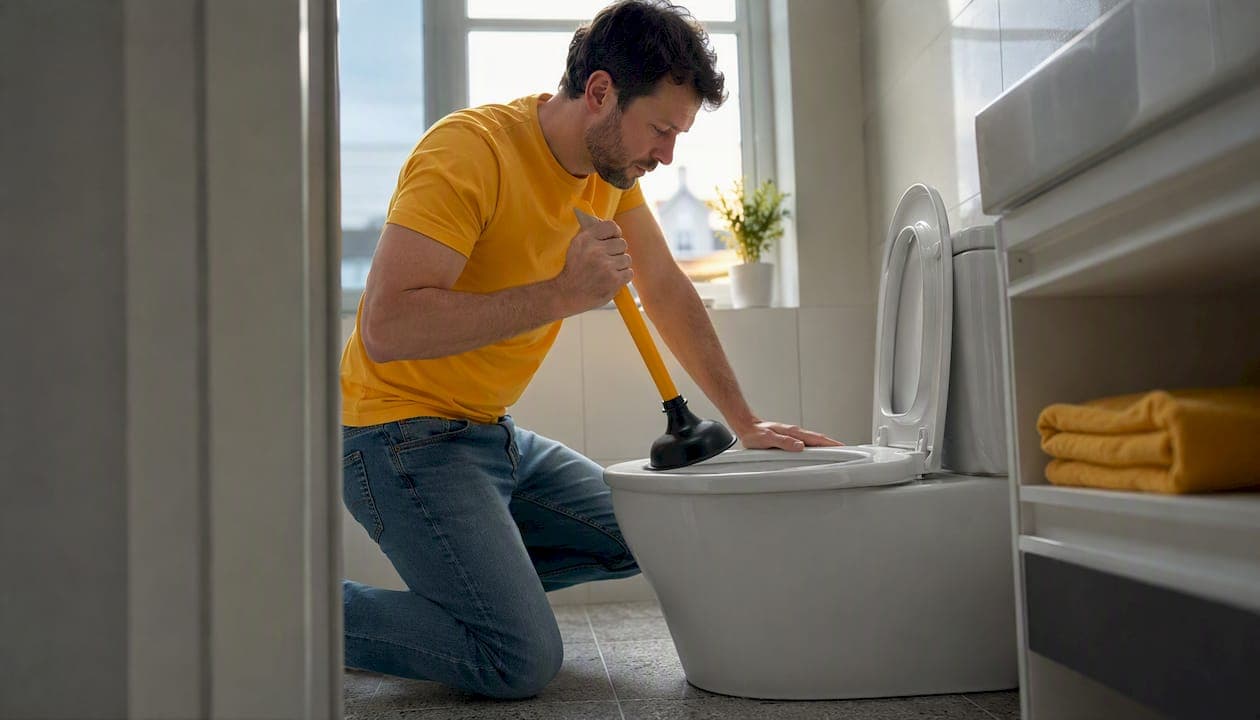
If your toilet keeps blocking, the most likely culprit is a recurring partial obstruction in the trap or drain line, often combined with a weak flush that lacks the water velocity to clear it fully. Stop flushing immediately if the bowl is rising. Then try these three steps:
- Step 1: Grab a flange plunger and work the blockage with firm, steady strokes. A cup plunger will not seal properly on a toilet.
- Step 2: If plunging clears it but the problem returns within days, that pattern points to a downstream restriction rather than a one-off clog. Repeated plunging without a lasting fix is a clear signal that a professional inspection is needed.
- Step 3: If the bowl is overflowing, turn off the isolation valve (the small tap behind or beneath the cistern) to cut the water supply before attempting anything else.
A toilet that clears once and blocks again is not a plunging problem. It is a diagnosis problem.
Table of Contents
- Why does your toilet keep blocking?
- How to tell what's actually wrong from the symptoms
- Safe step-by-step fixes you can try at home now
- Common mistakes that make blockages worse
- Red flags that mean it's time to call a drainage engineer
- What professionals do: CCTV surveys, jetting and descaling
- How to stop repeat blockages: habits and maintenance for UK homes
- Typical timeframes and costs for UK homeowners
- How Budgetrodz solves recurrent blockages
- Key takeaways
- The problem most homeowners never get to the bottom of
- Budgetrodz: emergency and scheduled drainage for the North West
- Useful sources and further reading
Why does your toilet keep blocking?
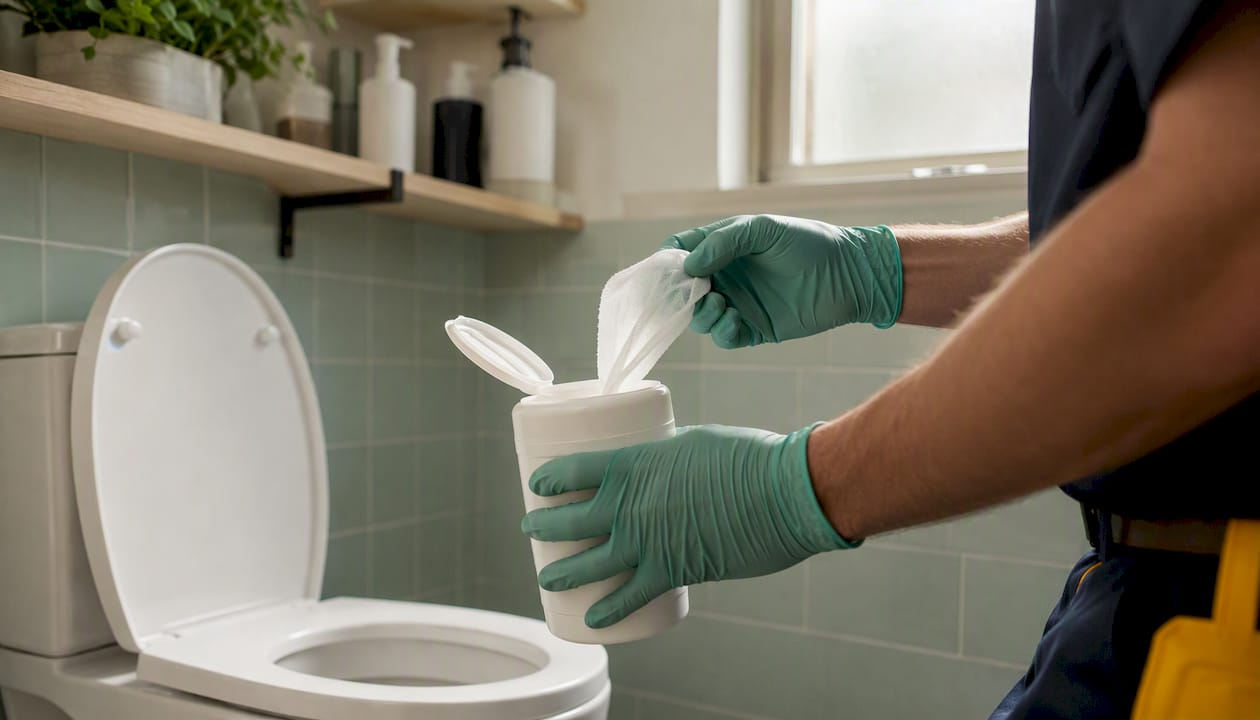
Most recurring blockages trace back to one of a handful of causes. Non-flushable items, particularly wet wipes, are among the common culprits causing repeat cases. Wet wipes do not disintegrate in water. A single wipe can snag on a rough pipe joint and begin collecting grease, paper, and debris over weeks until the pipe narrows enough to block consistently.
| Cause | Estimated share of recurring cases | Household habit or structural? |
|---|---|---|
| Non-flushable items (wet wipes, sanitary products) | 30–35% | Habit |
| Excess toilet paper in a single flush | 20–25% | Habit |
| Low-flush or ageing toilets with weak cisterns | 15–20% | Structural |
| Limescale and calcification in trap or pipework | Significant in hard-water areas | Structural/maintenance |
| Partial drain-line obstruction or root intrusion | Less common but serious | Structural |
| Blocked vent pipe | Less common, often missed | Structural |
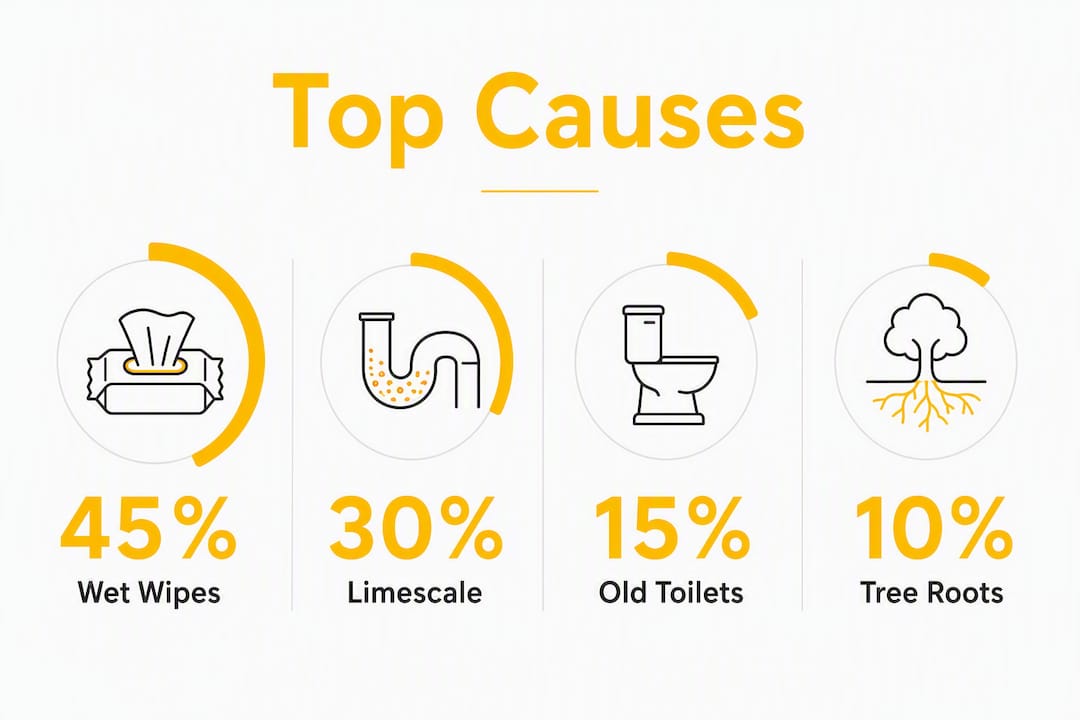
Limescale in rim jets and pipework progressively narrows the internal diameter of both the toilet and the drain. In hard-water areas across the North West and Cheshire, this is a genuine maintenance issue, not just cosmetic. Visible scale around the rim almost always means there is scale further down the pipe too.
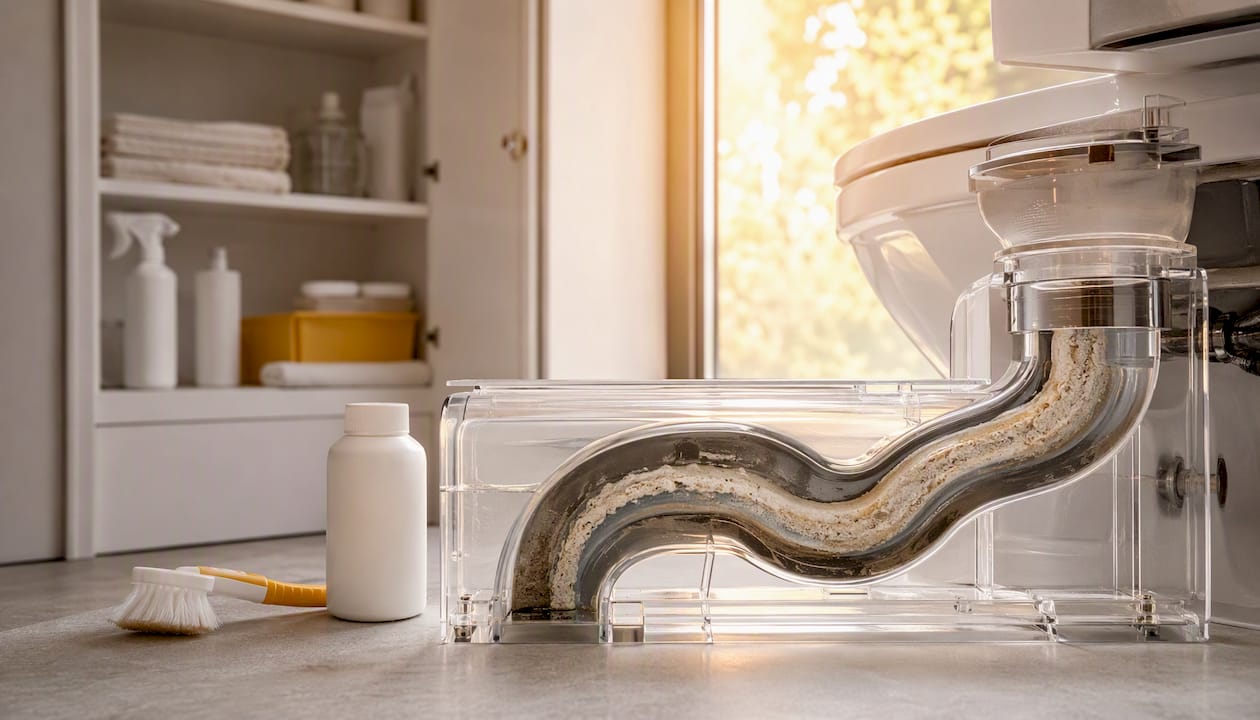
Older low-flush toilets from the 1990s may not generate enough velocity to push solids through the full drain run. If your toilet is old and blocks regularly, the fixture itself may be part of the problem.
Tree root intrusion and main sewer faults sit at the more serious end. Roots find their way into pipe joints and grow slowly, creating a mesh that catches everything passing through. This type of blockage tends to be intermittent at first, which is exactly why it gets misdiagnosed as a habit problem.
How to tell what's actually wrong from the symptoms
The location and pattern of symptoms tell you a great deal before any tools are involved.
Single fixture, consistent blockage. If only the toilet blocks and everything else drains normally, the problem is almost certainly in the toilet itself or the short section of drain immediately downstream. The trap, rim jets, or a partial obstruction in the first metre of pipe are the likely suspects.
Gurgling sounds from the toilet or nearby drains. A blocked vent pipe creates negative pressure across the drainage system, which manifests as gurgling, slow drainage, and phantom bubbling. This is one of the most commonly missed causes because it produces symptoms that look identical to a standard blockage. If you hear gurgling from a basin or bath when you flush the toilet, the vent is worth investigating.
Multiple fixtures draining slowly at the same time. This is the clearest sign the problem is downstream of the individual fixtures, in the shared drain or main sewer. A slow bath, slow basin, and slow toilet together point to a partial obstruction or root intrusion in the main line.
Intermittent blockages that clear themselves. A blockage that seems to resolve on its own, then returns, usually means a partial obstruction that allows some flow but catches solids periodically. It will not fix itself permanently.
A simple at-home check: pour a bucket of water directly into the pan. If it drains slowly even without flushing, the restriction is in the toilet or the immediate drain. If it drains fine but the flush is slow, the cistern fill level or flapper valve is worth checking first.
Safe step-by-step fixes you can try at home now
Before calling anyone, work through these in order. Most habit-related blockages clear at step one or two.
- Gather your kit. You need a flange plunger (the one with the rubber extension that fits into the toilet outlet), rubber gloves, old towels or newspaper for the floor, and optionally a toilet auger (also called a closet auger).
- Reduce the water level. If the bowl is full, bail out enough water so it sits at roughly half-full. This gives the plunger room to work without splashing.
- Seat the plunger. Push the flange into the toilet outlet and press down slowly to expel air, then pull back sharply. Repeat with firm, rhythmic strokes for 15–20 seconds. The goal is pressure variation, not brute force.
- Test the drain. Pour a small amount of water from a jug rather than flushing. If it drains freely, flush once to confirm.
- Try a toilet auger if plunging fails. Feed the cable into the pan, turn the handle clockwise, and advance it until you feel resistance. Rotate to break up or retrieve the obstruction. Augers reach 60–90 cm into the trap where a plunger cannot.
- Hot water and washing-up liquid. Squirt a generous amount of washing-up liquid into the bowl and follow with a bucket of hot (not boiling) water poured from waist height. The heat softens grease; the detergent lubricates. Wait five minutes before testing.
- Bucket flush method. If the cistern is filling slowly, a controlled bucket flush can generate more force than a standard flush. Pour a full bucket rapidly into the pan from waist height to create a surge.
Pro Tip: Never use boiling water directly from a kettle. Ceramic pans and older plastic seals can crack or soften under sudden extreme heat. Hot tap water or water that has cooled for two minutes after boiling is the safe limit.
For step-by-step guidance on alternative methods, the unblocking without a plunger guide covers additional techniques worth trying.
Common mistakes that make blockages worse
Some of the most popular DIY fixes actively damage pipework or create new hazards.
- Chemical drain cleaners. Products like caustic soda or sulphuric-acid-based cleaners are designed for grease and organic matter. They do very little against solid obstructions such as wet wipes or foreign objects, and they corrode older cast-iron and clay pipes. Mixing two different chemical products can produce toxic fumes.
- Boiling water. As noted above, it can crack the ceramic pan or soften the wax seal between the toilet and the floor flange, creating a leak that is far more expensive to fix than the original blockage.
- Drain bladders and high-pressure attachments on garden hoses. These can dislodge a blockage further into the system or rupture an already-compromised pipe joint. They are not designed for toilet drains.
- DIY excavation. Digging to access a drain without knowing its depth, material, or route risks damaging the pipe further and may require notification to your local authority depending on the drain's status.
- Sewage exposure without PPE. Sewage contains pathogens including E. coli and norovirus. Wear rubber gloves, eye protection, and wash hands thoroughly after any contact with drain water.
- Mixing products. Never combine bleach with any other cleaning product in the toilet or drain. The reaction can produce chlorine gas.
Red flags that mean it's time to call a drainage engineer
Some situations are beyond safe DIY intervention. Call a professional when:
- The blockage returns within a week of plunging, more than twice.
- Two or more fixtures (toilet, bath, basin, kitchen sink) are draining slowly simultaneously.
- You can smell sewage inside the property, particularly in rooms away from the bathroom.
- The toilet bowl is rising towards the rim or has overflowed.
- You suspect a foreign object (a child's toy, sanitary product, or similar) has been flushed and is lodged in the trap.
- There are gurgling sounds from multiple drain points when you flush.
- The property is more than 30 years old and has never had a drain inspection.
The multi-fixture symptom is the most important one to act on quickly. It usually means the shared drain or main sewer is partially blocked, and continued use risks a full sewer backup into the property.
What professionals do: CCTV surveys, jetting and descaling
A drainage engineer's toolkit goes considerably further than a plunger or a hand auger.
CCTV drain survey. A camera is fed into the drain and transmits live footage to a monitor. CCTV cameras typically inspect 20–40 metres of private drain, precisely locating blockages, root intrusion, bellied sections, and cracked pipes. The recorded footage lets the engineer recommend the right fix rather than guessing. It is the fastest method for pinpointing hidden obstructions and avoids unnecessary excavation.
High-pressure jetting. Water is pumped at high pressure through a specialist nozzle, cutting through grease, scale, and compacted debris. Jetting restores the original internal diameter of the pipe where descaling alone cannot. It is the standard treatment for partial drain-line blockages that accumulate debris over time.
Professional descaling. Consumer descalers treat only the visible bowl and rim jets. Professional equipment treats long lengths of drainpipe where scale has narrowed the bore. In hard-water areas, this is often needed alongside jetting for a lasting result.
Root cutting, relining, and excavation. Tree root intrusion requires specialist cutting tools followed by relining or, in severe cases, pipe replacement. Relining inserts a resin-coated liner into the existing pipe, restoring structural integrity without digging.
Questions worth asking any drainage engineer before they start:
- Will you provide CCTV footage of the inspection?
- Is the price fixed, or will it change based on what you find?
- Do you offer a guarantee on the clearance?
- If relining or excavation is needed, will you provide a written quote first?
How to stop repeat blockages: habits and maintenance for UK homes
Prevention splits into two areas: what goes down the toilet, and how the system is maintained.
What never to flush:
- Wet wipes, including those labelled "flushable" (they do not disintegrate at the same rate as toilet paper)
- Sanitary towels, tampons, and applicators
- Cotton wool and cotton buds
- Kitchen roll and facial tissues
- Nappies and baby wipes
- Dental floss and hair
Everyday habits that reduce blockage risk:
- Use less paper per flush and split heavy use into two flushes.
- Keep a small bin beside the toilet for non-paper items.
- Pour a bucket of hot water down the toilet once a fortnight to soften any grease accumulation.
Maintenance checklist for UK homeowners:
- Clean rim jets monthly with a descaling solution and a small brush to prevent scale restricting the flush.
- In hard-water areas (most of the North West, Cheshire, and the Midlands), descale the toilet bowl and visible pipework every three months.
- Check the cistern fill level and flapper valve annually. A weak flush often traces back to a worn flapper or a low fill level rather than the drain.
- Inspect any accessible drain covers twice a year for debris accumulation.
Pro Tip: If your property is more than 20 years old or has mature trees within five metres of the drain run, book a CCTV drain survey as preventive maintenance. Root intrusion and pipe deformation are far cheaper to address before a full blockage than after.
Typical timeframes and costs for UK homeowners
Costs vary by access, severity, and location, but these ranges give a realistic starting point.
- High-pressure jetting: — usually completed in one to three hours; costs typically fall in the £100–£250 range for a standard residential drain run.
- CCTV drain survey: — the inspection itself takes 30–60 minutes on site; costs typically range from £100 to £200 for a standard residential survey with a recorded report.
When comparing quotes, ask specifically whether the price is fixed or subject to change once work begins, and whether VAT is included. A fixed-price callout with no hidden fees is the clearest indicator of a trustworthy provider.
How Budgetrodz solves recurrent blockages
A recurring blockage in a mid-terrace property in Ellesmere Port illustrates how professional diagnosis changes the outcome. The homeowner had plunged the toilet repeatedly over several months, clearing it each time, only for the problem to return within a week. A CCTV inspection revealed a partial grease and scale build-up approximately eight metres into the drain run, well beyond the reach of any domestic tool. High-pressure jetting cleared the obstruction in under an hour, and a descaling treatment addressed the limescale narrowing the pipe bore. The toilet has not blocked since.
Budgetrodz carries out emergency drain unblocking, CCTV drain surveys, high-pressure jetting, professional descaling, drain relining, and root cutting for residential and commercial properties across Ellesmere Port, Wirral, Chester, Liverpool, Wrexham, and North Wales. Typical response time is 90 minutes. All work is fixed-price with no hidden call-out fees. Budgetrodz holds a 5.0 rating from over 50 Google reviews.
Key service capabilities:
- Emergency response, typically within 90 minutes across the coverage area
- CCTV drain surveys with recorded footage and written report
- High-pressure jetting for grease, scale, and compacted debris
- Professional descaling for hard-water pipe narrowing
- Drain relining and root cutting for structural pipe issues
- Fixed pricing confirmed before work begins
Key takeaways
A toilet that keeps blocking almost always signals a partial obstruction or weak flush that needs proper diagnosis, not repeated plunging.
| Point | Details |
|---|---|
| Stop flushing first | A rising bowl can overflow; turn off the isolation valve and assess before acting. |
| Try safe DIY fixes in order | Use a flange plunger, then a toilet auger, then hot water and detergent before escalating. |
| Recognise the red flags | Multiple slow fixtures, sewage smell, or a blockage that returns within a week all require a professional. |
| Book a CCTV survey for recurrent problems | CCTV cameras inspect 20–40 metres of drain and locate hidden obstructions, root intrusion, and pipe damage. |
| Budgetrodz for local emergencies | Budgetrodz covers Ellesmere Port, Wirral, Chester, and surrounding areas with a typical 90-minute response and fixed pricing. |
The problem most homeowners never get to the bottom of
The pattern Budgetrodz sees most often is not a dramatic overflow. It is a toilet that blocks, gets plunged, clears, and then blocks again three weeks later. The homeowner concludes it is just "one of those things" and keeps a plunger handy. Months pass. Eventually the blockage stops clearing with a plunger, or the drain backs up into the bath, and what could have been a £150 jetting job becomes a £600 repair.
The real issue is that plunging treats the symptom at the toilet end while the actual restriction sits further down the drain. Every time you plunge, you push debris slightly further into the system, where it compacts. The partial obstruction grows slowly until it becomes a full one.
There is also a hard-water dimension that gets underestimated in the North West and Cheshire. Limescale does not just coat the bowl. It narrows the internal bore of the drain over years, reducing flow velocity to the point where even a modest amount of paper causes a blockage. A toilet that flushed perfectly for a decade can become unreliable purely because of scale accumulation, with no change in household habits at all.
The practical takeaway: if you have plunged the same toilet more than twice in a month, stop plunging and book a CCTV inspection. The footage will show you exactly what is happening and what it will cost to fix it properly. That is almost always cheaper than the alternative.
Budgetrodz: emergency and scheduled drainage for the North West
When a toilet blocks repeatedly and DIY methods have run their course, the gap between a quick fix and a lasting one comes down to diagnosis. Budgetrodz provides emergency drain unblocking across Ellesmere Port, Wirral, Chester, Liverpool, Wrexham, and North Wales, typically arriving within 90 minutes. There are no call-out fees and every job is priced before work begins.
For recurrent blockages, Budgetrodz's drainage services include CCTV surveys with recorded footage, high-pressure jetting, professional descaling, and drain relining. Whether the problem is a grease build-up, limescale narrowing, root intrusion, or a structural pipe fault, the survey identifies it and the fix is quoted at a fixed price. Call or book online to get a drainage engineer to your property.
Useful sources and further reading
- Why Does My Toilet Keep Clogging? Common Causes & Fixes — prevalence data on non-flushable items and excess paper; explains blocked vent pipes and their symptoms.
- CCTV Drain Surveys | Budgetrodz — explains what a survey covers, what the footage shows, and how to book a survey in the Ellesmere Port, Wirral, and Chester area.
- How to unblock a toilet: quick fixes that actually work | Budgetrodz — step-by-step DIY methods for clearing a blocked toilet at home.