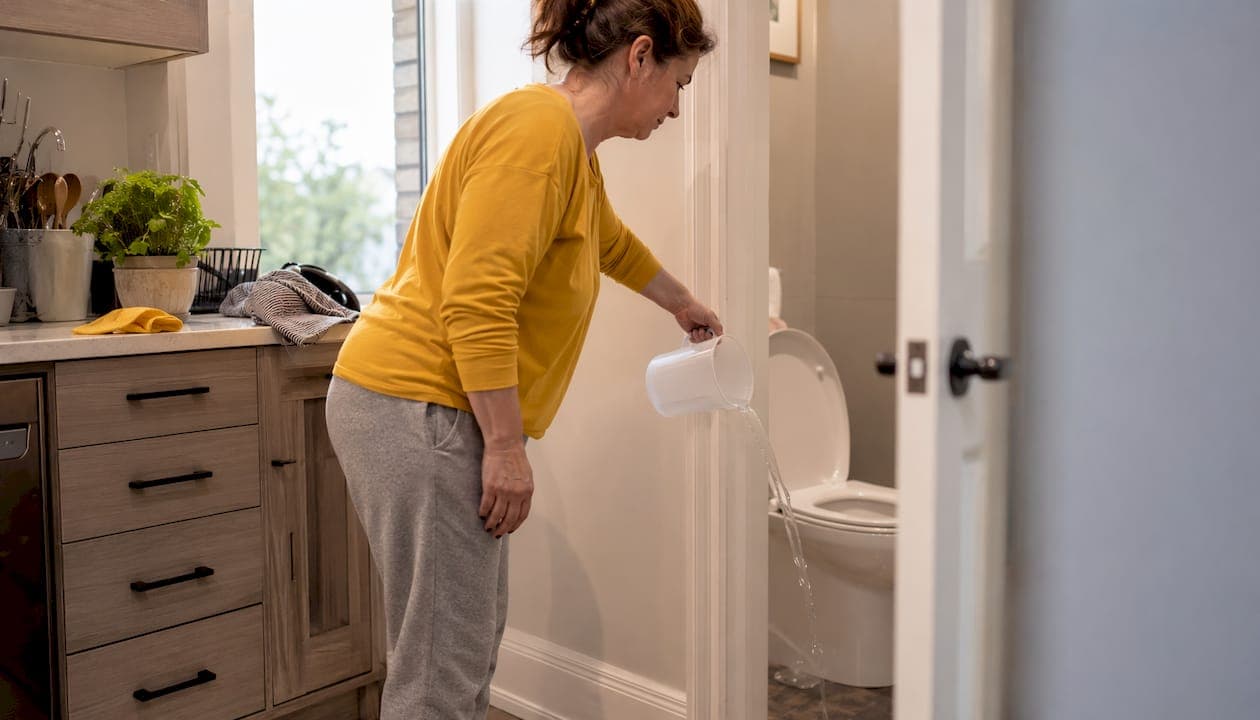
Yes, you can often clear a blocked toilet without a plunger. The fastest, safest method is a generous squirt of washing-up liquid followed by hot (not boiling) tap water poured from waist height. Professional plumbers recommend this combination as the first-line DIY tactic for soft clogs.
Two things to do right now:
- Squirt a good amount of washing-up liquid into the bowl and leave it for 10 minutes.
- Pour a bucket of hot tap water from waist height, then wait and flush carefully.
Safety first: Never use boiling water — it can crack the porcelain. Never mix bleach with vinegar or any other cleaner.
Table of Contents
- What to have ready before you start
- Method 1: washing-up liquid and hot water
- Method 2: baking soda and white vinegar
- Method 3: mechanical options when liquid methods fail
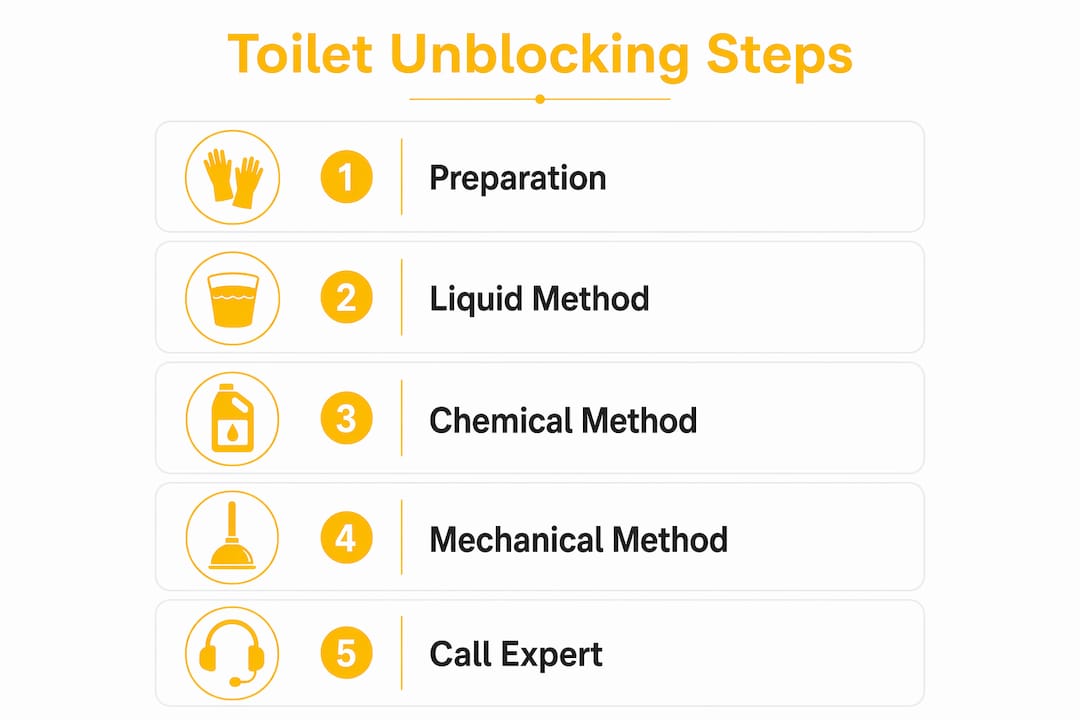
- When should you stop and call a professional?
- Key takeaways
- The honest truth about DIY toilet unblocking
- Blocked toilet in Cheshire? Budgetrodz can be there in 90 minutes
- Useful sources
What to have ready before you start
Rushing in without preparation risks a bigger mess. Gather these before you touch anything:
- Rubber gloves (thick ones)
- An old bucket
- Towels or old cloths on the floor around the base
- Protective footwear (flip-flops or old shoes)
- A disposable cup or jug for bailing water
- Disposable cloths for spillage
Three things to avoid:
- Boiling water — thermal shock can crack porcelain and require a full fixture replacement
- Mixing bleach with vinegar or any other household cleaner — the fumes are toxic
- Forcing hard objects (keys, toys, phone) deeper into the trap
If the bowl is close to overflowing, bail water into your bucket first using the cup until the level drops by roughly a third. This gives you working room and reduces the chance of a flood when you pour.
Pro Tip: Remove the cistern lid and close the flapper (the rubber valve at the bottom of the tank) before you start. This stops more water entering the bowl if you need to flush to test progress.
Method 1: washing-up liquid and hot water
This is the method professional plumbers recommend first for soft clogs. Dish soap works as a lubricant — it coats the clog and the pipe walls so the obstruction can slide through. The chemistry is simple; the patience is the hard part.
Steps:
- Squirt a generous amount of washing-up liquid (Fairy or similar) directly into the bowl — aim for the drain opening.
- Leave it to sit for 10–20 minutes. This is not optional; the soap needs time to work down into the clog.
- Fill a bucket with hot water from the tap. It should be hot enough that you cannot hold your hand in it comfortably, but not boiling.
- Stand up straight and pour from waist height in a steady stream. The drop creates downward force that mimics a pumping action.
- Wait two minutes, then flush carefully. Watch the water level — if it drops normally, the clog has cleared.
If it does not clear first time:
- Repeat the full cycle multiple times for soft clogs; patience often makes the difference.
- Stop repeating if the bowl is near overflow or if you suspect a foreign object is involved — more water will only make things worse.
Pro Tip: The height of the pour genuinely matters. A waist-level pour concentrates the flow and generates the downward force needed to shift soft obstructions — a slow trickle from close up does very little.
Method 2: baking soda and white vinegar
This is the classic fizzing method. The reaction between baking soda and white vinegar creates carbon dioxide bubbles that can help shift organic material sitting in the trap. It is not a guaranteed fix, but it is worth trying when soap and water have not worked after two or three attempts.
Steps:
- Check the bowl is roughly half-full of water. If it is too full, bail some out first.
- Pour one cup of baking soda directly into the bowl, aiming for the drain.
- Slowly pour one cup of white vinegar on top. Pour slowly — the fizzing reaction is vigorous and can splash.
- Leave the mixture to work for 20–30 minutes.
- Flush carefully. If the water level drops, the clog has cleared.
Safety rules for this method:
- Never add bleach, commercial drain cleaner, or any other product to the mix — the chemical reactions can produce toxic fumes or damage your pipes.
- Do not seal the bowl or cover it tightly; the reaction needs to vent.
- Ventilate the bathroom — open a window or turn on the extractor fan.
When to use this instead of Method 1: if you have already run the soap-and-water cycle twice with no result, the baking soda method adds a different kind of action. When to stop: if there is still no movement after one attempt, move to a mechanical approach or call a professional. Repeating this method multiple times adds little benefit.
Method 3: mechanical options when liquid methods fail
When liquid methods have not shifted the blockage, a little physical persuasion can help. Three options are available without specialist tools, each with its own risk profile.
Wire coat-hanger snake
- Unwind a wire coat hanger until it is roughly straight, leaving a small hook at one end.
- Wrap the hook end tightly in an old cloth or rag and secure it with tape or an elastic band. This protects the porcelain from scratches.
- Gently feed the wrapped end into the drain opening and rotate slowly, feeling for the obstruction.
- Work carefully — the goal is to break up or hook soft material, not to push it further in.
Toilet brush as a last resort
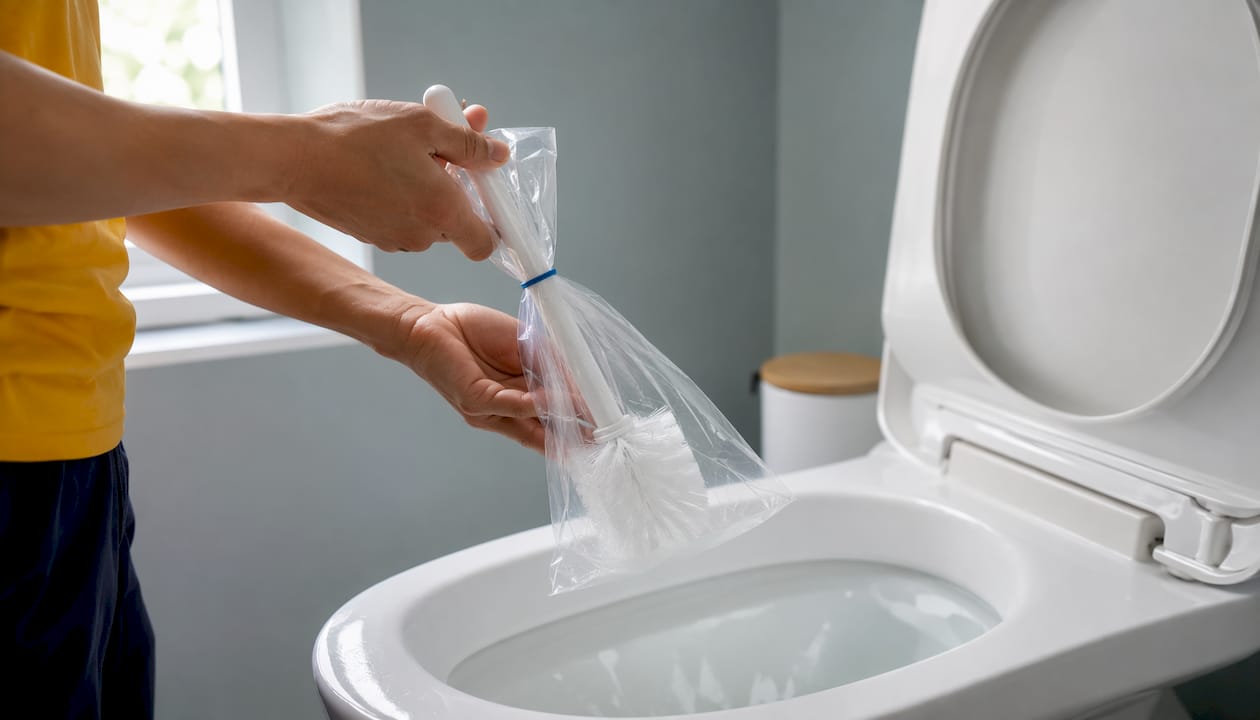
Wrap the brush head in a plastic carrier bag secured with an elastic band, then use it in an up-and-down plunging motion in the drain opening. It creates some suction and can break up soft blockages. The limitation is reach — a brush only goes a few centimetres into the trap.
Manual toilet auger
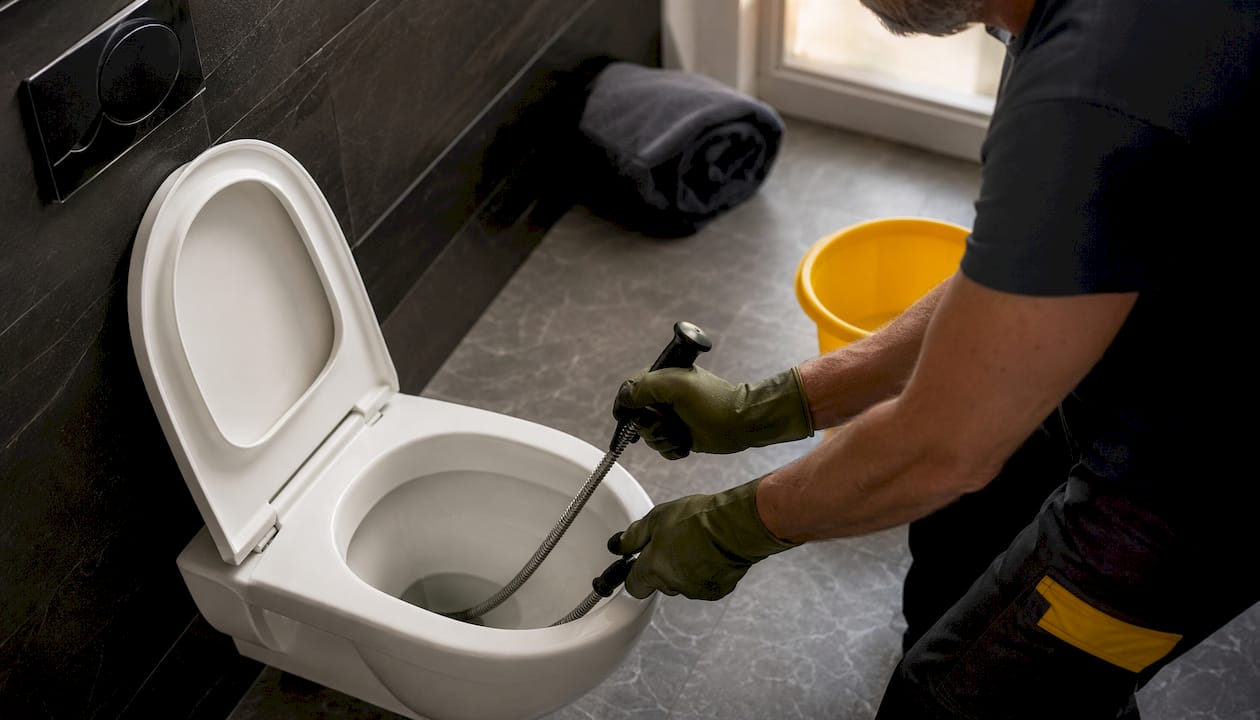
A hand-held toilet auger is the most effective DIY mechanical tool. It physically removes the blockage without damaging the bowl. Available from most DIY retailers, it is worth buying if you have older plumbing or recurring clogs.
Risk callouts for all mechanical methods:
- Never force a rigid object hard into the trap — you risk pushing a foreign object deeper, which turns a simple job into an expensive one.
- Scratched porcelain is permanent; always protect the bowl surface.
- If you can see a foreign object (a toy, a phone, a toothbrush), do not attempt to push it through — it needs to come out, not go further in.
Pro Tip: Briefly lifting and releasing the cistern flapper can send a surge of stored tank water into the bowl. Done carefully, this low-risk tactic sometimes dislodges a partial blockage that mechanical prodding has already loosened.
When should you stop and call a professional?
Some blockages are beyond DIY. Stop attempting home methods and call an emergency unblocker if you notice any of the following:
- The bowl continues to overflow despite bailing and closing the flapper
- Foul smells coming from multiple drains — this suggests a deeper sewer blockage
- A foreign object is visible or suspected in the trap
- Slow drains elsewhere in the house (sinks, bath, shower) alongside the toilet blockage
- No improvement after three full attempts with different methods
What a professional will do: On a first visit, an emergency drain engineer will typically assess the blockage with a drain camera or snake, then use a manual auger, high-pressure jetting, or CCTV inspection to locate and clear the obstruction. Budgetrodz provides emergency drain unblocking across Cheshire, Ellesmere Port, Wirral, and Chester, typically arriving within 90 minutes.
Tell the engineer when you call:
- Your address and whether you have a basement or ground-floor drain
- What methods you already tried and how many times
- The current water level in the bowl
- Whether other drains in the property are slow or blocked
Key takeaways
Washing-up liquid and hot water poured from waist height is the safest, most reliable first method to clear a soft toilet blockage without a plunger.
| Point | Details |
|---|---|
| First method to try | Washing-up liquid plus hot tap water poured from waist height; wait 10–20 minutes before flushing. |
| Repeat limit | Repeat the soap-and-water cycle up to 2–3 times for soft clogs; stop if the bowl is near overflow. |
| Secondary option | Baking soda and white vinegar (one cup each); wait 20–30 minutes; never mix with bleach. |
| Hard stop signs | Overflow continuing, foul smells from multiple drains, foreign object suspected, or no progress after three attempts. |
| Budgetrodz | Local emergency unblocking across Cheshire with a typical 90-minute response, fixed pricing, and CCTV and jetting capability. |
The honest truth about DIY toilet unblocking
Most blocked toilets in Cheshire homes are soft clogs — too much tissue, a build-up of waste, or a combination of both. For those, the soap-and-water method works more often than people expect, provided they actually wait the full 10–20 minutes and pour from height. The number of people who give up after two minutes and declare it hopeless is surprisingly high.
Where DIY goes wrong is not in the method itself but in the escalation. Trying a wire hanger on what turns out to be a child's toy, or pouring a third bucket of water into a bowl that is already at the rim — these are the decisions that turn a £90 callout into a £400 repair. The rule I would apply: attempt one or two safe methods for what looks like a soft clog, limit yourself to three cycles total, and never force anything you cannot see clearly.
Foreign objects are the exception where early professional intervention almost always saves money. A plumber with a camera and the right retrieval tool can remove a toothbrush in ten minutes. The same toothbrush pushed to the bend of the soil pipe is a different job entirely.
Blocked toilet in Cheshire? Budgetrodz can be there in 90 minutes
When DIY has not shifted the blockage, or when you simply do not want the risk of making things worse, Budgetrodz emergency drain unblocking is the practical next step for Cheshire homeowners. The service covers Ellesmere Port, Wirral, Chester, and surrounding areas, with a typical fast response and fixed pricing with no hidden call-out fees.
Every job starts with a proper assessment. Depending on what the engineer finds, they will use a manual auger, high-pressure drain jetting, or a CCTV camera survey to locate and clear the blockage completely. There is no guesswork about what is causing the problem and no vague estimate that changes when the engineer arrives. Budgetrodz holds a very positive rating from many Google reviews, built on fast turnaround and transparent pricing. Call with your address, a brief description of what you have already tried, and the current water level in the bowl — that information helps the engineer arrive prepared.
Useful sources
The following sources back the methods and safety guidance in this article:
- Hot water and dish soap for toilet clogs — what works and what to avoid — supports the lubrication mechanism, wait times, and the boiling-water warning.
- How to unclog a toilet with hot water and dish soap — professional plumber endorsement of soap and hot water as a first-line method.
- How to unclog a toilet with hot water — source for the waist-height pouring technique and its mechanical rationale.
- How to unblock a toilet with and without a plunger — baking soda and vinegar method guidance and safety limits.
- How plumbers unclog a toilet without a plunger — auger recommendation and foreign-object risk warnings from professional plumbers.
- How to unclog a toilet without a plunger — repeat-cycle guidance (2–3 attempts) and overflow risk thresholds.
- Budgetrodz emergency drain unblocking — local Cheshire emergency service information, response times, and CCTV and jetting capabilities.