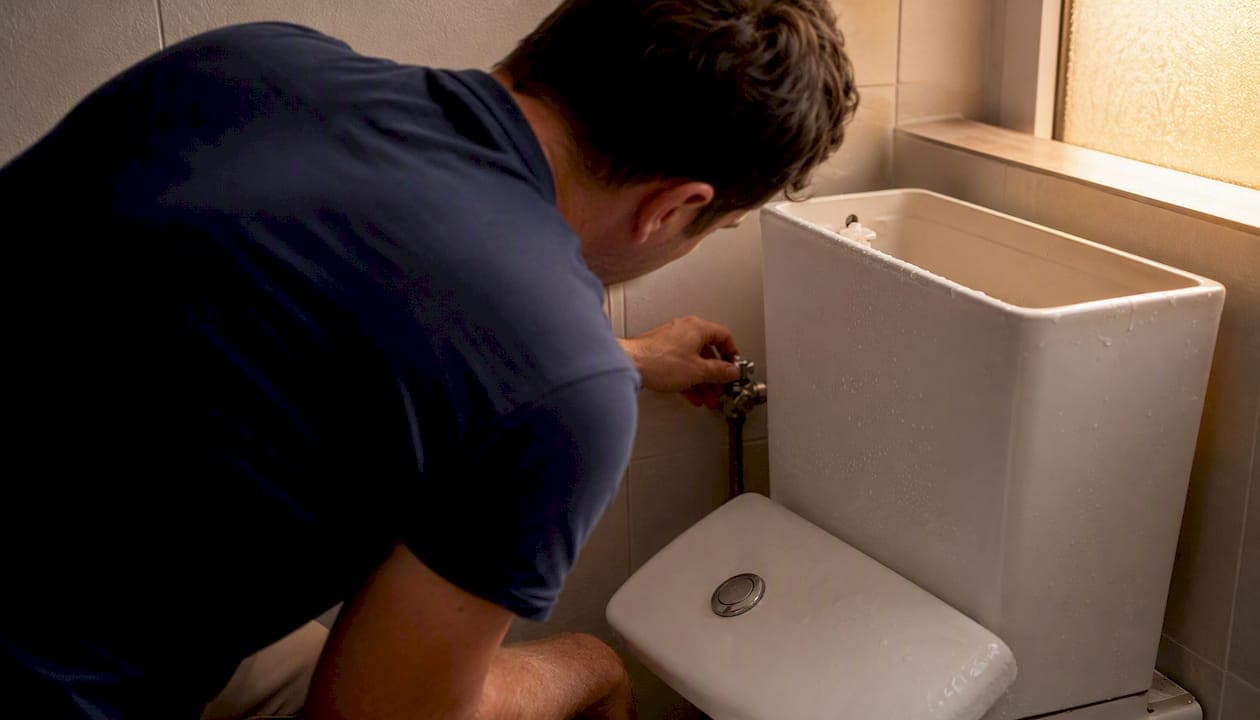
Stop the water first. Reach behind the toilet and turn the isolation valve clockwise until it stops. That single move cuts off the supply feeding the cistern and gives you time to think instead of panic.
Can't reach the valve, or it won't budge? Lift the lid off the cistern and hold the float arm up, or press the flapper down to stop water entering the bowl. Either move buys you the same result: no more incoming water, no more rising level.
- Turn the isolation valve clockwise.
- If stuck, remove the cistern lid and hold the float up.
- Do not flush again until the level drops.
Pro Tip: Set the cistern lid down flat on a towel, not on the tiles. Lids crack easily and a cracked one is one more job you didn't need today.
Key Takeaways
Stopping the water supply to the cistern within the first minute is what actually prevents flood damage, not which fix you try afterwards.
| Point | Details |
|---|---|
| Stop water first | Turn the isolation valve clockwise, or hold the cistern float up if it's stuck. |
| Diagnose before fixing | Check whether other fixtures are affected before assuming it's a simple clog. |
| Use the right plunger | A flange plunger seals properly on a toilet bend; a cup plunger doesn't. |
| Know the red flags | Multiple drains backing up or a sewage smell means call a professional, not another plunge. |
| Budgetrodz as the fallback | Fixed-fee emergency callouts across Ellesmere Port, Wirral and Chester with a typical 90-minute response. |
Table of Contents
- Toilet water overflowing: the next five minutes
- Why is my toilet overflowing? Quick diagnosis
- Toilet overflow fix: safe DIY steps to try
- What tools and safety gear do you need?
- When should you call a plumber instead?
- How do you prevent a toilet overflowing again?
- If you need an emergency drain specialist now
- Frequently asked questions
- Sources
Toilet water overflowing: the next five minutes
Once the water's stopped, you're managing what's already on the floor and finishing the job properly. Work through this in order.
- Confirm the isolation valve is fully closed. If water is still trickling in, go back and hold the float up manually.
- Remove the cistern lid if you haven't already, and check whether the flapper has sealed shut.
- Grab old towels or a bucket and start bailing water out of the bowl before it goes any further, working from the bowl outward across the floor.
- Mop up standing water immediately. It carries bacteria even if the bowl looks clean.
While you're doing this:
- Wear rubber gloves. Toilet overflow water is never just water.
- Keep any electrical items, extension leads or floor-standing heaters well clear of the spreading puddle.
- Warn anyone downstairs if you're on an upper floor. A ceiling stain often turns up before you'd expect.
- Don't flush again, and don't tip a bottle of drain cleaner into a bowl that's already full to the brim.
Stopping water into the cistern is the fastest way to prevent flood damage. It gives you the breathing room to work out what's actually gone wrong before you make it worse.
Why is my toilet overflowing? Quick diagnosis
Not every overflow has the same cause, and treating a sewer blockage like a simple clog wastes time you don't have. The Spruce identifies four common causes of a toilet overflowing: a local drain clog, a cistern or tank fault, a blocked vent stack, or a blocked main sewer or septic line.
Work through this checklist:
- Bowl fills fast after a single flush, other drains normal: almost certainly a local clog in the trap or branch pipe.
- Water keeps trickling into the cistern's overflow pipe even after flushing: a fill valve or float problem, not a blockage at all.
- Sink, shower or bath also gurgle or back up when you flush: points to a main sewer blockage or a blocked vent, not something a plunger will fix.
- Smell of sewage anywhere in the house: treat as a sewer issue and stop using water in the property.
If it's isolated to one fixture, move on to the DIY fixes below. If more than one drain is misbehaving, skip straight to calling a professional. Our guide on gurgling drains covers this exact warning sign in more depth.
Toilet overflow fix: safe DIY steps to try
With the water off and the floor dry, you've got two realistic tools for a local clog: a flange plunger and a toilet auger.
- Plunge properly. Use a flange plunger, not a flat sink plunger. The flange creates the seal a toilet bend actually needs. Push down slowly to expel air, then pull up sharply. Repeat 10 to 15 times before checking if the water drains.
- Move to an auger if plunging fails. Feed the cable into the bowl gently, cranking the handle as it advances. Never force it. If you feel solid resistance, ease off rather than pushing through.
- Check the cistern. If the fault turned out to be the tank rather than a clog, lower the float arm or adjust the fill valve height to sit just below the overflow tube. ASAP Drainage notes that most tank overflows come down to a faulty fill valve, float, or flapper, and swapping the part usually fixes it.
- Consider an enzyme treatment. For a partial clog that's draining slowly rather than sitting solid, an enzyme-based cleaner can help break down organic material over several hours. Caustic drain cleaners are a different story entirely; they're a bad idea in a near-full bowl and can damage older pipework.
If you've plunged and augered without progress, stop. According to Prime Plumbing, repeated plunging on a blockage that won't shift usually just packs it tighter, making it harder for anyone to clear later.
Pro Tip: No plunger to hand? Our guide to unblocking a toilet without a plunger covers a couple of workable stopgaps until you can get one.
What tools and safety gear do you need?
- Flange plunger (a cup plunger won't seal properly on a toilet bend)
- Toilet auger or hand-held drain snake
- Bucket, old towels, and a mop or wet/dry vacuum
- Rubber gloves and, ideally, eye protection
Ventilate the bathroom while you work, and bag or wash anything soft that's been sitting in overflow water rather than putting it straight back into use.
Cistern lids are heavier and more brittle than they look. Rest one flat on a towel rather than balancing it against the wall, and stop entirely if rising water reaches any socket or plug.
When should you call a plumber instead?
Some signs mean DIY has run its course. Robins Plumbing points out that multiple fixtures backing up or gurgling together signals a main sewer blockage, not something a plunger will touch.
Call a specialist if you're seeing:
- More than one drain backing up or gurgling at once
- Overflow persisting after several rounds of plunging and augering
- A sewage smell anywhere in the property
- An isolation valve you simply can't shut off
A drainage specialist brings equipment you won't have at home: an electric eel for tougher clogs, high-pressure jetting for grease and root intrusion, and CCTV cameras to see exactly what's blocking the line before touching it. Companies specialising in jetting techniques use pressure calibrated to the pipe material, which is why DIY attempts on a deep blockage rarely match professional results.
Response times for emergency callouts typically run from under an hour to a few hours depending on the operator and time of day, with out-of-hours jobs priced at a premium over standard daytime rates. When you call, tell them: how many fixtures are affected, whether water's still rising, and whether you've managed to isolate the supply.
If more than one fixture is affected, treat the problem as a main sewer issue and stop using water in the property until someone qualified arrives.
How do you prevent a toilet overflowing again?
Most repeat overflows trace back to habits or worn parts, not bad luck. Benjamin Franklin Plumbing points to excessive toilet paper and "flushable" wipes as leading causes, since neither breaks down the way toilet paper does.
Keep out of the bowl entirely: wet wipes, paper towels, sanitary items, cotton buds, and cooking grease.
- Replace rubber flappers regularly before they warp and stick.
- Exercise the isolation valve every few months so it doesn't seize when you need it.
- Book a CCTV survey or jetting service if slow draining becomes a pattern rather than a one-off.
A quick quarterly check of the cistern and an annual professional look at the drain run catches most problems before they become emergencies.
A note from the drain
Most call-outs I attend start the same way: a panicked homeowner, a rising bowl, water already on the tiles. Cutting the supply fast and calling early always limits the damage.
If you need an emergency drain specialist now
DIY handles plenty of overflows, but not all of them, and there's no prize for wrestling with a sewer blockage at midnight when help is available. Budgetrodz runs emergency drain unblocking across Ellesmere Port, Wirral, Chester, and the surrounding areas, with a typical response time of around 90 minutes and fixed pricing agreed before any work starts, so there's no surprise invoice waiting for you afterwards.
When a technician arrives, the difference from a DIY attempt is the kit: high-pressure jetting shifts blockages a plunger never will, and a CCTV drain survey shows exactly what's happening inside the pipe rather than guessing from the surface. That matters most for the sewer, vent, and root-intrusion cases where repeated plunging just wastes time. Budgetrodz's blocked toilet service covers exactly these scenarios, backed by a 5.0 rating from over 50 Google reviews.
If you've spotted any of the red flags above, sewage smell, multiple fixtures backing up, an overflow that won't quit, get in touch through the emergency contact page rather than losing another hour to trial and error. And if this was a slow build rather than a sudden flood, the toilet unblocking guide walks through the same fixes in more detail for next time.
Frequently asked questions
Why is my toilet overflowing when I haven't flushed anything unusual? Most sudden overflows trace back to a clog building gradually from toilet paper or wipes, then finally catching on a single flush. Check the cistern too; a stuck flapper can cause the same symptom without any blockage at all.
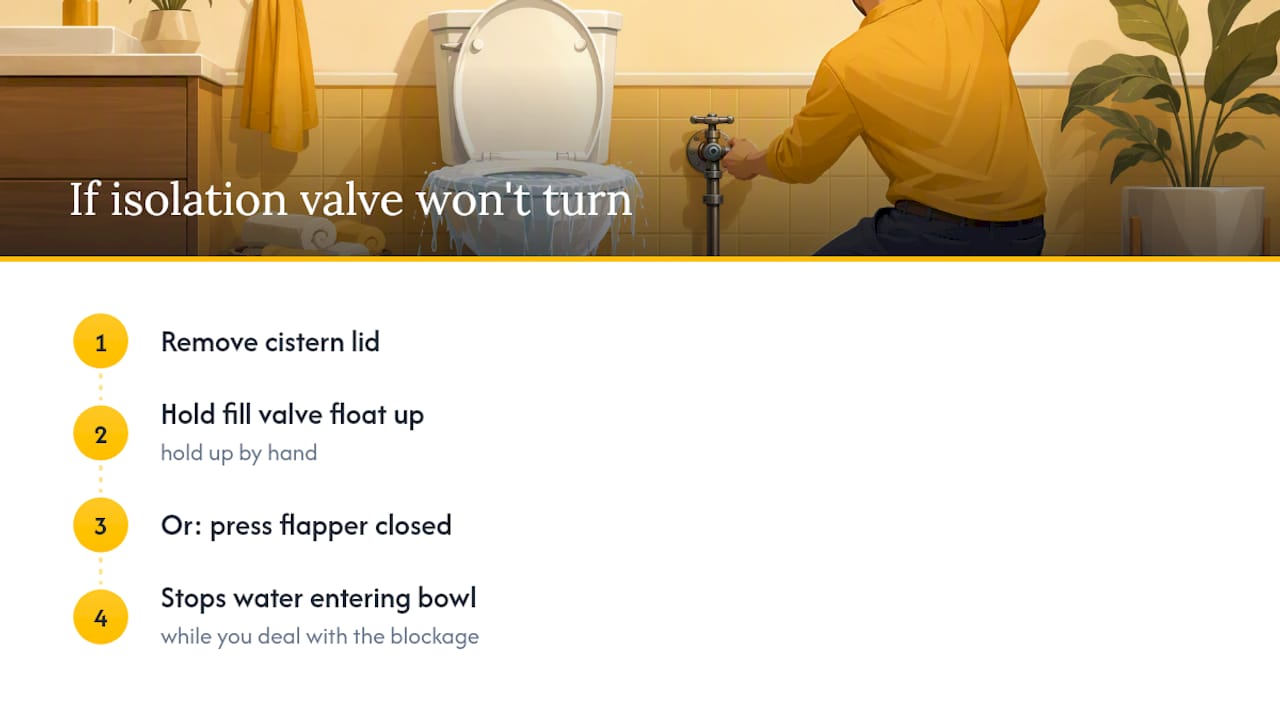
Toilet overflowing, what to do if the isolation valve won't turn? Remove the cistern lid and hold the fill valve float up by hand, or press the flapper closed. Either stops water entering the bowl while you deal with the blockage.
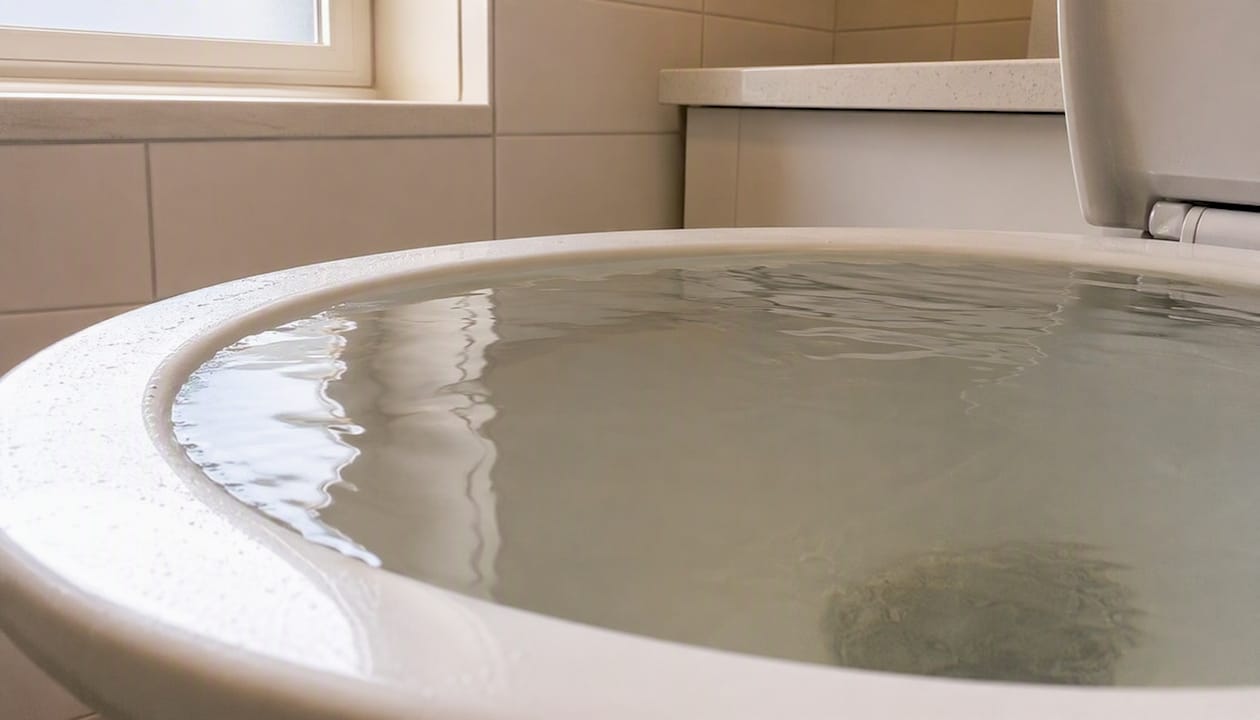
Is it safe to keep flushing to force the water down? No. Flushing again while the bowl is already full almost always makes the overflow worse and risks spreading contaminated water further across the floor.
Toilet blocked, who to call if plunging doesn't work? A licensed plumber or drainage specialist with an auger, jetting equipment, or a CCTV camera. Persistent overflow after plunging usually means the clog is beyond what a plunger can shift.
Can a blocked toilet mean a problem with the whole house's drains? Yes, if other fixtures are also backing up or gurgling. That pattern points to a main sewer blockage rather than an issue isolated to the toilet.
Sources
- Why Is My Toilet Overflowing? — The Spruce
- Toilet overflowing? What to do | Prime Plumbing
- What to do when your toilet is overflowing — Benjamin Franklin Plumbing
- How to fix an overflowing toilet — ASAP Drainage