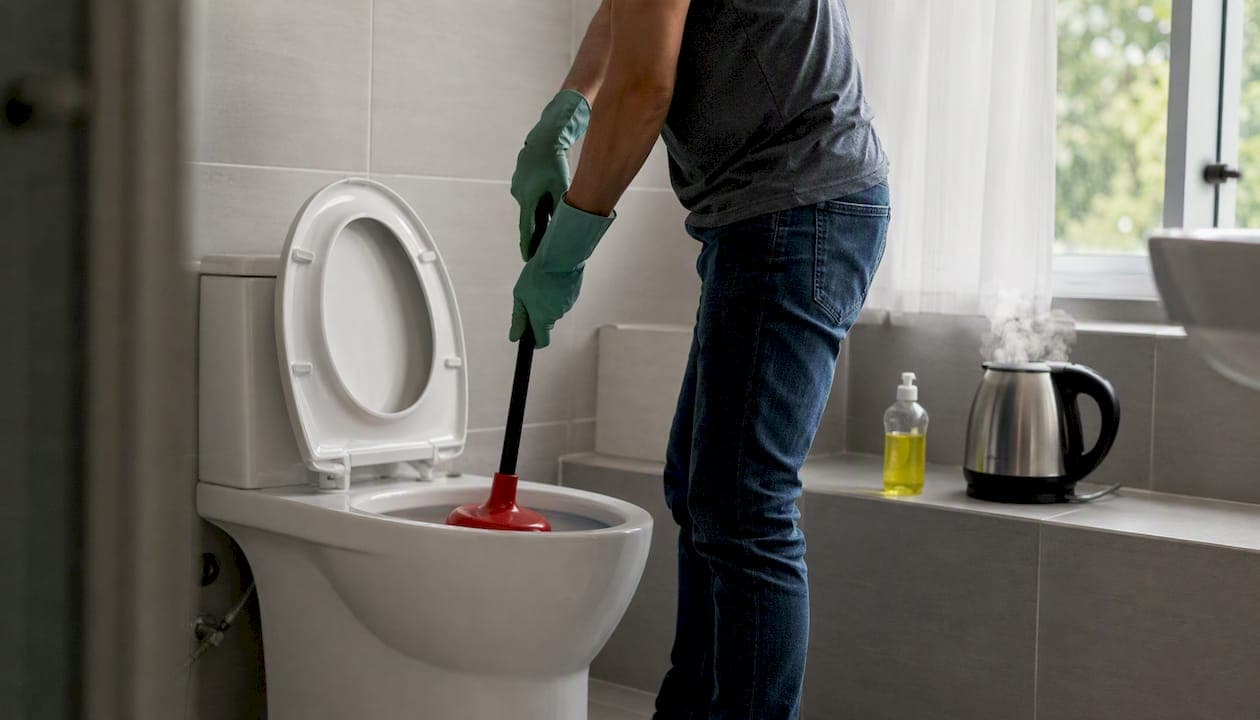
Stop flushing immediately. That single action prevents a manageable blockage from becoming a flooded bathroom floor. For most toilet paper clogs, you need three things: a flange plunger, five minutes, and a little patience. If plunging does not shift it, hot (not boiling) water with a generous squirt of washing-up liquid usually softens the paper enough to flush through. A toilet auger is your third option if both of those fail.
Fastest methods at a glance:
- Flange plunger — 5–10 minutes; clears most paper blockages on the first attempt
- Dish soap + hot water — 15–20 minutes dwell time; works well when paper has formed a soft wad
- Toilet auger (closet auger) — 10–15 minutes; use when plunging and soap have both failed
Pro Tip: Pull back on the plunger as firmly as you push. The suction on the return stroke is often what actually dislodges the paper, not the push itself.
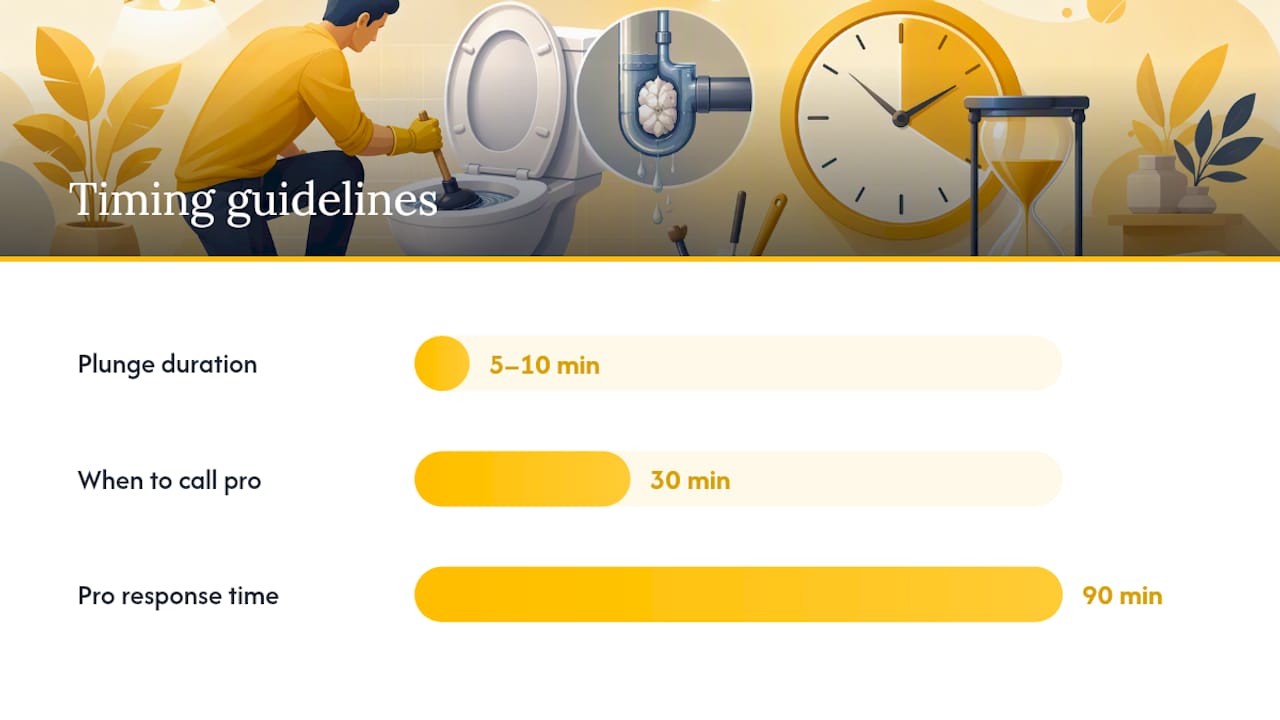
If none of these methods work within 30 minutes, stop. Continued attempts risk pushing the blockage deeper or damaging the pan. That is the point to call a professional.
Key takeaways
A toilet paper clog clears fastest with a flange plunger and hot soapy water — if those fail after 30 minutes, the blockage has a deeper cause that needs professional diagnosis.
| Point | Details |
|---|---|
| Try these first | Stop flushing, shut the cistern valve, then plunge with a flange plunger for 5–10 minutes. |
| Hot water, not boiling | Use water at 70–80°C with washing-up liquid; boiling water risks cracking the porcelain. |
| Recurring clogs need investigation | A toilet that keeps blocking usually has a partial obstruction the paper is catching on, not a paper problem. |
| Keep non-flushables out | Wipes, cotton pads, and sanitary items in a lidded bin prevent the majority of repeat blockages. |
| Budgetrodz for professional help | Covers Ellesmere Port, Wirral, and Chester with a typical 90-minute response, fixed pricing, and CCTV diagnosis. |
Table of Contents
- Why does toilet paper block a toilet?
- Step-by-step DIY methods to clear a toilet paper clog
- What tools and products actually work for toilet paper clogs?
- Safety: what not to do when unblocking a toilet
- When should you stop DIY and call a professional?
- How to prevent toilet paper clogs in future
- Quick troubleshooting checklist
- A note from a local blocked-toilet specialist
- When DIY is not enough, Budgetrodz is 90 minutes away
- Sources
Why does toilet paper block a toilet?
Toilet paper is engineered to break down quickly in water, but it can still form a stubborn wad when conditions work against it. The most common culprits are using too much paper in a single flush, a low-volume cistern that does not generate enough force, or a drain that is already partially narrowed by limescale, grease, or a non-flushable item sitting further downstream.
The real reason your toilet keeps blocking is often not the paper itself — it is something the paper is catching on. Wipes, cotton pads, and limescale build-up create a ledge that paper accumulates against. Remove the root obstruction and the repeat blockages stop.
Trade estimates suggest that excessive toilet paper accounts for roughly 20–25% of toilet blockages, with non-flushable wipes being a persistent secondary cause because they do not disintegrate the way paper does.
Signs the problem is at toilet level (DIY-fixable):
- Only this one toilet is affected; sinks and shower drains run freely
- The blockage appeared after a large amount of paper was flushed
- The water drains slowly rather than not at all
- The problem is a one-off, not a recurring pattern
Signs of a deeper drain issue (needs a professional):
- Multiple fixtures are slow or blocked at the same time
- Gurgling sounds from other drains when you flush
- The toilet blocks repeatedly every few days or weeks
- Sewage smell coming from drains or outside gullies
Toilet paper typically begins to soften and break apart within 15–20 minutes of sitting in water. If the clog is paper-only and the water level is not rising, waiting that window before plunging can make the job noticeably easier.
Step-by-step DIY methods to clear a toilet paper clog
Work through these in order. Each step builds on the last, and skipping ahead rarely saves time.
Step 1: Stop the water and assess
- Do not flush again. A second flush on a blocked toilet almost always overflows the pan.
- Locate the cistern shut-off valve (usually a small tap on the pipe behind or beneath the toilet) and turn it clockwise to stop the water supply.
- Wait 15–20 minutes. If the water level drops noticeably, the paper is softening and a single careful flush may clear it. If the level holds steady, move to the plunger.
Step 2: Use a flange plunger correctly
A flange plunger has a rubber cup with a soft inner sleeve (the flange) that folds out to seal the toilet outlet. A flat sink plunger will not create an adequate seal and is far less effective here.
- Submerge the plunger cup fully so it is covered by water. Add water from a bucket if needed.
- Press the cup firmly over the outlet hole to create a seal.
- Push down slowly to expel air, then pull back sharply. The pull-back vacuum is the key dislodging action.
- Repeat 6–10 vigorous push-pull cycles without breaking the seal.
- Test by turning the water back on and flushing once. If the water drains normally, you are done.
If after two or three rounds of plunging the blockage has not moved, do not keep going. Move to Step 3.
Step 3: Dish soap and hot water
This works because washing-up liquid lubricates the paper wad and reduces its friction against the pipe wall, while the heat softens it further.
- Squirt a generous amount of washing-up liquid (roughly 100–150 ml) directly into the toilet bowl.
- Heat water to approximately 70–80°C — hot from the tap or briefly boiled and left to cool for several minutes. Never pour boiling water directly into a toilet bowl; the thermal shock can crack the porcelain.
- Pour the hot water from waist height in a steady stream. The height adds a small amount of force that helps push the soap and water into the blockage.
- Wait 15–20 minutes, then attempt a flush.
Step 4: Toilet auger (closet auger)
A toilet auger is a coiled cable inside a protective sleeve, designed specifically to navigate the toilet trap without scratching the porcelain. It is different from a kitchen drain snake, which lacks that protective sleeve and can gouge the bowl.
- Insert the auger head into the toilet outlet, keeping the sleeve pressed against the porcelain.
- Crank the handle clockwise to feed the cable around the trap bend.
- When you feel resistance, continue cranking to hook or break up the paper.
- Pull the cable back slowly. If paper comes out, remove it and dispose of it in a bin bag.
- Flush to confirm the drain is clear.
Step 5: What to avoid
- Boiling water — cracks porcelain; always cool it first
- Caustic chemical drain cleaners (bleach-based or sodium hydroxide products) — they rarely dissolve paper effectively, can damage older pipework, produce dangerous fumes, and become a hazard if a plumber then needs to work in the bowl
- Metal coat hangers — the unprotected wire scratches the porcelain glaze and often pushes the blockage further rather than removing it
- Mixing chemicals — never combine different drain products; the reactions can produce toxic gases
Method comparison:
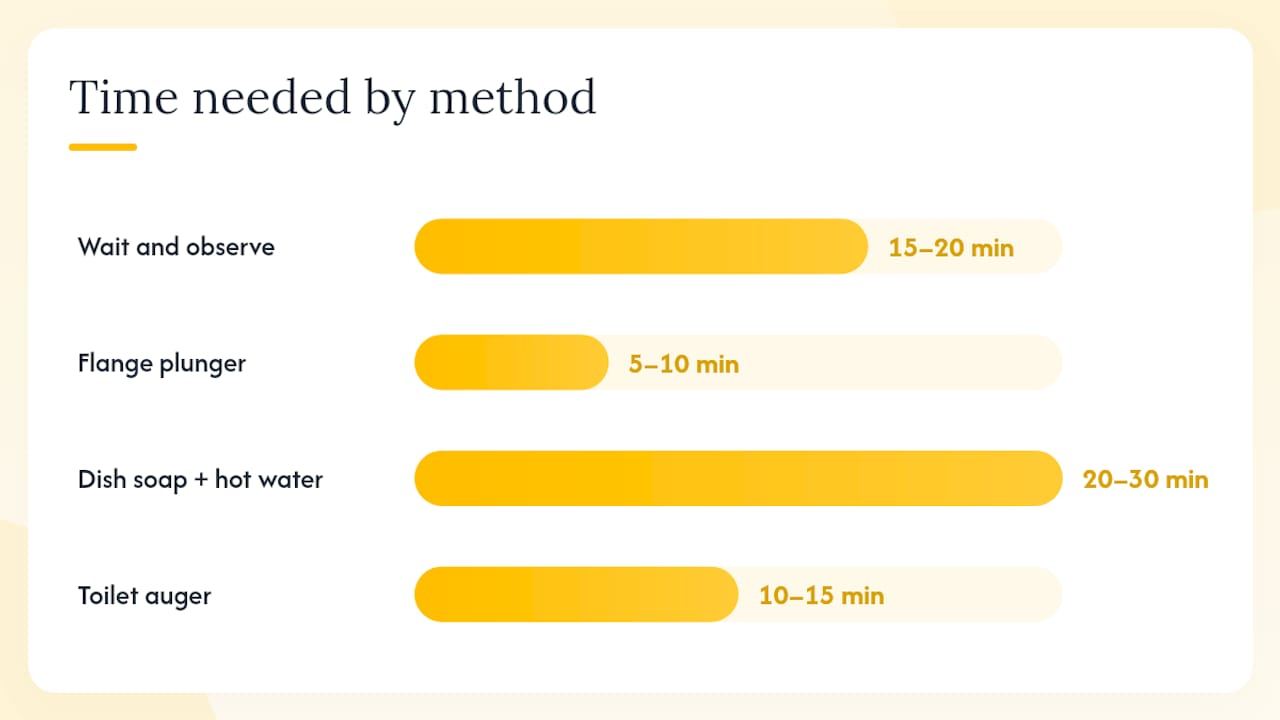
| Method | Effort | Time needed | Best for | Risk level |
|---|---|---|---|---|
| Wait and observe | None | 15–20 min | Soft paper-only clogs | None |
| Flange plunger | Low | 5–10 min | Most paper blockages | Very low |
| Dish soap + hot water | Low | 20–30 min | Soft or partial wads | Low |
| Toilet auger | Moderate | 10–15 min | Stubborn or deeper clogs | Low (if used correctly) |
| Chemical cleaners | Low | Variable | Not recommended for paper | High |
What tools and products actually work for toilet paper clogs?
Getting the right kit before you need it saves a frantic trip to the hardware shop mid-crisis.
Flange plunger
- Look for one with a soft rubber cup and a fold-out flange. Avoid rigid plastic cups.
- Typical UK price: £5–£15 from DIY retailers such as B&Q, Screwfix, or Amazon.
- Store it in a lidded bucket so it stays clean between uses.
Toilet auger (closet auger)
- A 90 cm (3 ft) auger handles the vast majority of domestic toilet traps. Longer models exist for commercial use.
- The protective sleeve is non-negotiable. A bare drain snake will scratch the bowl.
- Available from Screwfix, Toolstation, or plumbing merchants; expect to pay £15–£40.
Enzyme-based drain cleaners
- Products containing bacterial enzymes (look for "enzyme drain cleaner" or "bio drain cleaner" on the label) break down organic matter gradually. They are safe for all pipe types, including older clay and cast-iron runs common in UK housing stock.
- Enzyme cleaners are not a reliable emergency fix for a large physical blockage, but used monthly they reduce the build-up that paper catches on. Avoid caustic products (sodium hydroxide, sulphuric acid) for toilet paper clogs entirely.
PPE and cleanup kit
- Rubber gloves (elbow-length if possible)
- Old towels or puppy pads around the base of the toilet
- A bucket for water management
- Disinfectant spray (a diluted bleach solution or a proprietary bathroom disinfectant)
- Bin bags for disposing of any material you extract
You can check reviews for bathroom and plumbing products on platforms such as Trustpilot before buying, which helps you gauge quality and reliability from other UK customers.
Safety: what not to do when unblocking a toilet
Boiling water and porcelain
The most common DIY mistake is reaching for the kettle. Water at 100°C creates a rapid temperature differential between the water and the cold ceramic, and that thermal shock can crack the porcelain or the internal glaze. Use water at around 70–80°C — hot enough to feel the steam, not hot enough to scald on contact. If you are unsure, let freshly boiled water sit for five minutes before pouring.
Never pour boiling water directly into a toilet bowl. The porcelain can crack, turning a £30 DIY job into a toilet replacement. Hot tap water or water cooled from the boil is all you need — and it works just as well on softened paper.
Chemical drain cleaners
Caustic products are poorly suited to paper blockages. Paper does not dissolve in sodium hydroxide the way grease does, so the chemical sits in the bowl doing little while corroding the pipe joints. If a plumber then needs to attend, they are working in a bowl of corrosive liquid, which adds time and risk to the job. Fumes from caustic products in a small bathroom can also cause respiratory irritation. Keep the window open if you use any chemical product, and never mix two different products.
Metal coat hangers and improvised tools
A straightened coat hanger feels resourceful but it is unprotected metal against a glazed ceramic surface. Even light pressure leaves scratches that harbour bacteria and are impossible to clean properly. More critically, a rigid rod tends to compact the paper rather than hook it, pushing the blockage further down the drain where a plunger can no longer reach it.
Cleanup and hygiene
After clearing a blockage, disinfect the bowl, the plunger, and any surface the water touched. Rinse the plunger in the toilet after flushing, then soak it in a diluted disinfectant solution before storing. Bag any extracted material immediately and put it in the outside bin. Wash hands thoroughly with soap after removing gloves. If contaminated water has reached the floor, clean with a disinfectant solution and allow to dry before using the bathroom again. For guidance on containing a broader bathroom water incident, the bathroom leak advice from JM Plumbing covers the immediate containment steps.
When should you stop DIY and call a professional?
Some blockages are beyond what a plunger and a bottle of washing-up liquid can fix. Recognising that point early saves money and prevents damage.
Call a professional if you see any of these:
- The blockage has not shifted after 20–30 minutes of genuine effort across multiple methods
- More than one fixture (toilet, sink, bath, shower) is draining slowly or not at all
- You can hear gurgling from other drains when you flush
- There is a sewage smell from drains inside or outside the property
- Water is backing up into a bath or shower tray when the toilet is flushed
- The toilet has blocked repeatedly over recent weeks without an obvious cause
A recurring blockage almost always signals a partial obstruction sitting further down the drain — wipes, limescale, root ingress, or a structural defect — that paper is accumulating against. Plunging will clear the paper each time but will never address what the paper is catching on.
A professional visit typically includes a physical inspection, augering or high-pressure jetting to clear the line, and a CCTV drain survey if the cause is not immediately obvious. Camera inspection is the only reliable way to confirm a downstream obstruction or locate a non-flushable item lodged beyond the pan trap. Fixed pricing means you know the cost before work begins, with no surprise additions.
Before the engineer arrives:
- Stop using the affected toilet and any connected fixtures
- Turn off the cistern shut-off valve
- Tell the dispatcher how many fixtures are affected, when the problem started, and whether it is recurring
- Keep the bathroom ventilated
Continued DIY attempts after the blockage has resisted multiple methods can push debris deeper, compact it further, or scratch the bowl, all of which make the professional repair more involved and more expensive.
How to prevent toilet paper clogs in future
Most repeat blockages are preventable with a few consistent habits.
The single most effective prevention step is keeping non-flushable items out of the toilet entirely. Wipes labelled "flushable" do not break down like paper and are a leading cause of persistent drain blockages across UK homes. A small lidded bin next to the toilet removes the temptation.
Household rules that make a real difference:
- Flush only human waste and toilet paper. Nothing else.
- Use a moderate amount of paper per flush. If you need a large amount, flush halfway through rather than sending one large wad.
- For solid waste, use the full flush. For paper-only, a half-flush is usually sufficient and reduces the risk of a low-volume flush failing to carry the paper through.
- Teach children that wipes, cotton wool, and sanitary products go in the bin, not the toilet.
Maintenance habits worth building:
- Descale the rim jets annually. Limescale build-up reduces the water flow around the bowl, which weakens the flush and leaves paper sitting longer. A proprietary limescale remover or a diluted white vinegar soak works well.
- Check the cistern float and flush valve once a year. A weak flush is often a cistern setting issue rather than a pipe problem. If your toilet keeps running between flushes, a running toilet guide covers the common causes and fixes.
- Use an enzyme-based drain cleaner monthly if your property has older pipework or a history of slow drains. It will not clear an existing blockage, but it reduces the organic build-up that paper accumulates against.
- If you live in a hard-water area (most of the Midlands, South East, and parts of the North West), descaling is more important than in soft-water regions. Limescale narrows pipes gradually and is invisible until it causes a problem.
Quick troubleshooting checklist
Work through this in order. Tick each step before moving to the next.
- Stop flushing — do not flush again until the blockage is clear (immediate)
- Shut off the cistern valve — turn the tap behind or beneath the toilet clockwise (30 seconds)
- Wait 15–20 minutes — check whether the water level drops on its own; if yes, try a careful flush
- Plunge with a flange plunger — 6–10 push-pull cycles, two or three rounds (5–10 minutes)
- Dish soap + hot water — 100–150 ml of washing-up liquid, water at 70–80°C, 15–20 minutes dwell (20–30 minutes total)
- Toilet auger — feed carefully around the trap, hook or break up the paper, remove and dispose (10–15 minutes)
- Call a professional — if none of the above has worked, or if multiple fixtures are affected
Safety reminder: never use boiling water, never mix chemical products, and always wear rubber gloves throughout.
A note from a local blocked-toilet specialist
In the Ellesmere Port, Wirral, and Chester area, the blocked toilets we attend most often share a common pattern: the paper is not the original problem. It is catching on something else — a partial limescale ridge inside the trap, a wipe that was flushed months ago and never fully cleared, or a low-flush cistern that was never quite powerful enough for the pipe run in the property. Homeowners who try a plunger and hot water are doing exactly the right thing first, and in most cases that is all it takes. When it is not enough, the cause is almost always something that needs a camera to find. If you have tried the steps above and the toilet is still blocked, do not keep going — call us and we will have someone with you quickly.
When DIY is not enough, Budgetrodz is 90 minutes away
Toilet paper clogs that resist plunging and hot water usually have a deeper cause: a partial obstruction, a collapsed pipe section, or a build-up that only jetting will shift.
Budgetrodz covers Ellesmere Port, Wirral, Chester, Liverpool, Wrexham, and surrounding areas with a typical 90-minute emergency response. No call-out fee, fixed pricing agreed before work starts, and no hidden charges when the job is done. Engineers arrive with high-pressure jetting equipment and CCTV survey capability as standard, so the cause is diagnosed and cleared in a single visit rather than a return trip. If you are seeing recurring blockages or multiple slow fixtures, a CCTV drain survey will locate exactly what the paper is catching on. When you call, tell the team how many fixtures are affected, whether the problem is recurring, and whether there is any sewage smell — that information gets the right equipment dispatched first time. Call Budgetrodz now for a blocked toilet specialist in your area.
Sources
- Uk