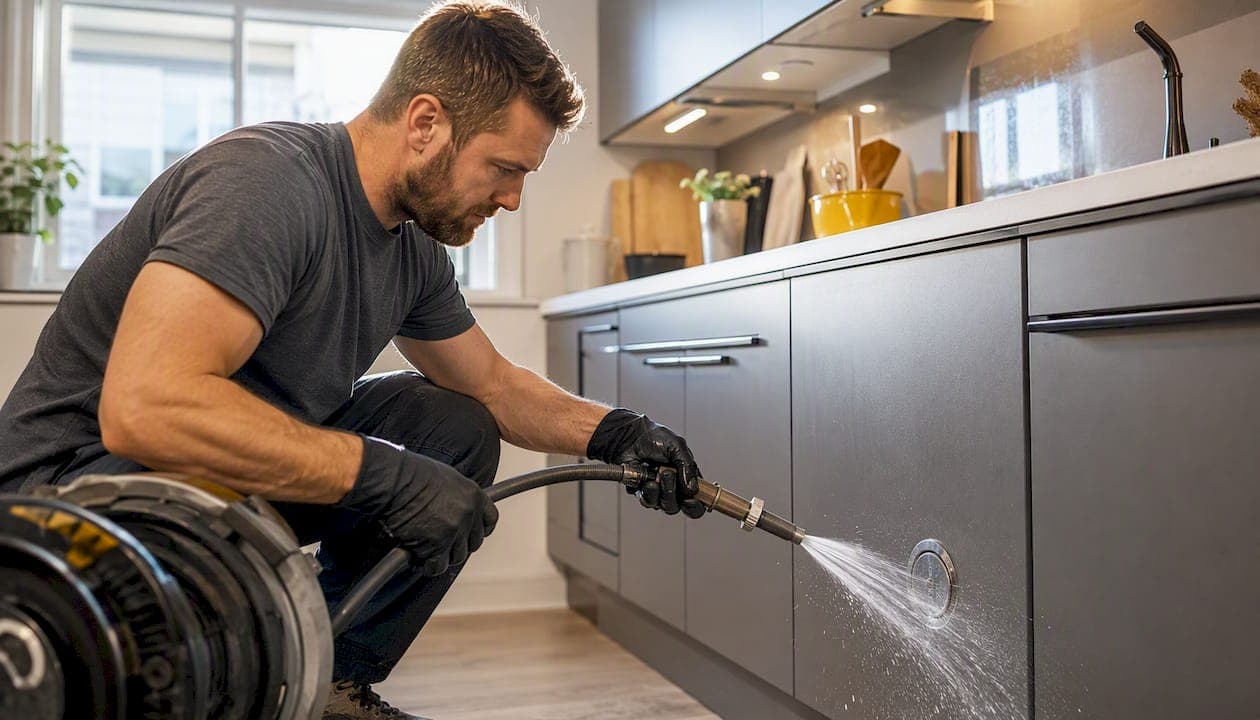
Drain descaling is the professional removal of limescale, rust and mineral deposits from the internal walls of drainage pipes. Before any aggressive cleaning begins, arrange a CCTV drain survey — it tells you exactly what you are dealing with and prevents a well-intentioned clean from cracking a pipe that was already fragile.
Three signs you need to act now:
- Drains that empty slowly and stay that way despite repeated plunging
- Blockages that clear briefly, then return within weeks
- Discoloured water or visible white or orange scale around plug holes and drain covers
Industry practice consistently shows that a diagnostic-first approach prevents accidental damage and gives you before-and-after evidence of the work done.
Key takeaways
Professional drain descaling requires a CCTV survey first: the camera determines which method is safe and appropriate, and prevents costly damage to fragile or older pipes.
| Point | Details |
|---|---|
| Book a CCTV survey first | Always inspect before descaling — camera footage confirms wall condition and scale type. |
| Match method to pipe condition | Hydro-jetting suits most pipes; mechanical descaling targets heavy cast iron tuberculation; avoid acid chemicals on older iron. |
| Recognise the warning signs | Recurring slow drains, repeat blockages and discoloured water all indicate scaling rather than a one-off clog. |
| Maintain to reduce repeat work | Avoid pouring fat down drains, run a weekly hot-water flush and schedule inspections every 3–5 years. |
| Budgetrodz for local descaling | Fixed pricing, 90-minute response and CCTV before-and-after across Ellesmere Port, Wirral, Chester and surrounding areas. |
Table of Contents
- How professional drain descaling works
- Why drains scale up and the signs that point to it
- DIY methods versus professional descaling
- What a professional descaling visit looks like
- How to reduce future scaling
- What reputable contractors do
- A practical view on choosing the right contractor
- Budgetrodz: CCTV surveys, jetting and descaling with fixed pricing
- Sources
How professional drain descaling works
Professionals match the descaling method to the pipe material, its age and the type of deposit present. A contractor who arrives with one tool and uses it regardless of what the camera shows is cutting corners. The right method depends on scale characteristics and the cleaning objective — a principle confirmed by pipeline research reviewing techniques from conventional flushing through to guided ultrasonic waves.
The main professional methods:
- High-pressure jetting (hydro-jetting): Water delivered at controlled pressure and flow rate scours the pipe wall. Volume in gallons per minute matters as much as pressure in PSI — you need enough flow to carry dislodged material out of the line, not just loosen it. Nozzle selection is critical; the wrong head on a fragile pipe can cause more damage than the scale itself.
- Mechanical/rotary descaling: Rotating chain knockers and carbide-tipped cutters physically grind away tuberculation and restore internal diameter. On severely scaled cast iron, a technician will often run a CCTV camera alongside the cutter to monitor wall thickness in real time and stop before contacting weakened iron.
- Professional chemical descaling: Acid-based products dissolve mineral deposits quickly but are non-selective. They can attack iron and other metals, thinning pipe walls and causing pinhole leaks in older systems. Contractors who use them on cast iron do so cautiously and only after confirming wall integrity.
- Electronic/ultrasonic approaches: Emerging research points to guided ultrasonic waves as a targeted option for specific scale compositions, particularly in water-filled pipes where conventional tools struggle to reach. These are not yet standard on a domestic callout but represent the direction the industry is moving.
CCTV's role: The camera is not just a sales tool. It measures scale thickness, identifies areas of channel rot where scale may be structurally supporting the pipe, and produces footage that documents condition before and after the work. No reputable contractor skips it.
| Method | Best suited to | Key advantage | Main risk |
|---|---|---|---|
| High-pressure jetting | Most pipe materials | Thorough wall scour; clears debris | Can damage fragile or thin-walled pipes at excessive PSI |
| Mechanical/rotary | Cast iron, heavy tuberculation | Physically restores internal diameter | Must monitor with CCTV; risk of wall contact |
| Chemical descaling | Mineral-only scale, plastic pipes | Fast dissolution of limescale | Corrosive to older iron; non-selective |
| Ultrasonic/electronic | Specific scale types, research settings | Targeted; no mechanical abrasion | Not yet widely available commercially |
Why drains scale up and the signs that point to it
Hard water is the primary culprit. Calcium and magnesium dissolved in the water supply deposit on pipe walls every time water passes through, building up a layer that narrows the internal diameter over months and years. In areas with naturally hard water, this process accelerates noticeably.
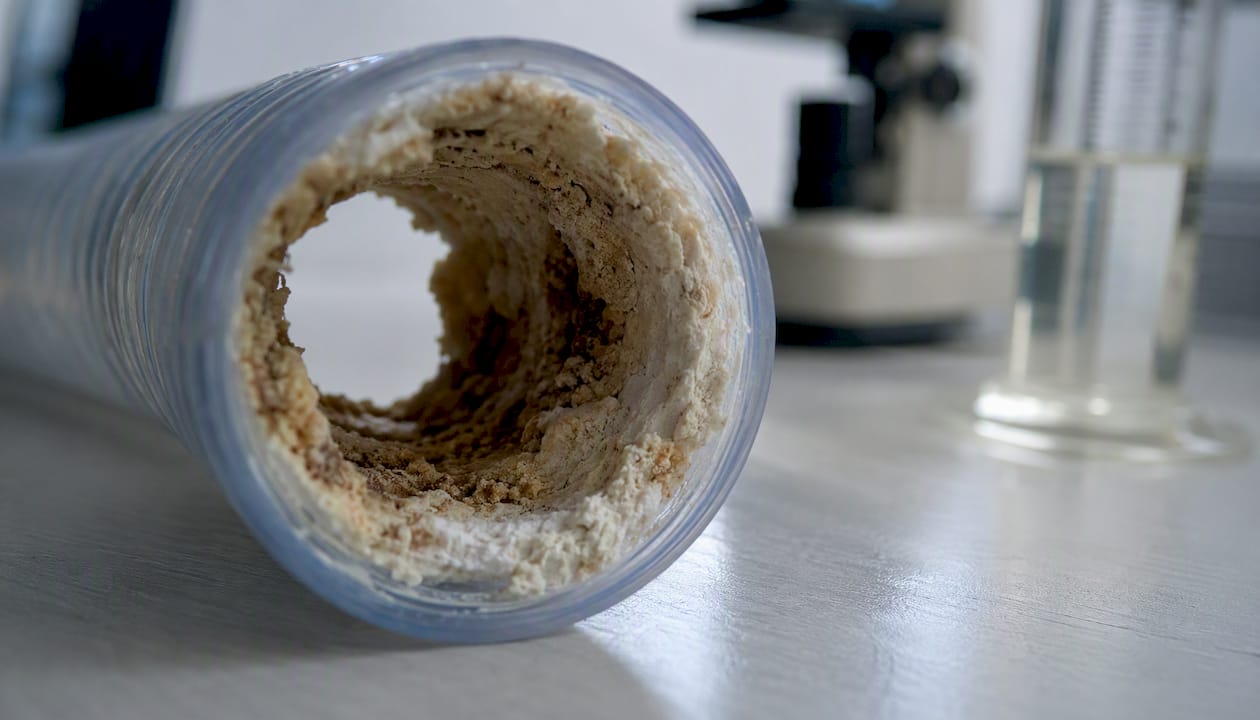
Grease and fat compound the problem. Cooking fat poured down a kitchen sink cools and solidifies on the pipe wall, then traps food particles, hair and debris. The resulting mass catches mineral scale on top of it, and what started as a thin film becomes a substantial obstruction. Cast iron pipes face an additional issue: the iron itself corrodes over time, producing rust tubercles that roughen the internal surface and give scale even more to grip onto.
Symptoms that suggest descaling rather than a one-off unblock:
- Drainage that slows gradually over weeks rather than stopping suddenly
- Blockages that return within a short time of clearing
- Gurgling or knocking sounds from pipes under load
- Discoloured water, particularly orange or brown tints suggesting rust
- CCTV footage showing circumferential scale or significant reduction in bore diameter
The mechanism is straightforward: limescale narrows the internal diameter, which reduces flow velocity, which in turn gives grease and hair more time to settle and stick. Each layer makes the next one easier to form.
DIY methods versus professional descaling
Baking soda and vinegar, store-bought drain cleaners and a hired drain snake all have their place for minor surface grime and soft blockages. They do not reliably remove hardened mineral scale from a main drain. Household remedies offer only superficial cleaning and are unsuitable for descaling sewer mains where circumferential scale has built up over years.
What DIY can and cannot do:
- Plunger or hand snake: Clears soft blockages; cannot touch calcified scale on pipe walls
- Baking soda and vinegar: Mild fizzing action on surface grime; no meaningful effect on hardened limescale
- Store drain cleaners (caustic/acid): Can shift grease blockages; risk of chemical burns, fume inhalation and, critically, accelerated corrosion in cast iron pipes
- Rental electric snake: Useful for cutting through soft obstructions; no descaling capability and can snag on tuberculation
The safety concern with chemical products is specific and worth stating plainly. Acid-based descalers can thin cast iron pipe walls, cause pinhole leaks and generate localised heat damage. Using them on an older system without knowing its wall thickness is a gamble with expensive consequences.
Pro Tip: Stop DIY attempts and call a contractor when: simple plunging or snaking fails to clear the blockage; the same drain blocks repeatedly within weeks; you notice discoloured water or hear structural pipe noises; or you need a CCTV inspection to understand what is actually in the pipe.
What a professional descaling visit looks like
Most jobs follow the same sequence: inspection, targeted cleaning, verification. The variation is in how long each stage takes and which cleaning method the technician selects.
Typical process on the day:
- Arrival and initial assessment — the engineer reviews access points, drain layout and any history you can provide.
- CCTV camera survey — a camera is fed through the drain to record scale thickness, pipe condition and any structural concerns before any cleaning begins.
- Method selection — based on camera findings, the technician chooses hydro-jetting, mechanical descaling, chemical treatment or a combination.
- Descaling — the chosen method is applied; on complex jobs, the camera may run simultaneously to monitor progress.
- Flushing — the line is flushed to clear dislodged material and confirm flow has been restored.
- Post-work CCTV — a second camera pass records the cleaned pipe, providing before-and-after documentation.
Timeline and cost factors:
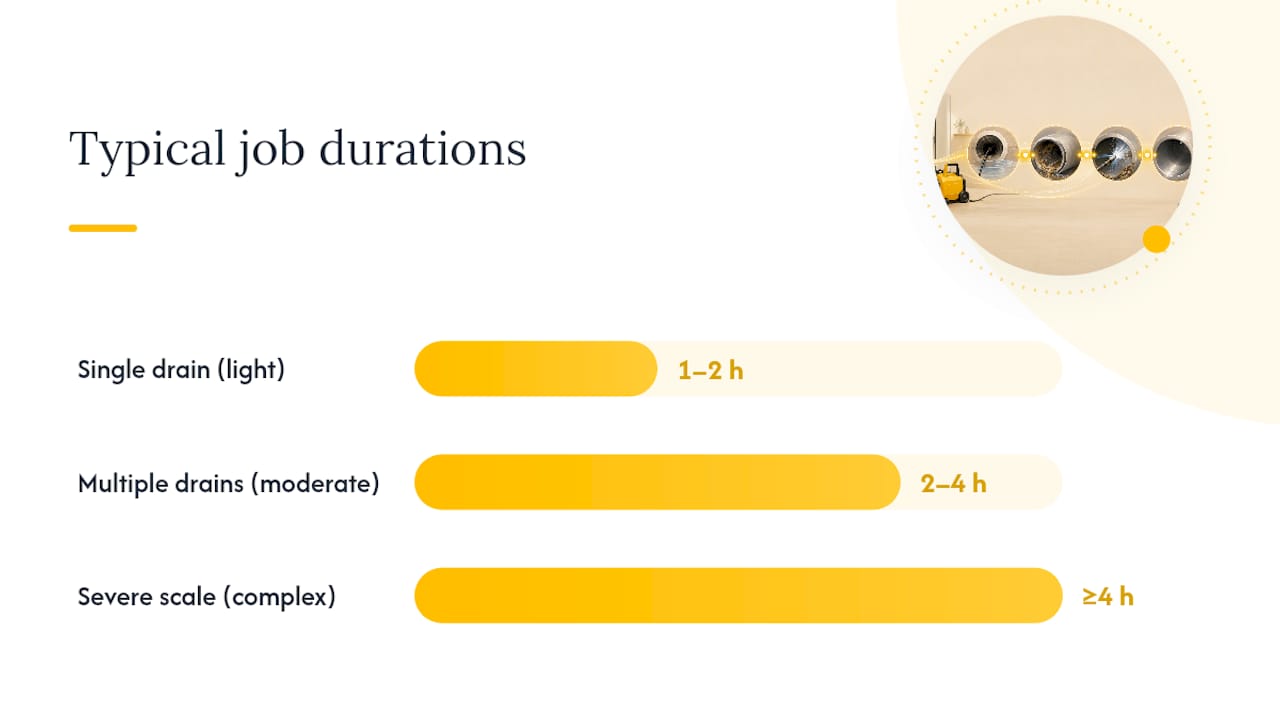
| Job type | Typical duration | Relative cost band |
|---|---|---|
| Single drain, light scale | 1–2 hours | Lower |
| Multiple drains or moderate scale | 2–4 hours | Mid-range |
| Severe scale, cast iron, complex access | Half-day or more; may need return visit | Higher |
Variables that move the cost: pipe material and wall condition, total pipe length and access difficulty, severity and type of scale, method required, and whether relining is needed after descaling. A contractor who quotes without a camera survey first is guessing.
How to reduce future scaling
Prevention combines three things: behaviour changes, hardware and scheduled inspections. None of them alone is enough, but together they extend the gap between professional visits considerably.
Maintenance checklist:
- Never pour cooking fat, oil or grease down any drain. Collect it in a container and dispose of it in the bin.
- Run hot water for 30–60 seconds after washing dishes to push residual grease further through the system.
- Fit a grease trap if you manage a commercial kitchen or a property with heavy cooking use.
- Consider a water softener if you are in a hard-water area — it reduces the calcium and magnesium load on your pipes directly.
- Keep external downpipes and gutters clear; debris entering the system from above adds to the accumulation load. Clean gutters reduce the amount of debris reaching your drains, which matters more than most homeowners realise.
- Book a CCTV inspection every 3–5 years for cast iron systems, or every 2–3 years for high-use commercial properties.
Pro Tip: For rental properties or commercial premises, schedule a hydro-jet maintenance flush annually. It costs far less than emergency descaling and prevents the kind of slow-building blockage that only becomes visible when a drain backs up completely.
What reputable contractors do
A professional approach starts with diagnostic CCTV and matches the descaling method to what the camera actually shows. That sounds obvious, but plenty of operators skip the survey and jet everything at maximum pressure regardless of pipe condition. Mechanical milling and hydro-jetting restore cast iron pipes effectively, but a prior CCTV inspection is essential to confirm wall thickness and avoid catastrophic failure. A camera that reveals channel rot or areas where scale is structurally supporting the pipe changes the entire plan.
Equipment a properly equipped contractor brings:
- CCTV camera rig with recording capability for before-and-after documentation
- High-pressure jetting unit with interchangeable nozzles calibrated to pipe diameter and condition
- Rotary descaling heads and chain knockers for mechanical work on cast iron
- Chemical descaling agents for mineral-only scale on appropriate pipe types
There are things a responsible contractor will not do in a single visit. Jetting at high pressure when the camera shows severe channel rot or graphitised iron is one of them. Descaling an area where scale is the only thing holding a section together, without relining it first, is another.
Verified Google reviews and a clear, written guarantee on the work are the two most practical trust signals available to a homeowner. A 5.0 rating across more than 50 reviews tells you something a brochure cannot.
A practical view on choosing the right contractor
Prioritise diagnostic CCTV first and choose the least aggressive method that will achieve the result. That single principle rules out most of the bad decisions in drain descaling.
Questions to ask before booking:
- Do you carry out a CCTV survey before and after the work?
- Are your engineers fully insured?
- Which descaling method will you use, and why is it right for my pipe type?
- Will I receive footage and a written report?
- Do you offer a guarantee or warranty on the descaling work?
Look for contractors with verifiable reviews, transparent fixed pricing and a clear process they can explain before they start. Local responsiveness matters too: a contractor who can reach you within 90 minutes is genuinely more useful than a national operator who books you in for next week when a drain is backing up into your kitchen.
Fixed pricing removes the anxiety of an open-ended job. You should know the cost before work begins, not after.
Budgetrodz: CCTV surveys, jetting and descaling with fixed pricing
Budgetrodz provides CCTV drain surveys, high-pressure jetting and mechanical descaling across Ellesmere Port, Wirral, Chester, Liverpool, Wrexham and surrounding areas, with a typical response time of 90 minutes and fixed pricing on every job.

When you contact Budgetrodz, the process is straightforward: a CCTV inspection first to establish exactly what is in the pipe, a transparent quote before any work starts, and before-and-after footage so you can see what was done. Engineers are insured, the work is guaranteed, and there are no hidden call-out fees. Whether you need a planned descaling survey or an emergency drain response, the same fixed-price, camera-first approach applies. Book a CCTV inspection or request a quote directly through the Budgetrodz services page.
Sources
The technical background for the methods and safety guidance in this article draws on the following:
- A descaling methodology for a water-filled pipe based on leaky guided ultrasonic waves cavitation
- How to Safely Descale Cast Iron Pipes Expert Guide