
A homebuyer drain survey is a CCTV inspection that reveals the true condition of a property's drainage system before you commit to buying. Standard property surveys rarely inspect underground pipework, which means hidden defects can go undetected until after you've moved in. In Cheshire, where many properties sit on older drainage networks, this gap in due diligence carries real financial risk. A pre-purchase drain inspection gives you documented evidence of any problems, and that evidence has direct value at the negotiating table.
What does a homebuyer drain survey involve?
A pre-purchase drain survey is a CCTV inspection that feeds specialist cameras into the drainage system via existing access points to record the condition of pipes from the inside. The camera travels through the pipework, capturing footage and still images that form the basis of a written report. No excavation is required, making the process non-invasive and efficient for buyers.
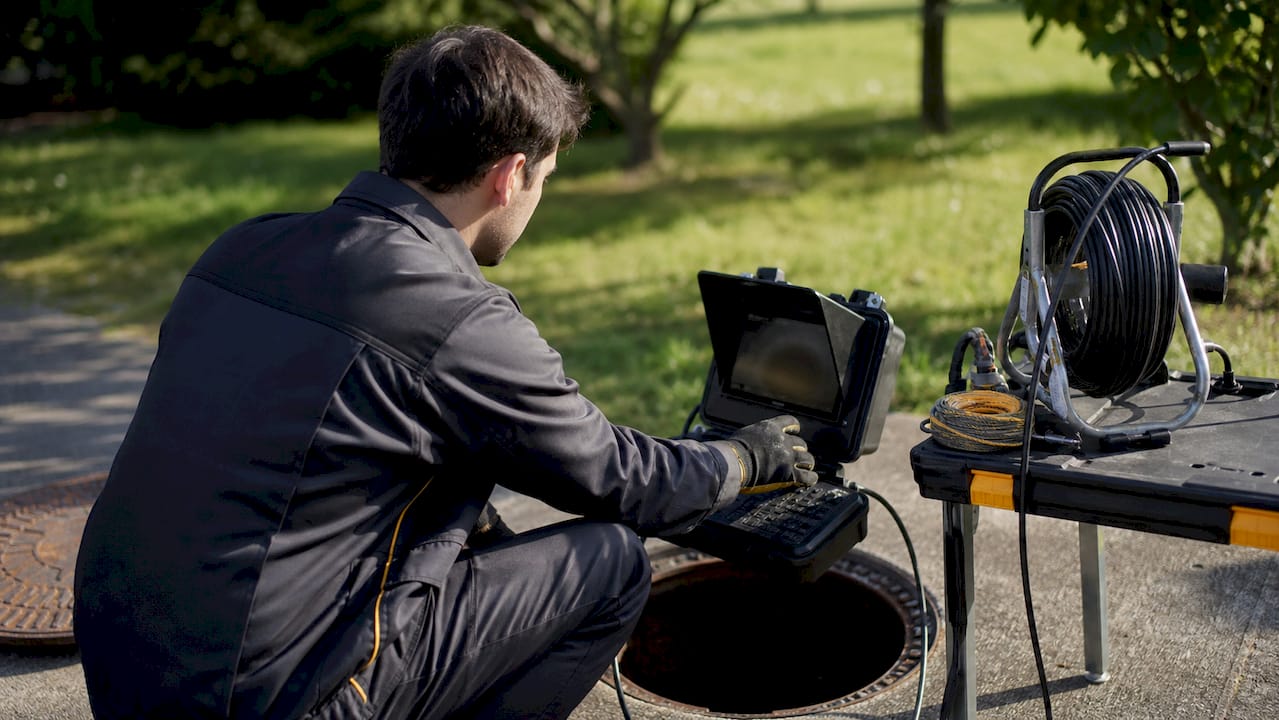
What the survey report contains
The report documents every defect the camera identifies, with timestamped footage and photographs as evidence. A thorough report will also include repair recommendations and, where relevant, an indication of urgency. This is what separates a drainage survey for buyers from a standard visual inspection: you receive objective, recorded proof rather than an engineer's verbal opinion.
Common defects the survey uncovers
Typical drainage defects found during a pre-purchase drain inspection include tree root ingress, cracked or fractured pipes, collapsed pipe sections, debris build-up, and poor previous repairs. Each of these carries a different repair cost and urgency level. Root ingress, for example, can cause progressive structural damage if left untreated, while a minor debris blockage may need only a single jetting session to clear.
- Tree root ingress: roots enter through pipe joints and grow, eventually causing collapse
- Cracked or fractured pipes: often caused by ground movement or age, particularly in clay pipes
- Collapsed sections: the most serious finding, usually requiring excavation and full pipe replacement
- Debris build-up: accumulated grease, silt, or waste that restricts flow
- Poor previous repairs: patch repairs that have failed or were never compliant with drainage standards
Pro Tip: Ask the surveyor to confirm whether any defects fall within private or shared drainage. Shared drains may be the responsibility of the water authority, which changes the repair liability entirely.
When is the best time to get a drain survey?
Timing determines how much value you extract from a home drainage assessment. The ideal window is after your offer has been accepted but before you exchange contracts. At that stage, you are not yet legally committed to the purchase, so any significant findings give you genuine options.
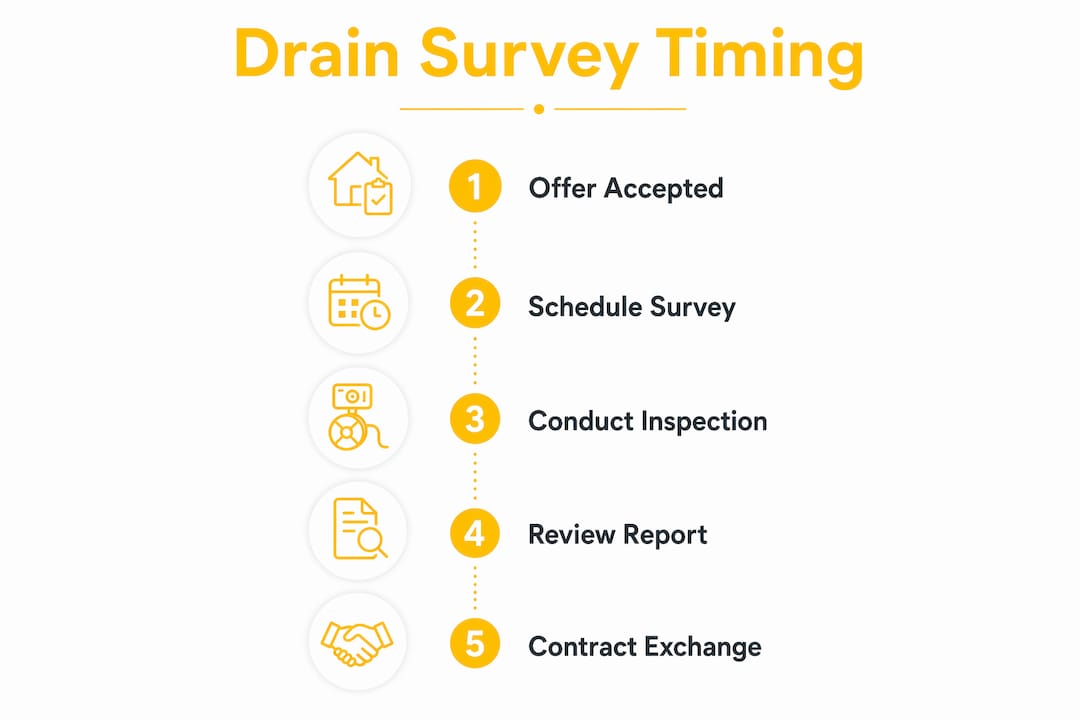
Commissioning the survey too late, after exchange, removes your negotiation leverage entirely. You become legally bound to complete the purchase regardless of what the drainage inspection reveals. Many buyers in Cheshire make this mistake because they treat the drain survey as an afterthought rather than a core part of their due diligence.
The right sequence looks like this:
- Offer accepted. Instruct your solicitor and commission your drain survey at the same time.
- Survey completed. Review the report with your solicitor before the contract pack is finalised.
- Negotiate if needed. Use the report to request repairs, a price reduction, or a retention held by your solicitor until works are completed.
- Exchange contracts. Do so only once you are satisfied with the drainage condition or have agreed remedies in writing.
- Completion. Move in knowing the drainage system has been independently assessed.
Pro Tip: If the seller refuses access for a drain survey before exchange, treat that as a significant warning sign. Sellers with nothing to hide rarely object to a standard inspection.
How much does a homebuyer drain survey cost?
Drain surveys typically cost between £250 and £650 for a standard residential property, depending on the size of the property and the complexity of the drainage layout. A three-bedroom semi-detached in Cheshire, for example, usually takes around three hours to survey. Larger detached properties with multiple drainage runs will sit at the higher end of that range.
| Factor | Effect on price |
|---|---|
| Property size | Larger properties have more pipework to inspect, increasing survey time |
| Drainage complexity | Multiple junctions, inspection chambers, or shared runs add time and cost |
| Report detail | Basic pass/fail reports cost less; full written reports with footage cost more |
| Access difficulty | Overgrown or buried access points may require additional preparation |
The cheapest quote does not always provide sufficient due diligence. A brief report with no footage gives your solicitor very little to work with if you need to negotiate. A detailed report with video evidence and repair costings is worth the additional spend, particularly when drainage repairs can run into thousands of pounds if excavation is required.
How does a drain survey benefit buyers beyond detection?
The financial and legal benefits of a CCTV drain survey extend well beyond simply knowing what is wrong. The documented evidence it produces becomes a tool your solicitor can use directly in purchase negotiations.
"The true value of a pre-purchase drain survey lies in objective inspection evidence. Solicitors can use video footage and written reports to negotiate price reductions or compel sellers to carry out repairs before completion."
Drainage repairs can be costly, particularly when excavation is required to access collapsed or fractured pipes. Identifying these issues before completion means you can budget accurately, request a price reduction, or walk away from a purchase that carries unacceptable risk. Buyers who skip the survey and discover problems after moving in have no legal recourse against the seller.
There are four clear advantages beyond defect detection:
- Negotiation leverage. A written report with footage gives your solicitor concrete grounds to request a price reduction or repair obligation from the seller.
- Mortgage lender compliance. Some mortgage lenders require a pre-purchase drain survey before approving a loan on certain properties, particularly older or rural homes.
- Liability clarity. UK property owners are responsible for drains that serve only their property. Knowing the condition of those drains before purchase prevents inheriting someone else's maintenance backlog.
- Maintenance planning. Even where no urgent repairs are needed, the survey gives you a baseline condition report to plan future maintenance and avoid emergency call-outs.
Key takeaways
A pre-purchase drain survey is the single most effective step a homebuyer can take to avoid inheriting costly, hidden drainage problems before legally committing to a purchase.
| Point | Details |
|---|---|
| Commission early | Order the survey after offer acceptance, before exchanging contracts, to retain negotiation options. |
| CCTV is non-invasive | Specialist cameras inspect pipes without excavation, making the process quick and non-disruptive. |
| Reports carry legal weight | Video footage and written findings give solicitors documented grounds to negotiate repairs or price reductions. |
| Cost is proportionate | Surveys range from £250 to £650; a detailed report is worth the investment against potential repair bills. |
| Liability starts at completion | UK owners are responsible for private drains, so knowing their condition before purchase protects you financially. |
Why I always recommend commissioning a drain survey early
Most buyers I speak to treat the drain survey as optional, something to consider if the property looks old or if the seller mentions drainage issues. That thinking is backwards. Drainage problems are almost always invisible from the surface. A perfectly presented property in Cheshire can sit on cracked clay pipes that have been quietly failing for decades.
The buyers who get into trouble are those who commission the survey after exchange, or not at all. By that point, any findings are purely academic. You are committed to the purchase, and the repair bill is yours. I have seen cases where a collapsed drain section required full excavation of a front garden, with costs running well beyond what a survey would have cost to commission.
Interpreting the report is also worth discussing with your surveyor directly, not just reading the written summary. Ask them to walk you through the footage. Understanding whether a crack is stable or progressive, or whether root ingress is minor or advanced, changes the urgency of any negotiation. A good surveyor will tell you plainly what needs doing now and what can wait.
Prioritise the drain survey alongside your mortgage application and solicitor instruction. Treat it as a fixed cost of buying, not an optional extra.
— Christopher
Budgetrodz CCTV drain surveys for Cheshire homebuyers
Budgetrodz provides specialist CCTV drain surveys for homebuyers across Cheshire, including Ellesmere Port, Chester, Neston, and surrounding villages. Their experienced engineers use camera technology to inspect pipe condition thoroughly, producing detailed written reports with video evidence suitable for solicitor negotiations and mortgage lender requirements.
Reports are delivered promptly, giving you the evidence you need before contract exchange. Budgetrodz also offers drainage services covering unblocking, high-pressure jetting, and emergency call-outs if the survey reveals issues that need immediate attention. With a 5.0 rating from over 50 Google reviews and transparent pricing with no hidden fees, Budgetrodz is a trusted choice for buyers who want a clear picture of what they are purchasing.
FAQ
What is a homebuyer drain survey?
A homebuyer drain survey is a CCTV inspection of a property's drainage system, carried out before purchase to identify defects such as cracked pipes, root ingress, or collapsed sections. It produces a written report with video evidence that buyers and solicitors can use in negotiations.
Does a standard property survey cover drains?
Standard property surveys are visual inspections and rarely assess underground drainage unless a specific concern is raised. A separate drain survey is required to inspect pipe condition properly.
Can a drain survey affect the purchase price?
A drain survey report with documented defects gives your solicitor grounds to negotiate a price reduction or request that the seller carries out repairs before completion. The survey pays for itself if it uncovers a significant problem.
How long does a pre-purchase drain inspection take?
A standard three-bedroom property typically takes around three hours to survey. Larger properties or those with complex drainage layouts will take longer.
Do I need a drain survey if the property is newly built?
New-build properties can still have drainage defects from installation errors or ground settlement. A pre-purchase drain inspection is worth commissioning on any property where you cannot verify the drainage history independently.