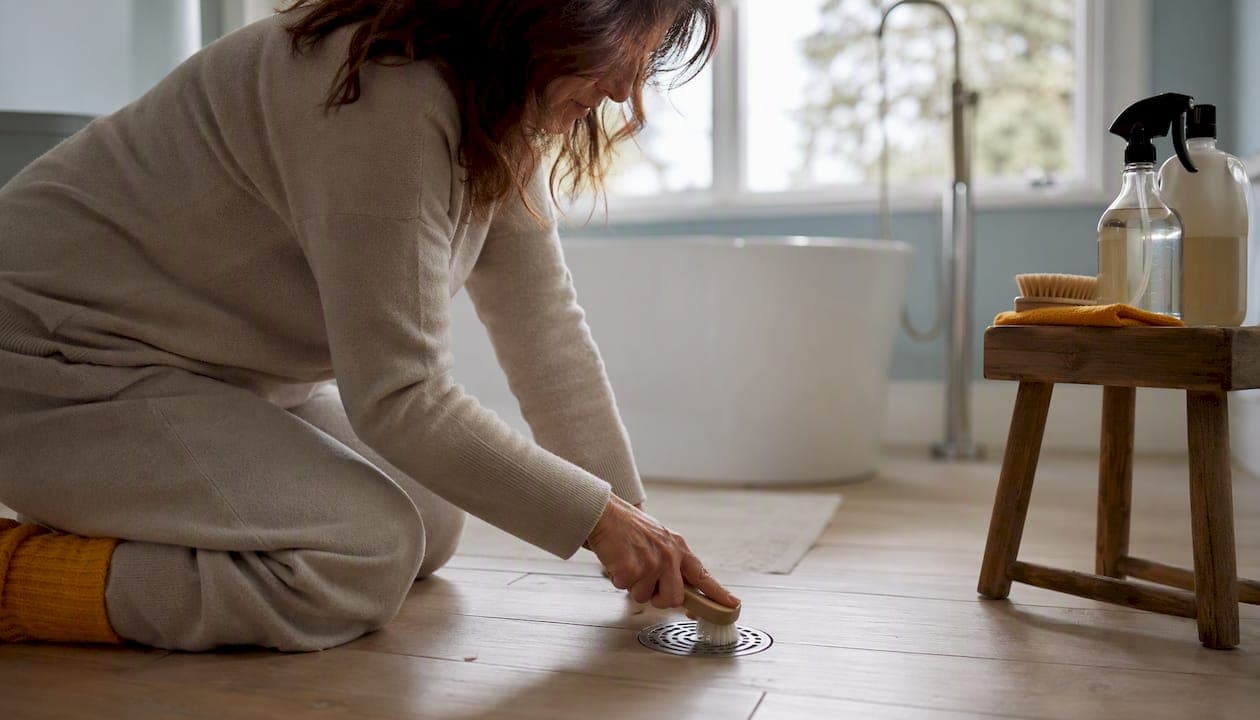
Most shower drain smells come down to one of two things: a biofilm of bacteria feeding on hair and soap scum, or sewer gas seeping in because the P-trap's water seal has dried out or failed. Both are fixable, and you can usually tell which one you're dealing with before you even touch a tool.
Three things to try right now:
- Run the shower for 30 seconds, or pour a litre of water down the drain. This refills the P-trap's water seal if it has evaporated.
- Remove the drain grate and pull out any visible hair and soap build-up by hand or with a flexible barb drain snake.
- Pour a cup of baking soda followed by a cup of white vinegar down the drain, leave it for 20 minutes, then flush with warm (not boiling) water.
Safety first:
- Never mix bleach with any other drain product. The fumes are toxic.
- Do not pour boiling water into plastic fittings. It softens and can crack them. Warm tap water is fine.
- If the smell is strong sewage and you feel dizzy or nauseous, open windows, leave the room, and call a professional. That is a sewer gas situation, not a DIY job.
Pro Tip: Pour the water down the drain before you do anything else. If the smell disappears within a few minutes, a dry trap was the entire problem. You just saved yourself an hour of cleaning.
Table of Contents
- What your shower drain smell is actually telling you
- The most common physical causes of a smelly shower drain
- Quick DIY fixes you can do in under an hour
- Deeper cleaning for persistent odours
- When to call a professional plumber or drainage specialist
- How to stop the smell coming back
- If the smell comes back: a troubleshooting checklist
- Key takeaways
- The point where DIY stops making sense
- Persistent shower drain smell? Budgetrodz can diagnose it fast
- Useful sources
What your shower drain smell is actually telling you
The scent itself is diagnostic. Get this right and you skip straight to the correct fix rather than cleaning a drain that does not need cleaning, or ignoring a trap that does.
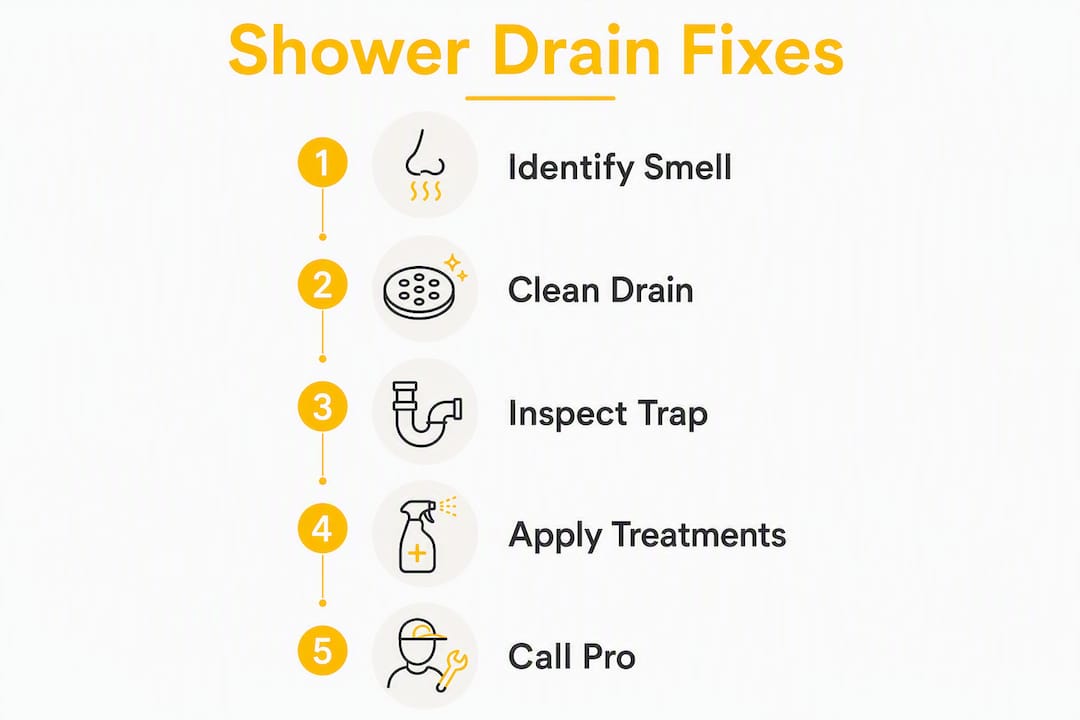
Plumbing professionals confirm that the odour category is one of the most reliable triage tools available. Here is what each smell typically points to:
Musty or sour, like a damp cloth. This is almost always biofilm. Bacteria colonise the hair mat and soap residue just below the grate and produce that stale, slightly sour odour. It tends to be strongest immediately after a shower when warm water stirs everything up.
Rotten egg or sulphur. This is hydrogen sulphide, produced either by anaerobic bacteria living in the biofilm or by sewer gas entering through a compromised water seal. According to This Old House, in homes on a private well supply, the water itself can carry this smell and should be tested separately before assuming the drain is the source.
Raw sewage, like an open drain outside. This points to a dry or failed P-trap, a blocked vent pipe, or a cracked drain line. If this smell is present when the shower has not been used, the water seal is almost certainly gone.
Pro Tip: Note when the smell is strongest. Immediately after showering = biofilm. Present even when the shower has been unused for hours = dry trap or venting fault. That single observation narrows your diagnosis before you touch anything.
The timing also matters for venting faults. If the smell worsens during long showers or on particularly windy days, that is a classic sign of pressure imbalance in the vent stack, where the system is being stressed by external conditions rather than a simple blockage at grate level.
The most common physical causes of a smelly shower drain
In order of how often they appear in UK homes:
- Biofilm and hair mats. The most frequent cause by far. Hair, dead skin, and soap residue accumulate just below the grate and create a warm, wet environment where bacteria thrive. The smell is musty or sour.
- A dry or evaporated P-trap. The P-trap is the curved section of pipe beneath the shower waste. It holds a small amount of water that physically blocks sewer gases from rising into the room. In a shower that is used infrequently, that water can evaporate within one to four weeks depending on the humidity and ventilation in the room, leaving a direct path for sewer gas.
- A blocked or undersized vent pipe. Every drain needs a vent to balance air pressure. When the vent is blocked by debris, bird nests, or a partial collapse, negative pressure siphons water out of the trap or pushes sewer gas backward through it. Symptoms include gurgling sounds and smells that affect multiple fixtures at once.
- Downstream blockages. A partial blockage further down the waste pipe traps organic matter and creates a slow-fermenting source of odour that no amount of grate-level cleaning will reach.
- Cracked pipes or failed seals. A hairline crack in a drain line or a deteriorated joint seal allows sewer gas to escape into the floor void and migrate up through the drain. This is less common but is the reason a smell sometimes returns within days of a thorough clean.
The P-trap deserves a moment's attention because it is so often misunderstood. The South Davis Sewer District describes it well: the curved pipe holds a small reservoir of water that acts as a physical barrier between your bathroom and the sewer system. Gravity keeps it in place under normal use. The trap only fails when the water evaporates (rare use), when a siphoning effect pulls it dry (venting fault), or when the trap itself cracks or the seal deteriorates.
Quick DIY fixes you can do in under an hour
The fastest reliable sequence is: remove debris, refill the trap, clean the splash zone, then treat with enzyme cleaner or baking soda and vinegar as ongoing maintenance.
What you will need:
- Rubber gloves
- A flexible plastic barb drain snake (available at most UK DIY retailers for a few pounds)
- A small drain brush or old toothbrush
- A bucket
- Enzyme drain cleaner (liquid or gel formulation)
- Baking soda and white vinegar as an alternative
Steps:
- Remove the grate (2 minutes). Most shower grates unscrew or lift out. Pull out any visible hair by hand. Wear gloves.
- Use the barb drain snake (5 minutes). Insert it slowly and rotate as you push. Compacted hair mats in the pivot zone of pop-up shower wastes cannot be dissolved by chemicals alone. The barb catches and extracts the mat physically.
- Refill the trap (1 minute). Run the shower or pour a litre of water down the drain. This restores the water seal if evaporation was the issue.
- Scrub the grate and visible pipe walls (5 minutes). Use the drain brush with a small amount of washing-up liquid. Biofilm clings to surfaces and needs mechanical disruption, not just rinsing.
- Apply enzyme cleaner (overnight). Pour the enzyme product down the drain according to the packet instructions and leave it overnight. For heavy biofilm, repeat for two or three consecutive nights. Enzyme cleaners digest organic matter rather than just masking it, which is why they outperform caustic alternatives for this specific problem.
- Flush with warm water (1 minute). Not boiling. Warm tap water is sufficient and safe for plastic fittings.
The baking soda and vinegar method works as a lighter maintenance routine rather than a deep clean. It creates a fizzing action that dislodges loose debris but will not break down a compacted hair mat the way a barb tool does.
Deeper cleaning for persistent odours
If the smell returns within a few days of cleaning, the hair mat is almost certainly sitting deeper than the barb tool reached, or there is a biofilm layer on the pipe walls that surface treatment has not touched.
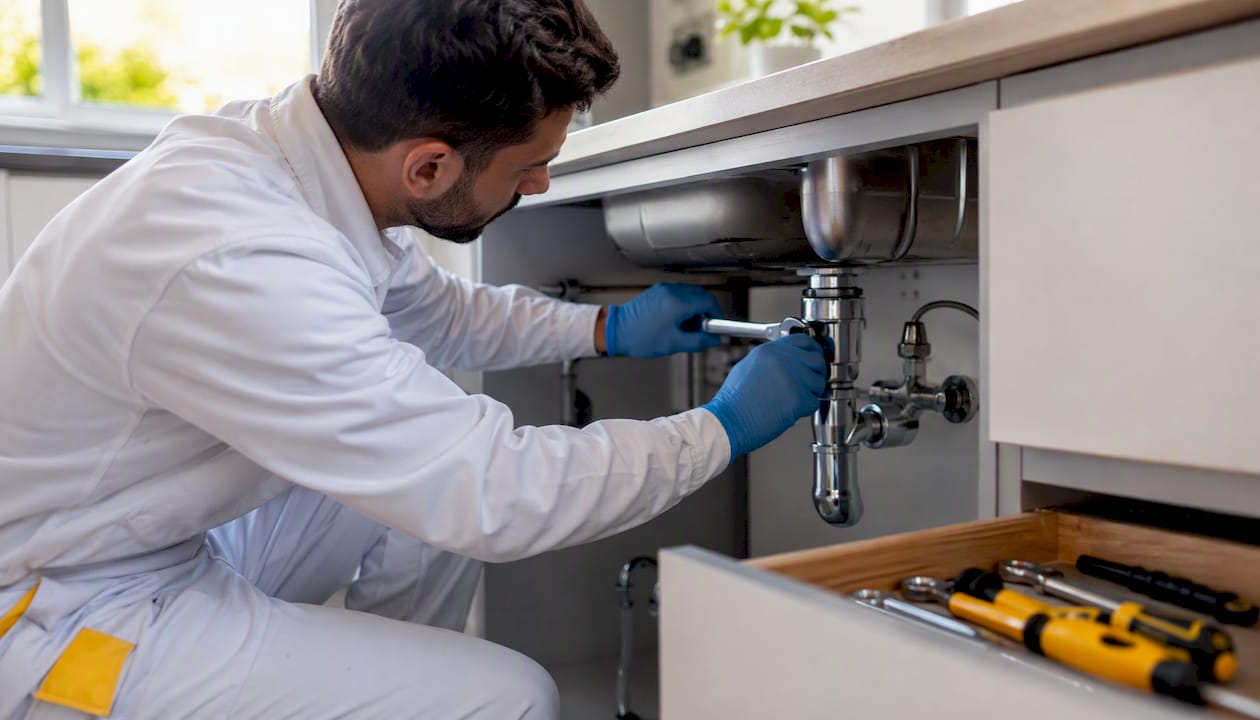
Remove the trap and inspect it. Place a bucket under the waste pipe before you start. Most UK shower traps unclip or unscrew by hand, though some require a pair of slip-joint pliers. Once removed, inspect the rubber seal. A cracked or flattened seal is a common source of odour that no amount of cleaning will fix. Replace it for under £5 at any plumbers' merchant.
With the trap out, use a bottle brush or flexible drain brush to scrub the visible pipe walls. You are removing the biofilm layer, which looks like a grey or brown slime coating. Rinse the trap itself under the tap, scrub it with a brush, and check the seal before refitting.
After mechanical cleaning, pour an enzyme cleaner directly into the open pipe and allow it to soak for several hours before refitting the trap.
What to avoid:
- Caustic drain cleaners (products containing sodium hydroxide) on older pipework. They can soften plastic joints and corrode older metal fittings, and they often only push the blockage further down rather than removing it.
- Boiling water in plastic traps. It warps the fitting.
- Cooking oil poured into a trap to slow evaporation. It turns rancid and creates a worse smell than the one you started with. Mineral oil is the correct choice for this purpose because it does not oxidise or spoil.
For rarely used showers, a few millilitres of mineral oil poured on top of the water after refilling the trap slows evaporation significantly. It sits on the surface and reduces the rate at which the water seal dries out between uses.
When to call a professional plumber or drainage specialist
Stop DIY and call a professional if any of the following apply:
- The smell returns within a few days of a thorough clean
- Multiple fixtures (sink, toilet, bath) smell simultaneously
- You hear gurgling from the drain when water runs elsewhere in the house
- The smell is strong raw sewage rather than musty or sour
- You can see water staining or damp patches near the shower base or floor void
These are the signs that the problem sits beyond what any grate-level cleaning can reach. A smell that returns quickly after cleaning commonly indicates a cracked drain line, a failed seal, or a disconnected vent joint. None of those are diagnosable without a camera.
What a professional will do:
| Service | Purpose | When it's used |
|---|---|---|
| CCTV drain survey | Camera inspection of the pipe interior to locate cracks, root intrusion, collapsed sections, or failed joints | Persistent odour after DIY; multiple fixtures affected; suspected structural damage |
| High-pressure jetting | Pressurised water clears deep biofilm, compacted debris, and partial blockages that snaking cannot reach | Slow drain with recurring smell; partial blockage confirmed by camera |
| Trap replacement | Swap a cracked or deformed trap and reseal the waste fitting | Visible seal damage; smell persists after cleaning |
| Vent inspection and clearance | Check and clear the roof-level vent stack | Gurgling symptoms; smell worsens on windy days or during long showers |
| Pipe repair or relining | Seal or reline a cracked drain section without excavation | Camera confirms crack or joint failure |
For most households in the UK, a straightforward drain clearance takes a professional under an hour. A CCTV survey typically takes a similar amount of time and produces a written report. Pipe relining or repair is a larger job and will be quoted on site once the camera has confirmed the extent of the damage.
How to stop the smell coming back
Prevention is cheaper than repeated fixes. The routine below takes minutes per month and keeps the most common causes from developing.
- Weekly: Clear the grate of hair after every shower if possible, or at minimum once a week. A hair catcher or strainer fitted over the drain grate is the single most effective low-cost intervention available. It stops the hair mat forming in the first place.
- Monthly: Pour an enzyme drain treatment down the shower waste and leave it overnight. This digests the thin biofilm layer before it builds up into a problem. For guest showers or bathrooms used infrequently, run the shower for 30 seconds to refill the trap.
- Quarterly: Remove the grate and do a quick visual check. Look at the trap seal, check for any slow drainage, and scrub the grate itself. For any drain that has been unused for more than a month, refill the trap and add a small amount of mineral oil on top.
- Annually: If you have older pipework or a property with mature trees nearby, a CCTV drain survey every year or two is a sensible precaution. Root intrusion and joint deterioration are slow processes, and catching them early is considerably cheaper than dealing with a collapse.
Product types worth having in the cupboard: a hair catcher strainer (silicone ones sit flat and are easy to clean), a bottle of enzyme drain treatment, and a flexible barb drain snake. That is the entire toolkit for most routine maintenance.
If the smell comes back: a troubleshooting checklist
Work through these steps in order, making one change at a time before moving to the next.
- Refill the trap. Run the shower for 30 seconds. Does the smell stop within a few minutes? Yes: maintain the trap regularly and consider mineral oil for slow-evaporating traps. No: move to step 2.
- Check other fixtures. Does the sink, bath, or toilet in the same room also smell? Yes: the problem is likely a venting fault or a downstream blockage affecting the whole stack. Call a professional. No: move to step 3.
- Listen for gurgling. Flush the toilet or run the bath. Does the shower drain gurgle? Yes: this is a venting or blockage issue. Call a professional. No: move to step 4.
- Remove and inspect the trap. Is the seal cracked or deformed? Yes: replace the seal or the trap. No: clean the trap and pipe walls mechanically, apply enzyme treatment overnight, and refit.
- Test after 48 hours. Has the smell returned? Yes: the source is beyond the trap. Two or more red-flag items from this list (multiple fixtures, gurgling, rapid return of smell) means it is time for a camera inspection. No: the problem is resolved. Add the monthly enzyme routine to prevent recurrence.
Princeton University's Environmental Health and Safety office notes that dry traps are one of the most frequently misdiagnosed odour sources in buildings. The fix takes seconds, but it is often overlooked because people assume the smell must have a more complicated cause.
Key takeaways
Most shower drain smells are caused by biofilm or a dry P-trap, and the correct fix depends entirely on which one you are dealing with.
| Point | Details |
|---|---|
| Smell type is your first clue | Musty or sour points to biofilm; rotten egg or raw sewage points to a dry trap or venting fault. |
| Refill the trap first | Run the shower for 30 seconds before anything else. If the smell clears, a dry trap was the cause. |
| Enzyme cleaners beat caustic products | Enzyme treatments digest biofilm; caustic drain cleaners often damage pipework without fixing the source. |
| Call a pro for these red flags | Multiple fixtures smelling, gurgling drains, or a smell that returns within days of cleaning all need a camera inspection. |
| Budgetrodz for escalation | Budgetrodz offers CCTV surveys and high-pressure jetting across Ellesmere Port, Wirral, Chester, and surrounding areas for cases that DIY cannot resolve. |
The point where DIY stops making sense
There is a version of this problem that homeowners fix in ten minutes with a barb tool and a bottle of enzyme cleaner. There is another version that looks identical from the outside but has a cracked drain line sitting two metres below the floor. The frustrating part is that both present as a smelly shower drain.
The practical rule is straightforward: if you have cleaned the trap, extracted the hair mat, and applied enzyme treatment, and the smell is back within three or four days, stop repeating the same steps. You are not dealing with a surface problem. The cause is structural or downstream, and no amount of baking soda will reach it.
What a camera survey actually shows in these cases is often surprising. Root intrusion from a garden tree, a joint that has pulled apart by a centimetre, a section of pipe that has partially collapsed and is holding standing water. None of these are visible from above. All of them produce a persistent smell that mimics a simple biofilm problem.
The other thing worth saying: sewer gas is not just unpleasant. Hydrogen sulphide is the compound responsible for the rotten-egg smell, and at low concentrations it is merely offensive. At higher concentrations, particularly in enclosed spaces with poor ventilation, it causes headaches and nausea. If the smell is strong and you feel any physical symptoms, that is not a DIY situation.
Persistent shower drain smell? Budgetrodz can diagnose it fast
When the DIY steps have not worked and the smell keeps coming back, the fastest route to a real answer is a professional inspection. Budgetrodz provides emergency drain unblocking and CCTV diagnostic surveys across Ellesmere Port, Wirral, Chester, Liverpool, Wrexham, and North Wales, typically arriving within 90 minutes of your call.

On a visit, the engineer will assess the drain on site, run a camera through the waste line where needed, and give you a clear diagnosis with fixed-fee repair options before any work begins. No hidden charges, no vague estimates. If the problem needs high-pressure jetting to clear deep biofilm or a partial blockage, that can usually be completed the same visit. If the camera reveals a structural fault, you will receive a written report and a quoted repair.
To book or to ask whether a CCTV survey is the right next step for your situation, visit budgetrodz.com/services or call directly for a same-day appointment.
Useful sources
- Oatey: Sewer Gas Odour in Your House — covers P-trap evaporation timescales, mineral oil as a preventive measure, and when to escalate.
- This Old House: Why Does My Shower Drain Smell Like Rotten Eggs? — covers hydrogen sulphide causes including private well water supply as a source.
- Wikipedia: Trap (plumbing)) — technical reference for how plumbing traps function and the standards they are designed to meet.