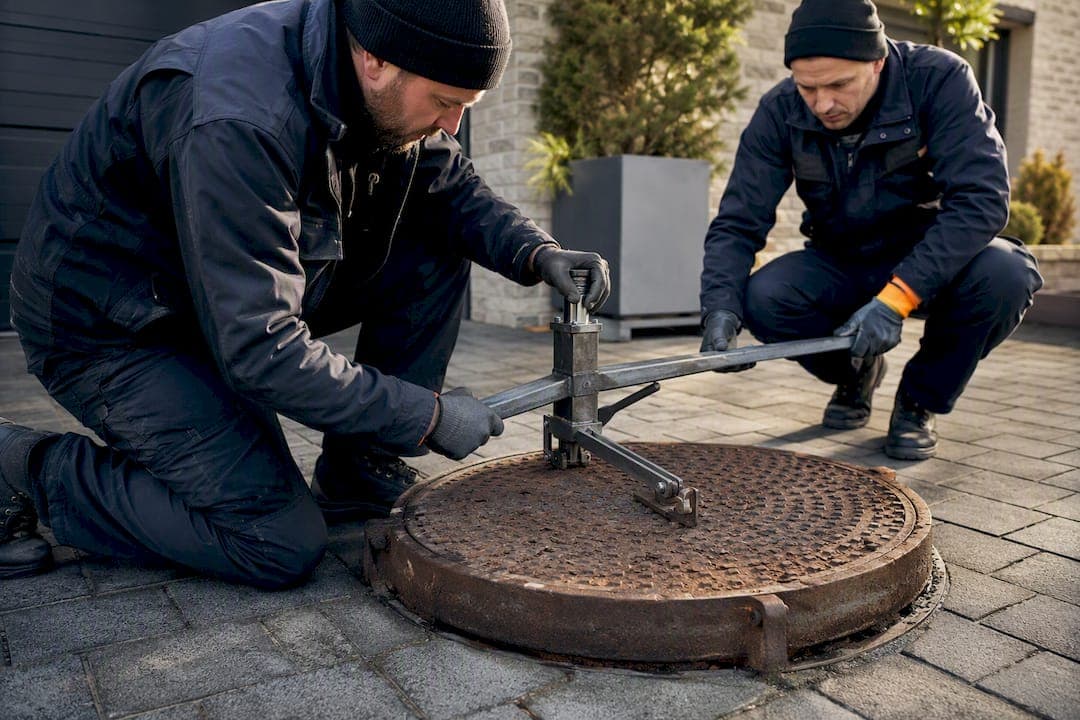
Clear the rim and lifting slots of debris, then try a water flush before anything else. If it still won't budge, use a proper manhole key or magnetic lifter rather than a crowbar or hammer. Stop immediately and call a professional if the cover is bolted, visibly corroded, or won't move after a controlled attempt — HSE guidance and manufacturer procedures from GATIC both back that threshold.
TL;DR:
- Using a water flush before attempting to lift a manhole cover often loosens debris and reduces the need for forceful tools.
- Mechanical aids like a manhole key, magnetic lifter, or slide-hammer are recommended over brute force, especially for corroded or sealed covers.
- Never lift heavy covers by hand or with unsuitable tools, and always assess hazards like traffic, gas, or structural shifts before starting.
- Regular annual cleaning, greasing, and replacing missing parts can prevent future seizure of the cover.
- Calling professional services becomes essential if corrosion, bolting, or fluid smells indicate deeper issues or if DIY methods fail.
Table of Contents
- Safety rules and warning signs that mean stop
- Which tools actually free a stuck cover?
- Step-by-step: how to open a stuck manhole cover
- Preventing the next seizure
- What years of call-outs teach you about stuck covers
- When it's time to call in a professional team
- Sources
Safety rules and warning signs that mean stop
Before you touch a seized cover, know where the line is. HSE manual-handling guidance is explicit: heavy covers should never be lifted by hand, and mechanical aids plus a second pair of hands are the standard approach for anything over a light residential lid. A cast iron cover can be very heavy, and a bad lift with a twisted spine or a crushed finger is the most common injury this job produces.
Traffic, confined spaces, and gas are the other three hazards worth respecting. A cover sitting in a driveway or footpath needs cones or a barrier before you start. If you catch a whiff of sewage or anything resembling gas as the seal breaks, back away and ventilate the area rather than leaning in for a closer look.
Run through this before attempting anything:
- The cover has visible bolts or screws rather than a plain keyhole.
- Rust has spread across more than a quarter of the frame or seating.
- There's standing water, a strong odour, or you're near live traffic.
- You're working alone with no one to help lift or watch for hazards.
Any one of those means stop and bring in someone with the right kit.
Pro Tip: Photograph the cover before you start. If you do call a professional, that photo of the frame, keyholes and any corrosion saves them a wasted trip and helps them bring the right tool first time.
Which tools actually free a stuck cover?
The tool matters more than the effort. A manhole key or hook is the standard starting point, a T-shaped or L-shaped bar that slots into the lifting eye and lets you apply upward force with your legs and back properly braced, rather than your fingers under a metal edge.
For solid-surface lids with no lifting slot, a magnetic lifter or dolly clamps onto the top face and cranks the cover up mechanically, which removes the need to find or force a gap at all. Manhole Covers Direct notes this works well specifically where recessed edges have corroded shut, since there's no slot to lever from in the first place.
When friction has genuinely welded a lid to its frame, a slide-hammer or impact release tool is the better answer than brute force. These deliver repeated upward shocks that break static friction from below, rather than the shock of a sledgehammer landing from above. CoverUp Key's manufacturer guidance points out that this physics-based approach frequently succeeds where steady prying fails, and it does so without cracking the frame the way hammering often does.
For GATIC-style sealed covers, a jacking-screw with a short-handle key breaks the seal, but that short key is for jacking only. The actual lift needs a long-handle key. GATIC's own technical guide warns that using the short-handle key to lift rather than jack risks injury and tool failure — a distinction that trips up a lot of first-timers.
Avoid these entirely:
- A sledgehammer used as the first and only tool.
- Levering with a screwdriver, spade, or anything not designed to take that load.
- Prying from one corner at an angle that can flick the cover up unpredictably.
- Bare-handed lifting on anything heavier than a light inspection cover.
Step-by-step: how to open a stuck manhole cover
Work through these in order and stop the moment you hit resistance you weren't expecting.
Preparation. Cordon off the area if it's near foot traffic or a driveway, put on gloves and steel-toe boots, and clear leaves, soil, and grit from the rim with a stiff brush or trowel. Check for bolts, keyholes, and any sign the frame itself has shifted.
-
Clean and flush. Sweep out the seating groove properly, then pour water into the joint and let it sit for ten to fifteen minutes. OMAG's field reports back this up directly: a clean-then-flush approach loosens compacted grit and often frees a lid before you need any tool at all. For recessed tray covers specifically, Pavingexpert recommends compressed air or a high-pressure jet if a hose alone doesn't shift the debris.
-
Keyed levering. Insert the manhole key fully into the lifting eye, brace your feet shoulder-width apart, and lift with your legs, not your back. If it still won't give, bring in a second person to lever from the opposite edge simultaneously rather than pushing harder alone.
-
Impact release or jacking screw. If levering fails, a slide-hammer tool delivers the vertical shock needed to break the seal without damaging the casting. For sealed GATIC-style lids, follow the manufacturer sequence exactly: remove any plugs, clean the seating, break the seal with the short-handle jacking screw, then switch to the long-handle key to actually lift. Never use the short key for the lift itself.
-
Mechanical lifting. A magnetic dolly or a small winch is the next step up, and honestly this is where most DIY attempts should end. Winching a stuck cover without the right anchor points or load rating is a professional job, not a weekend one.
End step. Once open, secure the opening immediately with a barrier, cone, or board across the gap. Never leave an open manhole unattended, even for two minutes to fetch a tool.
Pro Tip: If the cover lifts an inch and then jams again, don't force it further. That's usually a sign the frame has warped slightly, and continued force can crack the casting instead of freeing it.
Preventing the next seizure
An annual lift-and-clean routine is the single most effective habit here. Pavingexpert's guidance notes that regular lifting combined with light greasing of the seating surface prevents the rust and galvanic bridging that causes permanent seizure in the first place.
- Lift and clean the seating groove once a year, ideally before winter.
- Apply a light coating of grease or a manufacturer-approved sealing compound to the contact surfaces, following whatever the cover manufacturer specifies rather than a generic product.
- Replace missing or damaged keyhole plugs so grit and water can't collect inside them.
- Clear jointing debris from the surrounding paving so it doesn't wash back into the seating.
If a cover keeps seizing despite regular maintenance, that's usually a sign of a deeper issue, standing water, root ingress, or a collapsing pipe nearby, and it's worth booking a CCTV drain survey rather than fighting the same lid every year.
What years of call-outs teach you about stuck covers
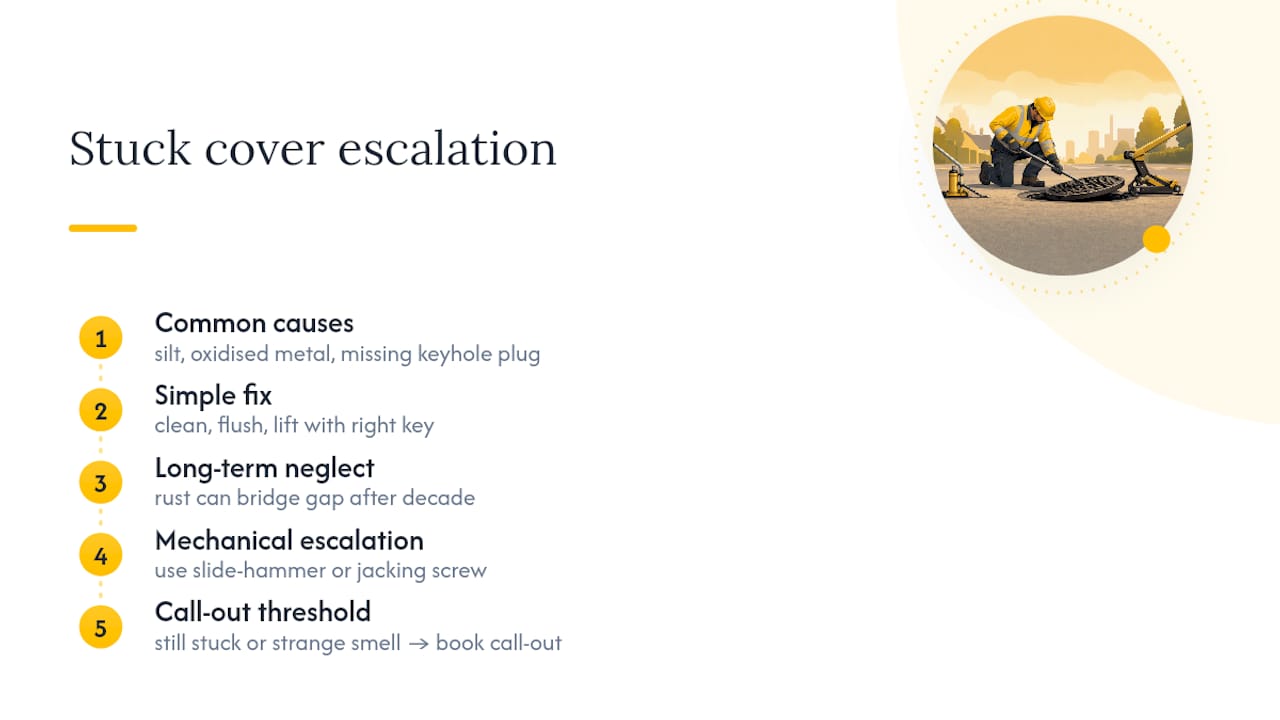
Most seized covers come down to one of three things: soil and silt building up in the seating groove, oxidised metal fusing to the frame, or a keyhole plug that went missing years ago and let grit pack in ever since. The fix for the first two is almost always the boring one, clean it, flush it, lift with the right key, and it opens without drama.
Where it gets interesting is the covers that have been ignored for a decade. By that point rust has often bridged the gap entirely, and no amount of careful levering shifts it safely. That's when a slide-hammer or a jacking screw stops being optional and starts being the only sensible route. If a lid still won't move after that, or there's a smell that shouldn't be there, that's usually the point a call-out gets booked rather than a fourth attempt with a bigger bar.
— Christopher
When it's time to call in a professional team
If you've cleaned the seating, tried the water flush, and worked through the keyed lever without success, or the cover is bolted, badly corroded, or sitting over a suspected blockage, that's the point to stop attempting it yourself. Budgetrodz handles exactly this end of the job: emergency drain unblocking with a typical 90-minute response across Ellesmere Port, Wirral, Chester and the surrounding area, backed by high-pressure jetting and CCTV surveying to see what's actually happening beneath a lid that won't move.
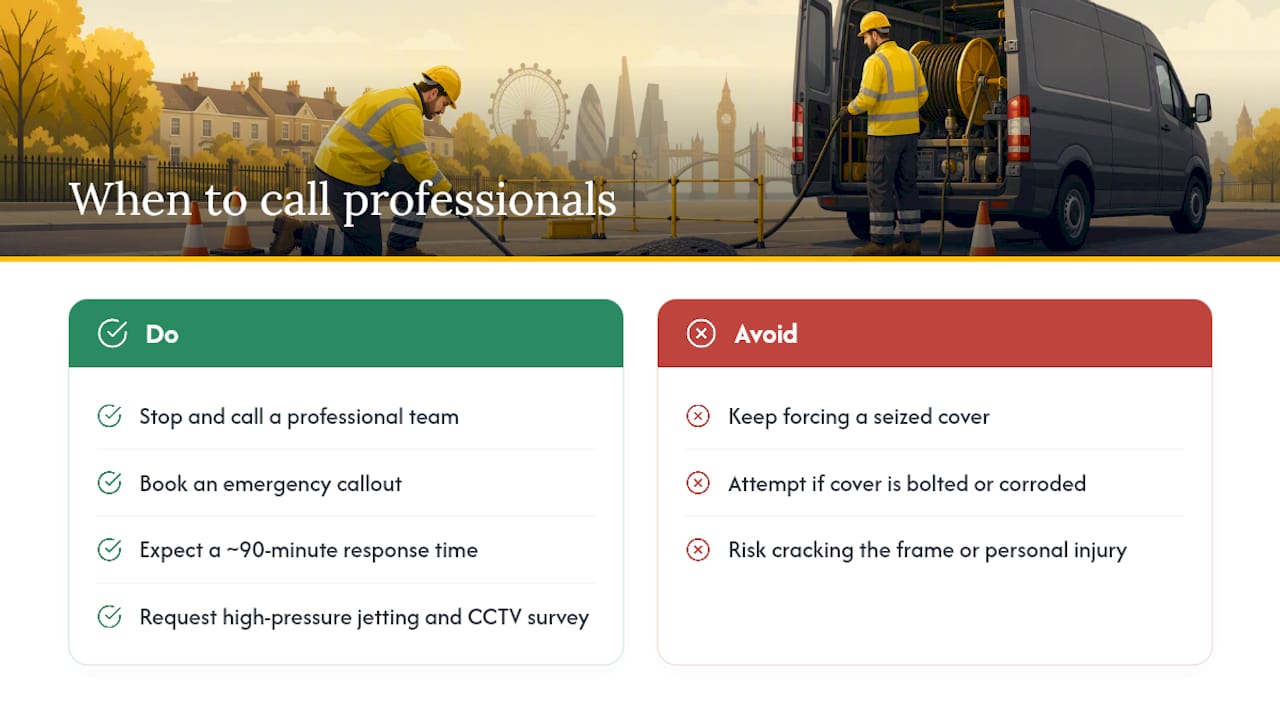
Pricing is quoted upfront with no hidden call-out surprises, whether it's a single seized cover or a full drainage service visit involving mechanical lifting and a survey. If you've reached the limit of safe DIY, get in touch and book an emergency callout rather than risking a cracked frame or an injury on the next attempt.
Sources
- GATIC — Safe removal of manhole covers (technical guide)
- Paving Expert — Freeing jammed recess tray covers - FAQ
- CoverUp Key — slide-hammer release tool (manufacturer/whitepaper)