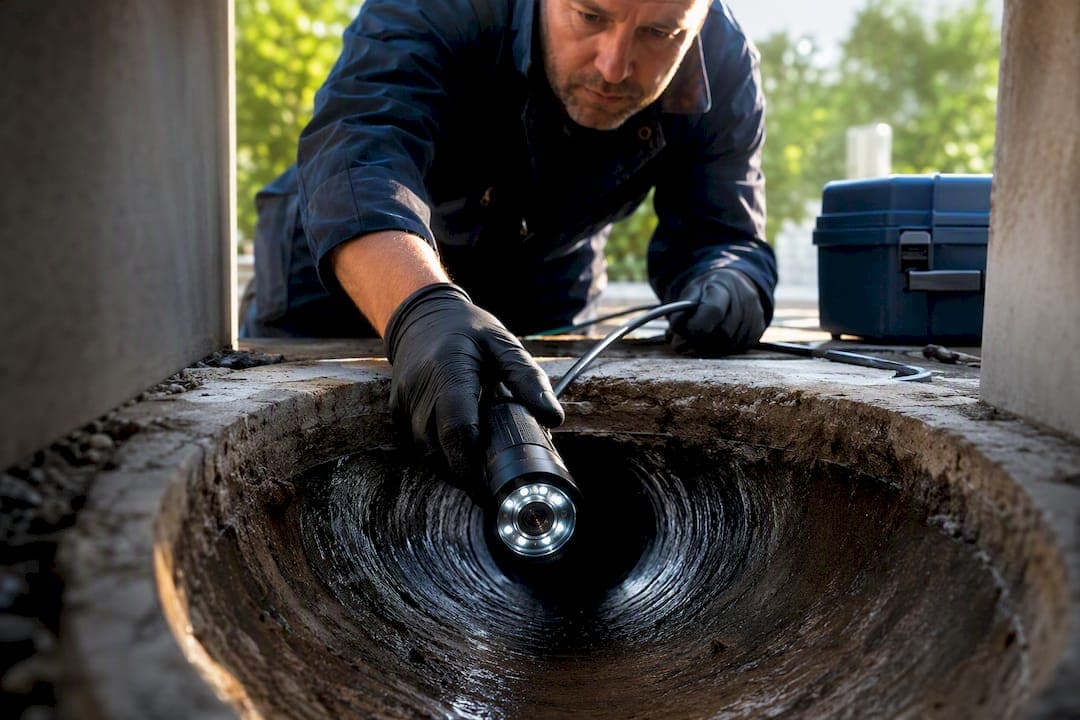
Pipe patch repair is a trenchless technique that seals a small, defined section of damaged pipe using a resin-impregnated patch pressed into place with an inflatable packer, without digging up the ground above it. It works best on cracks, joint displacement, small holes, and isolated root ingress confirmed by a CCTV drain survey. It's the wrong tool for collapsed sections or widespread deterioration, where full relining or excavation via high-pressure jetting first is the safer route.
TL;DR:
- Patch repair is suitable only for small, localized defects confirmed by CCTV, and is ineffective for collapsed or extensively deteriorated pipes.
- The process involves a CCTV survey, high-pressure jetting, and installing a resin-impregnated patch with a flow-through packer, curing in minutes or hours.
- Costs depend on pipe depth, diameter, and defect number, usually making patching faster, less disruptive, and cheaper than excavation for single defects.
- Contractors should provide verified materials, specific cure system details, a fixed price, and post-repair CCTV confirmation before proceeding.
- If multiple defects, collapse, or extensive deterioration are present, full relining or excavation is the right alternative to patching.
Table of Contents
- What is pipe patch repair and how does patch lining work?
- When should you choose a patch over relining or excavation?
- Which materials and kit features actually matter?
- What happens on site, step by step?
- What does a patch repair actually cost and how disruptive is it?
- How do you choose a contractor and what should you ask?
- How Budget Rodz handles patch repair jobs
- Author's view: when to patch and when to call in a specialist
- Book a CCTV survey and patch repair with Budget Rodz
- Sources
- FAQ
What is pipe patch repair and how does patch lining work?
You can't patch what you can't see, which is why every legitimate job starts with a CCTV drain inspection. A camera crawls the pipe to pinpoint the defect's exact location, size and severity, and that footage decides whether patch lining is even the right call, according to Castle Surveys' technical breakdown.
Once the defect is confirmed, the pipe gets cleaned with high-pressure jetting, and any root intrusion is cut back. An inflatable packer carries a resin-soaked patch to the exact spot, presses it against the pipe wall, and holds it there while the resin cures. After curing, the packer deflates and comes out, leaving a smooth, sealed patch behind, a method Drainageuk as restoring only the localised section rather than relining the whole run.

That's the key difference from full-length CIPP relining: a patch fixes one spot, a lining job resurfaces the entire pipe interior.
When should you choose a patch over relining or excavation?
Patch repair suits isolated, well-defined problems. A patch is generally the right call for:
- Cracked or fractured pipe sections with no ongoing collapse
- Displaced or offset joints causing leaks or minor infiltration
- Small holes from corrosion or impact damage
- Isolated root ingress at a single joint
Patching isn't suitable everywhere. Collapsed sections, missing lengths of pipe, or deterioration spread across multiple metres call for full relining or open excavation instead, since patching several defects close together often costs more in the long run than one continuous liner, as Castle Surveys notes. The CCTV report is what settles the argument, not guesswork or a quick look down the manhole.
Which materials and kit features actually matter?
Not all patch kits perform the same, and the difference usually comes down to the resin. Kits with pre-measured, bottled resin cut out manual mixing errors entirely. Contractors favour them because they reduce spillage risk and give a more consistent cure than bag-mix systems, where a slightly wrong ratio can mean a patch that never fully hardens.
Pro Tip: Ask what cure system the kit uses before you book. Ambient cure needs longer dwell time but no extra kit; accelerated cure (often UV or hot water) gets the packer out faster, which matters if the drain needs to go back into service the same day.
Beyond the resin, check for:
- Fibreglass matting weight and patch length options to match your pipe diameter and defect size
- Bend or radius tolerance if the defect sits near a junction or elbow
- Low-VOC formulations for confined or occupied spaces
- Manufacturer-quoted design life backed by WRc or comparable long-term hydrostatic testing
That last point is worth pressing on. Suppliers who reference WRc-style testing for hydrostatic performance are giving you something you can actually verify, rather than a vague promise of durability.
What happens on site, step by step?
A patch job follows a fairly predictable sequence, though the exact hours depend on access and pipe diameter.
- CCTV survey and written quote. The engineer confirms the defect, measures it, and gives you a fixed price based on what the camera actually shows.
- Cleaning and root cutting. High-pressure jetting strips grease, scale and debris; any roots get cut back so the patch can seat properly.
- Packer and patch installation. The resin-soaked patch travels down on the packer and inflates against the defect. Many crews now use flow-through packers, which let wastewater keep flowing through the packer's core during the job, so the drain doesn't need shutting down or pumping out.
- Curing. Ambient cure can take a couple of hours; accelerated systems cure in minutes once triggered.
- Post-cure CCTV verification. A second camera pass confirms the patch has bonded, sits flush, and hasn't shifted.
Pro Tip: If your drain serves a kitchen, bathroom, or communal system that can't sit idle, ask specifically whether the crew is using a flow-through packer. It's the detail that determines whether your household or business carries on as normal during the repair.
Most single-defect jobs finish within a few hours from first CCTV pass to final verification. Multiple defects, restricted access, or a deep manhole run can push that timeline out.
What does a patch repair actually cost and how disruptive is it?
Cost hinges on three things: how deep the pipe sits, how wide it is, and how many defects need patching. A single, accessible defect is normally quicker and cheaper to fix than several spread along the same run.
Compared with excavation, patch repair usually wins on both time and disturbance:
- No digging means no reinstatement of paving, flooring, or landscaping afterwards
- Jobs frequently complete in a single working day, where excavation can stretch across several
- Minimal or no traffic management needed for most residential and light commercial jobs
What pushes costs up: deep or hard-to-reach runs, additional defects discovered mid-survey, or a job that needs specialist packers for unusual pipe shapes or larger diameters.
How do you choose a contractor and what should you ask?
A confident contractor will happily walk you through their process before quoting a price. If they can't, that's the answer in itself.
- Insist on a CCTV survey with a written report and images first. No competent contractor recommends a patch without seeing the defect on camera.
- Ask exactly what resin and matting they use. Pre-measured bottled resin with documented testing beats a vague "we use standard resin."
- Ask about design life and warranty. A contractor confident in their materials will quote a specific figure, not a shrug.
- Check their on-site kit. A proper jetting unit, packers in the right sizes, and their own CCTV camera should all be standard, not upgrades.
- Confirm fixed pricing and typical response time before you book.
Pro Tip: Treat "we'll take a look and see" as a red flag when it comes without a camera. A contractor who won't verify the repair afterwards with post-cure CCTV isn't giving you proof, just their word.
Vague answers on materials, no post-repair verification offered, and no clear warranty are the three signs to walk away from a quote.
How Budget Rodz handles patch repair jobs
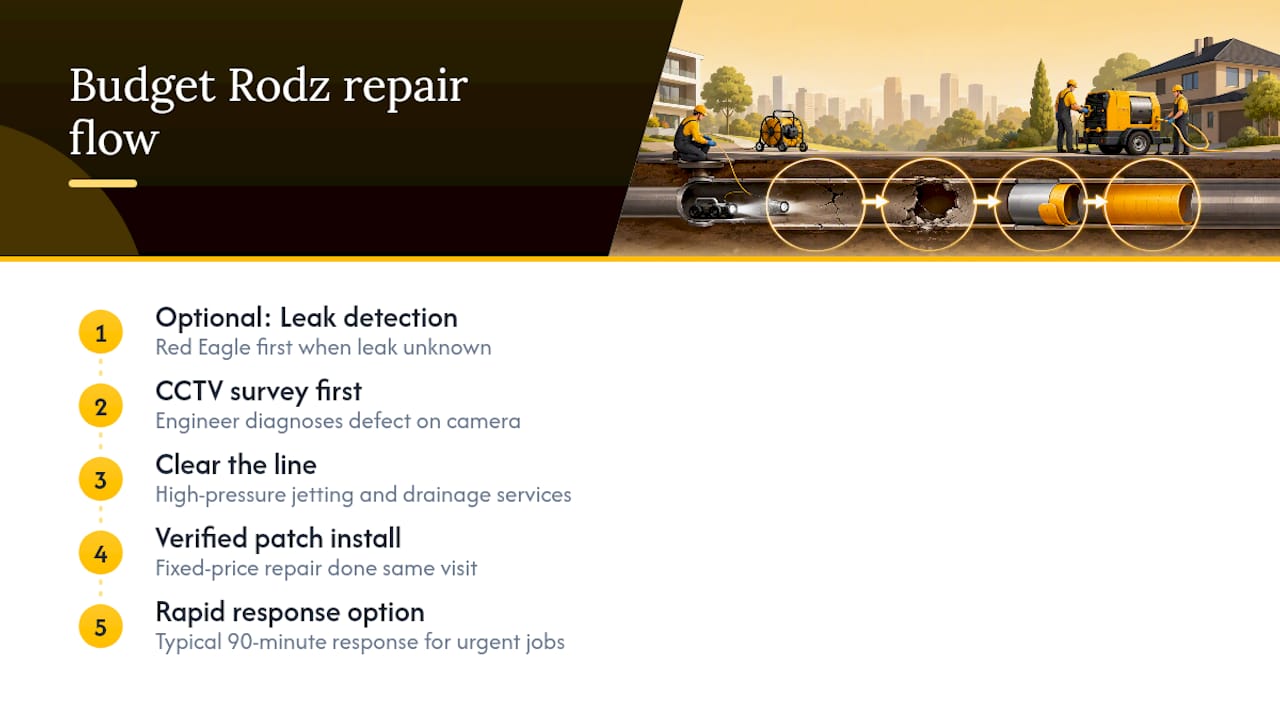
Budget Rodz runs the same sequence on every patch job: a rapid CCTV survey to confirm the defect, high-pressure jetting to clean the line, a packer-based patch install, and a post-repair CCTV check to prove it's sealed. Fixed pricing and a typical 90-minute response mean no surprises. If you're unsure whether your pipe needs a patch or something more, book a CCTV survey before reaching for a DIY tape fix.
Author's view: when to patch and when to call in a specialist
Patch repair earns its place when the defect is small, single, and confirmed on camera. The moment a survey shows collapse, multiple defects, or missing pipe wall, stop thinking about patches and get a professional relining or excavation quote instead. If you're not certain which category your pipe falls into, book a CCTV survey before you buy anything.
— Christopher
Book a CCTV survey and patch repair with Budget Rodz
Budget Rodz is the practical alternative to buying a DIY patch kit and hoping for the best: a trained engineer diagnoses the defect on camera first, then fixes it properly the same visit, with fixed pricing agreed before work starts.
[CTA IMAGE: Budget Rodz CCTV rig or on-site patch repair]
Across Ellesmere Port, Wirral, Chester and the surrounding area, that means a CCTV drain survey to confirm exactly what's wrong, high-pressure jetting and drainage services to clear the line, and a verified patch install, backed by a typical 90-minute response when things go wrong at short notice. For leaks you can't yet locate, Red Eagle's leak detection service is a useful first step before any repair is booked.
If you've spotted a slow leak, a damp patch, or a recurring blockage, don't reach for tape. Book a CCTV survey and get a straight answer on whether a patch, a full reline, or something more urgent is what your pipe actually needs.
Sources
- Patch Lining Repairs | Localised no-dig drain repair solutions
- Patch Lining 101: How to repair a broken drain pipe effectively
- Re-Tec Patch Kit - Drain Patch Repair - No-Dig Pipe Repair – RE-TEC
- Drain patch repairs | Sewer patch lining | J&F Drainage
FAQ
What can I use to patch a leaking pipe?
A professional resin-impregnated patch installed with an inflatable packer is the durable fix; consumer pipe tape or sealants only offer a short-term stopgap and rarely bond structurally against ongoing flow or root pressure.
Can you patch a hole in a pipe?
Yes, a small isolated hole is one of the textbook cases for patch lining, provided a CCTV survey confirms the surrounding pipe wall is otherwise sound.
Does pipe repair tape work?
Tape can slow a leak temporarily, but it isn't a structural repair and typically fails under sustained water pressure or root growth, unlike a cured resin patch.
How do I repair a hole in a pipe line without digging it up?
You book a CCTV survey to confirm the defect, then a contractor cleans the line with high-pressure jetting and installs a resin patch using an inflatable packer, all through existing access points like a manhole, with no excavation needed.
How long does a typical patch repair take?
Most single-defect jobs, from initial CCTV pass to final verification, complete within a few hours on the same visit, though multiple defects or restricted access can extend that.